
advice/living
Helen Garner,
Simone de Beauvoir,
Constance Debré,
Jennifer Egan,
Sally Rooney,
Jonathan Franzen,
Patricia Highsmith,
Vivian Gornick,
Mario Levrero
just like life advice. ideally philosophical rather than pragmatic

To look at oneself and find it hideous, what a job! But then, when she hadn’t been hideous, had she sat around and stared at herself like this? Not much! A proper body’s not an object, not an implement, not a belonging to be admired, it’s just you, yourself. Only when it’s no longer you. but yours, a thing owned, do you worry about it — Is it in good shape? Will it do? Will it last?
aaaaahhh

Still later, Fred Ottenburg, the rich man who loves her but, like all the men in this book, wants Thea to have her life, says to her,
Don't you know most of the people in the world are not individuals at all? . . . A lot of girls go to boarding-school together, come out the same season, dance at the same parties, are married off in groups, have their babies at about the same time, send their children to school together, and so the human crop renews itself. Such women know as much about the reality of the forms they go through as they know about the wars they learned the dates of. They get their most personal experiences out of novels and plays. . . . You are not that sort of person. . . . You will always break through into the realities.
It is from passages like these -- vivid, sustained, dominating -- that The Song of the Lark draws its power. Cather makes a great romance of the loneliness of the artist's vocation, into which she pours her own defiant necessity, but that is not her subject at all. Her subject is the conviction that in pursuit of the deepest self there is glory, and in the absence of that pursuit there is emptiness.
<3

At this time, a friend wrote me a letter. He addressed me with the word “Dearest.” But however often I looked at the word “Dearest” and my name, I could not keep the two words together, because they did not seem related. He closed the letter by telling me to “have courage,” and I found, to my surprise, that if I simply looked at the words “have courage” there on the page, I had courage that I had not had a moment before.
iconic

A postcard. Neat handwriting fills the rectangle.
Half my days I cannot bear not to touch you. The rest of the time I feel it doesn’t matter if I ever see you again. It isn’t the morality, it is how much you can bear.
No date, no name attached.

She smiled at Danny, this ancient crone, alone and weak, nuts if she thought she could operate a battering ram on her own. She was powerless any way you sliced it, but she thought she was strong and that made it true in a way. This astounded Danny. He’d never seen it before.
[...] Danny had a creepy feeling of watching himself: a gimping, head-injured guy with a right foot full of big white toes anyone could reach out and grab, stumbling through a rotten garden outside a castle full of strangers in a country he didn’t know the name of. A guy at the end of the line is what Danny saw, with no options left. A guy with nothing, or why would he be here?
Another squirt of cold. Danny talked to himself: Get it together. Get. It. Together.
This was how the worm got in. You opened yourself to that kind of thinking and the worm crawled inside you and started to eat and didn’t stop until nothing was left. You saw yourself as a weak powerless guy and it was only a matter of time before everyone agreed you were that guy. Danny had seen it happen. The worm ate people up the way years had eaten away this castle: caving in ceilings, chewing through walls, tunneling under floorboards until even a perfectly renovated hallway with varnished doors and fake candles on the walls had a thousand bugs crawling around a few floors underneath it.
The will needs obstacles in order to exercise its power; when it is never thwarted, when no effort is needed to achieve one’s desires, because one has placed one’s desires only in the things that can be obtained by stretching out one’s hand, the will grows impotent. If you walk on a level all the time the muscles you need to climb a mountain will atrophy. These reflections are trite, but there they are.
from The Lotus Eater in The Mixture as Before
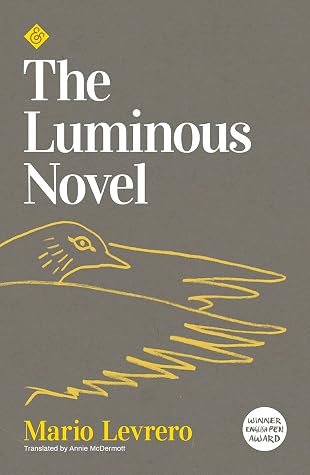
In the early hours of yesterday morning, I began. Although really I should say ‘I continued’, since I’ve decided to use the small amount I wrote in January too. It’s been happening for a while now that when I get into bed, I work on the text in my head, or rather I work on the images, or the mood, of what I want to write, and often I find myself mentally putting it into words. Early yesterday morning I was outlining yet again how I’d continue the story I began in January, when I saw quite clearly that I was going round in circles and getting nowhere; that I was forever thinking, ‘I’ll write it tomorrow,’ the way you might think about beginning a diet or a plan to quit smoking. But today I said: ‘Tomorrow doesn’t exist and it never will. The project won’t happen at this rate. I need to write down what I’m thinking this instant, because when I wake up tomorrow I’ll get tangled up in the thousand things I get tangled up in every day and the text will go on being postponed until it’s time to go to bed and … ’ And although I was already wearing the clothes I sleep in, I turned the computer on – configured to the user who’s a writer – and started to type. I don’t know how it turned out, but when I went to bed seventy minutes later I’d stopped feeling guilty.
Before that, I moved through the city like a sleepwalker; although my eyes were open, I saw no more than the bare minimum I needed in order to get where I had to go. But then, in the time opened up by the green-eyed gaze, the city filled all three, or four, of its dimensions; I lived in it, breathed in it and breathed it in, coming to know its pleasant and not-so-pleasant smells. I began to pick up on the slight sadness of particular neon lights glimmering on particular pavements, or the fleeting joy of an unexpected reflection – the red of a car in a torrent of water, traffic lights on rainy nights (the jubilation of the brilliant red or the gentle purity of the green, wet from the rain and bouncing off the asphalt; marble walls or the shiny surfaces of cars, which contrasted with the sweet, infinite sadness of those meek, tireless March and April showers that fell endlessly onto a city carpeted by the plane trees’ yellowish-brown leaves). Yes, there are happy autumns, just as there is happiness in sadness and even in despair: the point is to be alive and to know it, to feel it – and I curse and curse the dull fear of these long years, when all our lives are gradually drying out, dwindling, reducing, with never any place for sadness: nothing but fear, nothing but hatred, nothing but that long-lost, oft-hidden morsel of hope, worn out from so much manhandling, from our longing to squeeze just a few more drops from it, a few more drops to get us through the present with its shrinking horizons and impenetrable lead roof; and oh, how I also came to hate this city, which was falling to pieces, which was burying us under ever-higher walls and rubble and dust and noise and silence and shame.
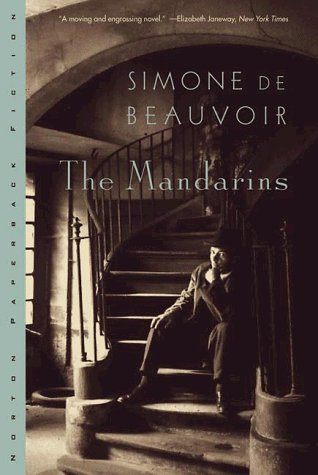
To have been a Party member in Russia in 1930 wasn't a mistake,' Dubreuilh said.
'If you have no right to make a mistake, it was a crime.'
'It's not a question of right,' Dubreuilh replied.
'How dare you set yourselves up as judges?' Scriassine said, without listening to him. 'Do you know Volange's reasons, his explanations? Are you sure that all the people you accept on your team are better men than he?'
'We don't judge,' Henri said. 'We choose sides. There's a big difference.'