
by
Joanna Biggs
advice/living
Helen Garner,
Simone de Beauvoir,
Constance Debré,
Jennifer Egan,
Sally Rooney,
Jonathan Franzen,
Patricia Highsmith,
Vivian Gornick,
Mario Levrero
just like life advice. ideally philosophical rather than pragmatic

[...] “I was a madly gay little girl,” she writes, though what I noticed most in her description of her childhood wasn’t her happiness but her confidence. She had appalling handwriting (Sartre used to complain about it) and always “made a mess of hems,” but “as soon as I was able to think for myself, I found myself possessed of infinite power . . . when I was asleep, the earth disappeared; it had need of me in order to be seen, discovered and understood.” Her confidence, which never left her (“I have almost always felt happy and well adjusted,” she said at sixty-four, “and I have trusted in my star”), is astonishing. I have never known a woman, in person or in print, who talks about herself the way Simone de Beauvoir does. That preternatural conviction makes sense of the teenage Simone rejecting God and the social code of the bourgeoisie she was born into; the woman in her twenties believing that she was her lover’s essential love despite evidence to the contrary; the thirty-something deciding to write a book about the female condition; the fifty-year-old producing a 2,000-page autobiography. One day, while drying the dishes her mother was washing, she caught sight of the wives in the windows opposite doing the same thing, and had a vision of domestic life as a horrifying mise en abyme. “There had been people who had done things,” she said to herself. “I, too, would do things.” [...]
<3

Now, me … if they said I had a year to live, I’ll bet I would just swim out to sea, get it over with. But Sally, it is as if the sentence had been a gift. Maybe it’s because she fell in love with Xavier the week before she found out. She has come alive. She savors everything. She says whatever she wants, does whatever makes her feel good. She laughs. Her walk is sexy, her voice is sexy. She gets mad and throws things, hollers cusswords. Little Sally, always meek and passive, in my shadow as a girl, in her husband’s for most of her life. She is strong, radiant now; her zest is contagious. People stop by the table to greet her, men kiss her hand. The doctor, the architect, the widower.
Jesse made everybody feel important. He wasn’t kind. Kind is a word like charity; it implies an effort. Like that bumper sticker about random acts of kindness. It should mean how someone always is, not an act he chooses to do. Jesse had a compassionate curiosity about everyone. All my life I have felt that I didn’t really exist at all. He saw me. I. He saw who I was. In spite of all the dangerous things we did, being with him was the only time I was ever safe.

Too late. I tilt my head at the roof. Rolph and I sat up there a whole night once, spying down on a party Lou was having for one of his bands. Even after the noise stopped, we stayed, our backs on the cool tiles. We were waiting for the sun. It came up fast, small and bright and round. “Like a baby,” Rolph said, and I started to cry. This fragile new sun in our arms.
Every night, my mother ticks off another day I’ve been clean. It’s more than a year, my longest yet. “Jocelyn, you’ve got so much life in front of you,” she says. And when I believe her, for a minute, there’s a lifting over my eyes. Like walking out of a dark room.

But this was no good, this line of thought. This was the thinking that had kept every woman from her greatness. There did not have to be an answer to the question why; everything important started out mysterious and this mystery was like a great sea you had to be brave enough to cross. How many times had I turned back at the first ripple of self-doubt? You had to withstand a profound sense of wrongness if you ever wanted to get somewhere new. So far each thing I had done in Monrovia was guided by a version of me that had never been in charge before. A nitwit? A madwoman? Probably. But my more seasoned parts just had to be patient, hold their tongues—their many and sharp tongues—and give this new girl a chance.
does the girl in stunt think this?

There was a lovely woman with whom, as a young man, I was smitten. She seemed to have similar feelings for me. We flirted in a harmless way at work (we were concierges at a well-known upscale New York boutique hotel, I won’t say the name but you’d have heard of it). I was married at the time, too young and unhappily, but we’d had an accidental child and I was doing the responsible thing. This is me in a nutshell. I am responsible. I am a good man. I always do the right thing. But is doing the right thing the right thing? Or is doing the right thing the cowardly thing? The thing that doesn’t make waves? The thing with which others cannot find fault? If romantic films have taught us anything, it is that by being responsible we are being irresponsible—to ourselves. To the cosmos. To the narrative. Even to those we need to wrong terribly by leaving them. Because is not it better to be honest with her, him, thon? I think perhaps it is. In the end, my marriage fell apart anyway. She became smitten with an art critic, a mediocre one at that. But it was too late. My Concierge to Merge (as we once jokingly referred to each other) also married an art critic. A separate art critic, although equally mediocre. One marvels at the accidental symmetry of life. And she was happy, ecstatically so, she told me, although I always felt she sounded a tad defensive. And my life was ruined. And I aged. And I look unhappy, ecstatically unhappy. And I don’t sleep at night. And I take pills to help me cope. And it’s not only her, although if I had her, I feel certain I would be fine with every other disappointment, but I don’t, so my professional failures come to the fore. In a sense, the same brand of cowardice that kept me from pursuing my true love kept me from pursuing my true chosen profession. Oh, I made one movie. I made it on a shoestring with money I had borrowed from my wealthy-by-marriage sister. It didn’t do for my career what I had imagined it would, what to this day I believe it should have. It is, and I say this as an objective professional critic with a PhD in the cinema of postwar Europe, perhaps the single most brilliant film of the last twenty years. Certainly, there were problems with it. I won’t say there weren’t. For one thing, it was decades ahead of its time. For another, I concede, it was perhaps too emotionally draining for audiences. Most goers are not looking for an experience that unrelentingly intense, that devastatingly heartbreaking, an experience that will change them forever. And then there were the critics, who were, in a word, jealous. They all want to be filmmakers themselves but do not have the talent, so they expressed their rage with a slew of moderately negative reviews. In some cases, they refused to review it at all.

And what of the fascisms in each of us who would be anti-fascist? “Kill the cop inside your head!” goes the anarchist dictum. As philosopher John Protevi noted in his 2000 essay, following Deleuze and Guatarri, “A thousand independent and self-appointed policemen do not make a Gestapo, though they may be a necessary condition for one.” How do we remove ourselves as participants in such a condition? Easier said than done. We cannot simply be anti-fascist; we must also practice and make better habits, forms of life. Rather than as a noun or adjective, anti-fascist as a gerund verb: a constant effort of anti-fascisting against the fascisms that even we ourselves uphold. Working to create nonhierarchical ways of living, working to undo our own privileges and desires for power. The individualized and detached Self, the over-codings of family-unit normativity, the authoritarian tendency of careerism—all of them paranoiac sites of micro-fascism in need of anti-fascist care. Again, easier said than done. But better than a faulty approach to anti-fascism that frames it as some pure position, when it is anything but. We act against fascists in the knowledge we need to act against ourselves, too. The strategy is always to create consequences for living a fascist life and seek anti-fascist departures.
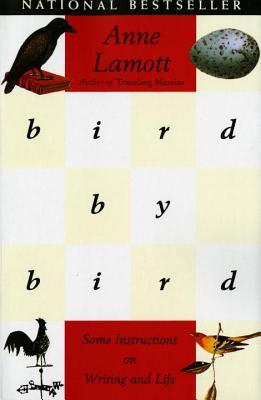
All that I know about the relationship between publication and mental health was summed up in one line of the movie Cool Runnings, which is about the first Jamaican bobsled team. The coach is a four-hundred-pound man who had won a gold in Olympic bobsledding twenty years before but has been a complete loser ever since. The men on his team are desperate to win an Olympic medal, just as half the people in my classes are desperate to get published. But the coach says, "If you’re not enough before the gold medal, you won’t be enough with it." You may want to tape this to the wall near your desk.
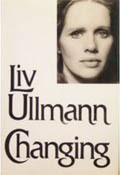
It never occurred to me that there must have been a number of losers that day. Future colleagues whom I would meet a long time later in a tour bus. That we would lightly trade back and forth the young people we once were, with laughter and distance.
Then I only had Grandma. By morning I was with her, and I cried my heart out. Sobbed on a breast which never had harbored the dream that now was crushed within me. In the span of a night everything that was customary and familiar had been stripped away, and I was in the middle of a transition. There was something to be learned from this, something hard to understand: that one carries one’s fate within oneself, one’s fate is not dependent on this kind of failure or success.
To become conscious is a long process, to become open to sorrow, look upon it as part of living, of developing, of changing.
A year in Oslo, where the first few months of loneliness are what I remember best. Where not being able enough, talented enough, was the big sorrow. Months that seemed endless, without any goal or meaning. Carefully jotted down in a blue diary that I still have, written by a young girl who lived long ago. Pains that I no longer recall, joys that are no longer a part of me.
Nora stands in the door and says: “I don’t know what will become of me. I don’t know where I am going. I only know that I can no longer bother about what others say. I must find my own way.”
Is this not where life’s possibilities lie? Not necessarily to arrive, but always to be on the way, in movement.
Also in love.
Also with the same hand in mine—if I am lucky.
<33