
advice/living
Helen Garner,
Simone de Beauvoir,
Constance Debré,
Jennifer Egan,
Sally Rooney,
Jonathan Franzen,
Patricia Highsmith,
Vivian Gornick,
Mario Levrero
just like life advice. ideally philosophical rather than pragmatic
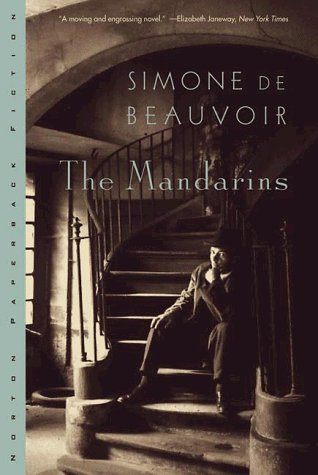
'Being a war correspondent is more or less defensible. But a "peace" correspondent — I can't see it,' Lambert said, adding spiritedly, 'Yes, it's well worth it, being the kind of journalist you are; it's a real adventure. But being an editor, even with L'Espoir, wouldn't mean anything to me unless I had to earn my living by it. On the other hand, living off my income would give me a bad conscience.' He hesitated and then continued, 'My mother left me too damned much money; no matter what, I'll have a bad conscience.'
'And so does everyone else,' Henri said.
'But everything you have, you earn. There's no question about that.'
'No one ever has a perfectly clear conscience,' Henri said. 'For example, it's utterly childish for me to be eating here when I refuse to go to black-market restaurants. All of us have our little tricks. Dubreuilh pretends to look upon money as a natural element. He has a hell of a lot of it, but he does nothing to earn it, never refuses anyone a loan, and leaves it up. to Anne to manage it. And as for Anne, she puts her mind at rest by not considering it as her own; she tells herself she's spending it for her husband and her daughter, making a comfortable life for them which she, by chance, happens to profit from. The thing that helps me is that I have a devil of a time balancing my budget; it gives me the feeling that I don't have anything to spare. But that's just another way of cheating, too.'
'Still there's a difference.'
Henri shook his head. 'When conditions are unfair, you can't very well live a blameless life. And that's the real reason for going into politics — to try to change conditions.'
AHHH
'He's a monster,' Anne said. 'He'd work in the ruins of Hiroshima.'
'He is working in the ruins of Hiroshima.'
'Why not?' Dubreuilh asked. 'There have always been ruins somewhere.'
can't disagree
[thinking of lives on the left - the history of the left is a history of defeat]
[EDIT it's actually Left Hemisphere and the line is In the beginning was defeat lol. i misremembered everything]
All the next day, Henri kept thinking about the conversation he had had with Dubreuilh, a conversation that had continued late into the night. The only question, Dubreuilh declared, was to choose, among existing things, those you preferred. It wasn't a question of resignation; you resign yourself when, between two real things, you accept the one which is worth less. But there was nothing above humanity, even such as it was. Yes, on certain levels, Henri agreed. Preferring emptiness to fullness was what he had blamed Paula for; she had clung steadfastly to old myths instead of taking him as he was. Conversely, he had never sought 'the ideal woman' in Nadine; he had chosen to live with her in spite of knowing her faults. It was especially when you thought of books and works of art that Dubreuilh's attitude seemed justified. The books you want to write are never written, and you can amuse yourself by seeing a defeat in every masterpiece. And yet, we don't dream of a superterrestrial art; the works we prefer command our absolute love. On the political level, however, Henri felt less convinced — because evil intervenes there. And it isn't always just a lesser good; it can be the absolutes of misery, of death. But then again, if you attach importance to misery, to death, to individual men, it isn't enough to say to yourself, 'Anyhow, it's a sad business,' to feel authorized to wash your hands of it. It is essential that it be more or less sad. Evening was falling and Henri was musing under the linden tree when Anne appeared in the doorway.
<3
She began going through the press clippings, and Henri opened a letter, a very amiable letter from a young man. There were a lot of amiable letters, and usually they pleased him. But that night, without quite knowing why, it irritated him to think that in the eyes of certain people he passed for a splendid specimen of humanity. The clock struck ten. Dubreuilh was speaking out against war, but Henri suddenly wished he were in his place. He had often said to himself, 'War is like death: there's no use preparing for it.' But when an aeroplane starts into a nose-dive, it's better to be the pilot who's trying to pull out of it than a terrorized passenger. Doing something, even though it were only speaking, was better than sitting by himself in a corner with that dark weight on his heart. Henri pictured the hall filled with people, their faces upturned towards Dubreuilh, Dubreuilh bent towards them, throwing out words. There was no room in them for fear, for anguish; together, they were hoping. After it was over, Dubreuilh would go to a bistro, a very ordinary bistro, and eat sausages and drink wine. No one would have very much to say, but they would feel good. Henri lit a cigarette. You don't prevent a war with words. But speaking was not necessarily a way of changing history; it was also a certain way of living it. In the silence of that study, given over to his innermost nightmares, Henri felt he was living it poorly.

Apparently Seneca believed widows should be permitted to mourn their husbands for ten months maximum, a precept meant to counteract the stubbornness of female grief, but what had any ancient man ever really known about any female anything? How could any of them have been so sure that it wasn’t all an act, that she wasn’t a bit pleased, that it wasn’t just relief that led a widow to dwell in her black? What says leave me alone better than a veil?
Still, sure, I could see how there might be value in putting time limits—though not prohibitions—on mourning:
For to be afflicted with endless sorrow at the loss of someone very dear is foolish self-indulgence, and to feel none is inhuman callousness. The best compromise between love and good sense is both to feel longing and to conquer it.

[...] Yes, my own personal brain chemistry is something I must reckon with, but doing so while navigating a cruel health care system, with the goal of remaining healthy enough to face a laughably uncertain financial future, all in service to surviving a world that is everywhere immiserating, hardly seems a good way to answer “how do I live.”
The best answer I’ve managed to come up with is that you live with intention of making that question easier for other people to answer. For me, the worst aspect of chronic depression (besides the boredom of it all) is the urge to be alone. If you’ve read my previous columns, you’ll notice that I almost always find a way to bring up our beholdenness to others. This is because I’m a lazy writer, but also because the fact of mutual obligation is what gives me the motivation to write at all. It’s also what animates any politics worth having.
I’m not sure if that’s an answer, really, and maybe we all need to fumble towards our own. All I know is that my occasional inability to bear the world is, in meaningful ways, a response to living in a world made unbearable. This can bring you to despair or it can bring you to purpose — today I chose the latter, and I hope I do again tomorrow.
Twenty years ago when I moved to Washington and went to Don Giovanni starring Erwin Schrott, I did not know that I was destined for a decade of increasing heartaches culminating in a bonanza of heartache that ultimately calibrated my soul with insight my soul had been waiting for its whole life. Till then I never understood the adage that failure and despair can be elucidating and strengthening. All that was unbeknownst to me twenty years ago.
<3
There’s a real closeness between imagination and forgiveness. I mean that in a phenomenological way. If you notice where you go when you have to forgive someone, it’s the place of supply, the place of extra. I think it’s worth spending a lot of time attending to that, so that when chance or fate or whatever it is knocks a poem your way, you’re ready. That’s why I’m quite often driven to say that it’s more important to do the work on one’s character than on the words. Don’t surround yourself with dictionaries. What really is nauseating in a poem is when you smell somebody trying to be a poet, and when it’s yourself, that’s just the worst of all. But a voice is such an incredible thing. When you think of how each person resonates differently and their physical voice comes out of this space that is tuned by tension and confidence and generosity—that’s the best thing you have.

I want to look, really look, at the world—but I find I do not want to look at it as an explanation for what is wrong with me. I don’t want to be forgiven. I want unkindness, from myself and from the world, because it is unkindness that has to be reckoned with, that makes me feel awake. I want to be punished; I want the stimulation of struggle. But it seems in order to do this I have to consider that the world does not owe me anything. I want to look at the world because despite the fact that it is unkind, it is also interesting, and full, and endlessly entertaining.
I forget this, during my worst winter and my most unmotivated months; I forget that there are stories to be chased that have nothing to do with me. I ask my therapist to help me remember these stories, these reasons to get out of bed in the morning. I ask her to help me re-want to learn about the world again—about literature, and philosophy, and ideas that continue to exist and exhilarate no matter how much money I have or will ever have, no matter how overworked I am and will certainly continue to be forever. She says that I am focusing on other things because I do not want to talk about myself: about how the boy I loved that winter had disappeared, about why I am fighting with my mother or about the fact that I am drowning in job applications. I need to do something nice for myself, she says, over and over again.
So should we just reject the “idea of harmony”? Adorno said not. The idea that a good work of art “embodies the contradictions, pure and uncompromised, in its innermost structure” doesn’t mean that it should contain contradiction as a general principle. True, good art doesn’t blithely lie about the continuing existence of disharmony by creating, as most pop music does, a naïvely harmonious tune. But nor does good art simply mirror our disharmonious society by creating irrationally dissonant works, as Shields seems sometimes to recommend. That’s just bad art, like my country cover of a metal song.
In between these two bad options, the best works of modern art express the broken relationship between individual and world by embodying the specific contradiction of our society: economic ends have taken precedence over human ones. So Adorno’s preference was for works constructed with painstaking care; such works (e.g., Beckett, Berg), perhaps despite themselves, hold onto the idea, the final goal, of social harmony. No matter how depressing their content, the forms of Endgame and Wozzeck are utopian. They’re internally inconsistent, but not in a capricious or random way; rather, their contradictions are an image of our own. They’re also moving and effective, incredible artistic achievements—and that achievement in itself is an imperfect image of what we could do, if our interests and our society matched up. Whether such works should take the form of fiction or nonfiction is an irrelevant and even an uninteresting question, from this perspective. Adorno’s continual plea was: don’t replicate the world by acting the way the world acts, because then you’ll just be a part of a bad society; but don’t lie about it, either, because change will only come when we understand the problem