
by
Sarah Polley
advice/living
Helen Garner,
Simone de Beauvoir,
Constance Debré,
Jennifer Egan,
Sally Rooney,
Jonathan Franzen,
Patricia Highsmith,
Vivian Gornick,
Mario Levrero
just like life advice. ideally philosophical rather than pragmatic

Now in my forties, I have changed in ways that reach far beyond the limits of my concussion recovery. I know now that I will become weaker at what I avoid, that what I run towards will strengthen in me. I know to listen to my body, but not so much that I convince myself I can’t do things or that I can’t push myself; not so much that I can use the concept of listening to my body as a weapon against my vitality. I do the highway drive I’m nervous about doing. I prepare to make a film. I write the book I’ve always wanted to write. “Run towards the danger” is a way of being that I have taken into my life with me; a treasure, a spell, a sword.

He comes, every night. He doesn’t text me during the day or give me any notice. I text him if it’s not a good night. If David is in town. He always comes even if just to tell me he can’t come, that Clémentine is staying home. Usually this is just after she has come over herself, so I already know, and he’s come straight from work. I don’t want to ask too many questions, about how this works for him, or for them, lest I should lean on it too heavily, and make it collapse. I try to remain open, open to whatever there is, in this strange parabola in my life, this pocket, in which so much is held.
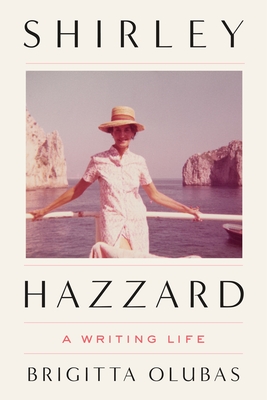
The Auden scholar Edward Mendelson described her as, above all, civilised: “There was a sense Shirley had, it was not courtesy, it was a sense of your value as a human being. It wasn’t a demand, it was that she assumed good motives on your part, civilised motives.” The intimacy of her conversation or friendship was itself reserved; “One loved her,” Mendelson said, “without there being a centre of herself that one loved. One loved her attributes—generosity, her sweetness, her learning, her sense that you were better than you were.” She also had “an absence of irrational hatreds and passions,” a commitment to “see in everyone the best they have.” She made a similar observation herself about her friend the poet James Merrill: “He had the generous talent of bringing out the best in his friends; one rose to his articulate occasion.” There was also a sense of serenity about her own place in the world, Mendelson felt: “She didn’t seem to care if you admired her work or not … She didn’t want anything from you. She wanted a sense of being part of your world of excellence … It was not that she felt ‘I am a famous person and I am being generous to you,’ she was absolutely at peace with herself.” That serenity embraced a notable reserve; despite her loquacity and her generosity, it was clear that there were things she chose not to disclose. The writer Matthew Specktor recalled her as “very very well defended” and described her use of conversation, admiringly—“she spoke in arias”—as a form of filibuster. Amanda Vaill, one of her editors at Viking, saw some of The Transit of Venus’s Caro Bell in her, a quality not exactly of reserve or aloofness but more of “being able to hold herself apart from a discussion … It was observant … She wasted nothing. She didn’t throw things away. She kept them.” And, Alec Wilkinson noted, she made judgments: “There was something so avid about her intellect; an intelligence that couldn’t help but take the measure of all it saw.”
The Auden scholar Edward Mendelson described her as, above all, civilised: “There was a sense Shirley had, it was not courtesy, it was a sense of your value as a human being. It wasn’t a demand, it was that she assumed good motives on your part, civilised motives.” The intimacy of her conversation or friendship was itself reserved; “One loved her,” Mendelson said, “without there being a centre of herself that one loved. One loved her attributes—generosity, her sweetness, her learning, her sense that you were better than you were.” She also had “an absence of irrational hatreds and passions,” a commitment to “see in everyone the best they have.” She made a similar observation herself about her friend the poet James Merrill: “He had the generous talent of bringing out the best in his friends; one rose to his articulate occasion.” There was also a sense of serenity about her own place in the world, Mendelson felt: “She didn’t seem to care if you admired her work or not … She didn’t want anything from you. She wanted a sense of being part of your world of excellence … It was not that she felt ‘I am a famous person and I am being generous to you,’ she was absolutely at peace with herself.” That serenity embraced a notable reserve; despite her loquacity and her generosity, it was clear that there were things she chose not to disclose. The writer Matthew Specktor recalled her as “very very well defended” and described her use of conversation, admiringly—“she spoke in arias”—as a form of filibuster. Amanda Vaill, one of her editors at Viking, saw some of The Transit of Venus’s Caro Bell in her, a quality not exactly of reserve or aloofness but more of “being able to hold herself apart from a discussion … It was observant … She wasted nothing. She didn’t throw things away. She kept them.” And, Alec Wilkinson noted, she made judgments: “There was something so avid about her intellect; an intelligence that couldn’t help but take the measure of all it saw.”

After making my way through some pine groves and alder scrub I came to the bog. No sooner had my ear caught the hum of diptera around me, the guttural cry of a snipe overhead, the gulping sound of the morass under my foot, than I knew I would find here quite special arctic butterflies, whose pictures, or, still better, nonillustrated descriptions I had worshiped for several seasons. And the next moment I was among them. Over the small shrubs of bog bilberry with fruit of a dim, dreamy blue, over the brown eye of stagnant water, over moss and mire, over the flower spikes of the fragrant bog orchid (the nochnaya fialka of Russian poets), a dusky little Fritillary bearing the name of a Norse goddess passed in low, skimming flight. Pretty Cordigera, a gemlike moth, buzzed all over its uliginose food plant. I pursued rose-margined Sulphurs, gray-marbled Satyrs. Unmindful of the mosquitoes that furred my forearms, I stooped with a grunt of delight to snuff out the life of some silver-studded lepidopteron throbbing in the folds of my net. Through the smells of the bog, I caught the subtle perfume of butterfly wings on my fingers, a perfume which varies with the species—vanilla, or lemon, or musk, or a musty, sweetish odor difficult to define. Still unsated, I pressed forward. At last I saw I had come to the end of the marsh. The rising ground beyond was a paradise of lupines, columbines, and pentstemons. Mariposa lilies bloomed under Ponderosa pines. In the distance, fleeting cloud shadows dappled the dull green of slopes above timber line, and the gray and white of Longs Peak.
I confess I do not believe in time. I like to fold my magic carpet, after use, in such a way as to superimpose one part of the pattern upon another. Let visitors trip. And the highest enjoyment of timelessness—in a landscape selected at random—is when I stand among rare butterflies and their food plants. This is ecstasy, and behind the ecstasy is something else, which is hard to explain. It is like a momentary vacuum into which rushes all that I love. A sense of oneness with sun and stone. A thrill of gratitude to whom it may concern—to the contrapuntal genius of human fate or to tender ghosts humoring a lucky mortal.

During a conversation two years earlier, when I was already unhappy enough to consider leaving, I told Harriet I was worried about the harm I would cause if I left. She told me I was right to worry. I would cause harm. She also told me no one moves through this world without causing harm. I’d wanted her to say, Don’t be crazy! You won’t cause any harm! Or at least, You’re in so much pain, you deserve to cause harm!
But she hadn’t said either of these things. What she said instead was neither condemnation nor absolution. It was just this: You have to claim responsibility for the harm you cause. You have to believe it’s necessary.
<3
In my firehouse days, a friend told me that surviving divorce isn’t about getting what you want, because you won’t. It’s about making the best life you can, with what you get.
good principles to live by

We live uneasily the only way we know how, ever more anxious that the earth under our feet is turning to quicksand, while a fierce wind howls at the horizon. Hauling oneself out of one’s elemental presence-ism and presentism is nearly impossible: all the institutions, structures, and systems we live within are predicated on the indefinite persistence of the present. These are the structures and systems and institutions that give our choices meaning, connect us with each other, allow us to see our lives not as transient, atomistic accidents but as coherent, organic parts of a greater whole. Yet as the world changes around us, we are increasingly aware that something is wrong: the future isn’t what it used to be, and the temporal stability we depend on to give our present reality the illusion of persistence seems less and less reliable. We begin to wonder whether thinking fifty, thirty, twenty, or even five years into the future makes any sense, since the global transformation that seems to be steadily approaching—whether for good or for ill, through revolution or through collapse—will overturn everything we hold dear. We find ourselves existentially threatened by ecological collapse and climate change not only in the material sense that it will lead to vast human suffering and billions of deaths but also in a philosophical or psychological sense, in that the promise of imminent catastrophe—or revolution—threatens to make our present day-to-day life meaningless.
fuck

This essay on the loss of grace in tennis speaks then to the passing of a writer's first ecstatic access to creation. Wallace mourns the loss and maps a paradox that would become the seed idea of later work. The paradox is that although we need to live in peaks, these hypostatic highs of sex, success, religion, love, creation, conception, childbirth, or yes sports, we can only fully appreciate the peaks when they are passed and passing. Why? Because ecstasy's power lies in its wordlessness, its ability to make of us a happy holy blank. Because appreciation is a branch of thought, it is only in falling, in coming down from ecstasy, that we can know that we have briefly touched the ultimate. It is only in the falling too that we try to find words for the sublime [...]

How brave of you to go on, to work, to write, in prison, after such a defeat for the Movement, after your partner’s death, people had used to say. Damn fools. What else had there been to do? Bravery, courage — what was courage? She had never figured it out. Not fearing, some said. Fearing yet going on, others said. But what could one do but go on? Had one any real choice, ever?
To die was merely to go on in another direction.