
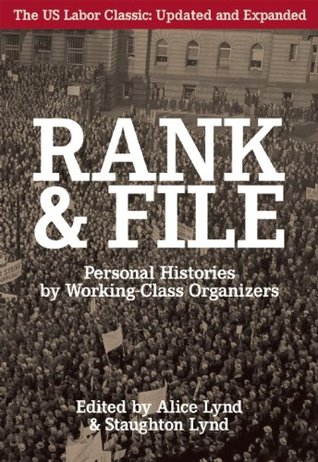
by
Alice Lynd,
Staughton Lynd
(editors)
83
Women had an awfully tough time in the union because the men brought their prejudices there. The fellows couldn't believe that women in the union were there for the union's sake. They thought that they were there to get a guy or something else. Some thought that we were frivolous. I would be approached by men for dates and they would ask me why I was in the union, so I would tell them that I was for socialism and I thought that this was the only way of bringing it about.
Women had an awfully tough time in the union because the men brought their prejudices there. The fellows couldn't believe that women in the union were there for the union's sake. They thought that they were there to get a guy or something else. Some thought that we were frivolous. I would be approached by men for dates and they would ask me why I was in the union, so I would tell them that I was for socialism and I thought that this was the only way of bringing it about.
85
About socialism, you didn't talk about socialism per se. You talked about issues and saw how people reacted. You talked about how one could attain these things. The only time I ever heard anyone from the union talk about socialism outside of the small meetings was the head of another CIO local, a Scotsman. After negotiations and they didn't get all they wanted, the guys were turning down the contract. He said, "Look, you bunch of bastards, you're not going to get all of this stuff, not until you have socialism." That's the way he put it to them and I thought it was great. "This is a limited contract under capitalism." I think the workers got the message. It all depends what your relationship is to the people you are talking with.
About socialism, you didn't talk about socialism per se. You talked about issues and saw how people reacted. You talked about how one could attain these things. The only time I ever heard anyone from the union talk about socialism outside of the small meetings was the head of another CIO local, a Scotsman. After negotiations and they didn't get all they wanted, the guys were turning down the contract. He said, "Look, you bunch of bastards, you're not going to get all of this stuff, not until you have socialism." That's the way he put it to them and I thought it was great. "This is a limited contract under capitalism." I think the workers got the message. It all depends what your relationship is to the people you are talking with.
110
This is, I think, the normal growth which occurs when labor unions and most other organizations become legitimate and old and part of the general situation of the country. At the same time, I think it important to realize that the growth of the union in this country has changed the bond. We no longer have many of the sweatshops we had in the '20s and early '30s, or the terribly low wages we had before. The union taught the system-taught the industrialists of this country-that it is possible to pay decent wages and pro- vide decent working conditions and still make a fortune. In fact the steel mills make more money now.than they ever made before. They do it by paying people a fairly decent wage and by working people not nearly so hard as they were worked in the past. The union has taught the companies how to make money through recognizing the union organization. And the government and the employers have learned how to adopt, co-opt, and engulf the union and make it a part of the establishment. And in making it part of the establishment they took the guts, the militancy, and the fight out of the people who work for a living.
This is, I think, the normal growth which occurs when labor unions and most other organizations become legitimate and old and part of the general situation of the country. At the same time, I think it important to realize that the growth of the union in this country has changed the bond. We no longer have many of the sweatshops we had in the '20s and early '30s, or the terribly low wages we had before. The union taught the system-taught the industrialists of this country-that it is possible to pay decent wages and pro- vide decent working conditions and still make a fortune. In fact the steel mills make more money now.than they ever made before. They do it by paying people a fairly decent wage and by working people not nearly so hard as they were worked in the past. The union has taught the companies how to make money through recognizing the union organization. And the government and the employers have learned how to adopt, co-opt, and engulf the union and make it a part of the establishment. And in making it part of the establishment they took the guts, the militancy, and the fight out of the people who work for a living.
153
My father, who was crippled and alcoholic, wouldn't go on WPA. He was too proud to go on WPA. He didn't believe in taking help. He had been a salesman; he sold tires. He was a good salesman but he was pushed into the sales mold because he had a club foot. Alcoholics Anonymous started in Akron, and my father was one of the early recruits-prominent in AA until he died. He always regarded the Depression as his own personal fault, and refused to lump himself into an abstract statistic.
lol
My father, who was crippled and alcoholic, wouldn't go on WPA. He was too proud to go on WPA. He didn't believe in taking help. He had been a salesman; he sold tires. He was a good salesman but he was pushed into the sales mold because he had a club foot. Alcoholics Anonymous started in Akron, and my father was one of the early recruits-prominent in AA until he died. He always regarded the Depression as his own personal fault, and refused to lump himself into an abstract statistic.
lol
155
I was a senior in high school when the sit-down strike of 1936 happened. It was winter, Akron's coldest winter up to that time. They had shanties set up along the "longest picket line in the world," built out of waste wood. They each had a name: "Mae West," or "Orphan Annie," or "Toonerville Trolley." We used to sit in the huts and drink Dago Red and coffee with the guys on strike. And they held a mass meeting in Central High School auditorium. This was in my high school. And I'll tell you, watching them pour into that auditorium was like watching the storming of the Winter Palace. We had a lot of physical evidence to make us accept the doctrine of the class struggle. The only catch was that we wanted it to be our class struggle, not the property of a commissar.
And when they came down the street for a collection for the striking rubber workers, they went to the pool rooms, they went to the butcher shop, they went to my grandfather's store, and they went to the whorehouse. Everybody chipped in. Everybody knew, "These are our boys. If they don't make it, we don't make it." The idea of community solidarity was pretty well impressed on me at that time. In those days, when somebody carried the title of "committeeman" it had all the weight, in our neighborhood, of "coun- cilman" or "alderman" today.
I was a senior in high school when the sit-down strike of 1936 happened. It was winter, Akron's coldest winter up to that time. They had shanties set up along the "longest picket line in the world," built out of waste wood. They each had a name: "Mae West," or "Orphan Annie," or "Toonerville Trolley." We used to sit in the huts and drink Dago Red and coffee with the guys on strike. And they held a mass meeting in Central High School auditorium. This was in my high school. And I'll tell you, watching them pour into that auditorium was like watching the storming of the Winter Palace. We had a lot of physical evidence to make us accept the doctrine of the class struggle. The only catch was that we wanted it to be our class struggle, not the property of a commissar.
And when they came down the street for a collection for the striking rubber workers, they went to the pool rooms, they went to the butcher shop, they went to my grandfather's store, and they went to the whorehouse. Everybody chipped in. Everybody knew, "These are our boys. If they don't make it, we don't make it." The idea of community solidarity was pretty well impressed on me at that time. In those days, when somebody carried the title of "committeeman" it had all the weight, in our neighborhood, of "coun- cilman" or "alderman" today.
160
[...] there was no smoking in the shop. I worked in the fifth floor tire room, and you had to go all the way down the stairs and walk about two city blocks to a railroad siding, where you could smoke. And we were all on piecework. The only way you could afford time for a smoke was if you had rates good enough to allow you to take the time off. You had to pay for your own sins. They sent around chow wagons, packaged foods. We never touched them. We'd shut our machines down, wash our hands and faces, go out of the plant and across the street and have a meal like a human being. We were allowed twenty minutes, but we took fifty and paid for it.
[...] there was no smoking in the shop. I worked in the fifth floor tire room, and you had to go all the way down the stairs and walk about two city blocks to a railroad siding, where you could smoke. And we were all on piecework. The only way you could afford time for a smoke was if you had rates good enough to allow you to take the time off. You had to pay for your own sins. They sent around chow wagons, packaged foods. We never touched them. We'd shut our machines down, wash our hands and faces, go out of the plant and across the street and have a meal like a human being. We were allowed twenty minutes, but we took fifty and paid for it.
162
I always knew in a fight - a picket line, or a union meeting, or a political faction struggle - whether somebody was on my side or not. You learn to recognize the cohorts who will be there when the chips are down. The chips were down about all the time. I'm proud to say that my closest friends today are men and women who were with me in these struggle situations thirty-five years ago.
They always said that anybody from the radical movement in Akron had a certain look around their eyes. We were mavericks in the radical labor movement. We were intellectualized activists. We fought every battle there was to fight. Student fights. Unemployed fights. Anti-ROTC fights. Anti-conscription fights. Anti-Legion fights. Anti-management fights. Anti-Union-boss fights. Anti-CP fights. Anti-Jim Crow fights. You name it. We were there.
<3
I always knew in a fight - a picket line, or a union meeting, or a political faction struggle - whether somebody was on my side or not. You learn to recognize the cohorts who will be there when the chips are down. The chips were down about all the time. I'm proud to say that my closest friends today are men and women who were with me in these struggle situations thirty-five years ago.
They always said that anybody from the radical movement in Akron had a certain look around their eyes. We were mavericks in the radical labor movement. We were intellectualized activists. We fought every battle there was to fight. Student fights. Unemployed fights. Anti-ROTC fights. Anti-conscription fights. Anti-Legion fights. Anti-management fights. Anti-Union-boss fights. Anti-CP fights. Anti-Jim Crow fights. You name it. We were there.
<3
168
There was one time when they wouldn't settle a grievance for the charging car operators. They had increased the tonnage on the furnaces without increasing the rate. We discussed this question with the superintendent: nothing doing. So that night it started to slow down, and by the next morning there were two furnaces where they had to shut the heat off. By that evening there were six furnaces that had to shut the heat off. They settled the grievance in a hurry. Nobody told anybody to strike. There was just that close relationship, working with the people, where they knew what was necessary.
There was one time when they wouldn't settle a grievance for the charging car operators. They had increased the tonnage on the furnaces without increasing the rate. We discussed this question with the superintendent: nothing doing. So that night it started to slow down, and by the next morning there were two furnaces where they had to shut the heat off. By that evening there were six furnaces that had to shut the heat off. They settled the grievance in a hurry. Nobody told anybody to strike. There was just that close relationship, working with the people, where they knew what was necessary.
169
We had a strike in No. 2 Open Hearth when a Negro fellow was refused permission to become a second helper. There were many Southern people who had come in at that time, and were working as third and second helpers. This thing broke out: management refused to give him the job and [management] was supported by the other workers. We held a meeting inside the plant. Gillies, the superintendent, spoke first. He was wishy-washy: "Well fellows, you know what's right and what's wrong, but we can't force you." Then I spoke after Gillies got through. I told them in plain words that this was wrong, that the union would never support them, that this man was entitled to a job regardless of his race. I pointed out to them that discrimination starts, maybe, with a Negro, but next it will go to the Mexican worker, and that it hasn't been long since Mexican workers could not work at this job (and there were Mexican workers there listening), and then it'll go to the Kentuckian, the hillbilly. I said, "Then a so-called hillbilly won't be able to work in a steel mill. And where will it stop?" After that the man was given his job.
We had a strike in No. 2 Open Hearth when a Negro fellow was refused permission to become a second helper. There were many Southern people who had come in at that time, and were working as third and second helpers. This thing broke out: management refused to give him the job and [management] was supported by the other workers. We held a meeting inside the plant. Gillies, the superintendent, spoke first. He was wishy-washy: "Well fellows, you know what's right and what's wrong, but we can't force you." Then I spoke after Gillies got through. I told them in plain words that this was wrong, that the union would never support them, that this man was entitled to a job regardless of his race. I pointed out to them that discrimination starts, maybe, with a Negro, but next it will go to the Mexican worker, and that it hasn't been long since Mexican workers could not work at this job (and there were Mexican workers there listening), and then it'll go to the Kentuckian, the hillbilly. I said, "Then a so-called hillbilly won't be able to work in a steel mill. And where will it stop?" After that the man was given his job.
179
THE WHOLE EARLY PART of my life was dominated by the idea that solutions to all that's wrong lie in individual morality. But my life experience, like that of most people, sent me messages which constantly contradicted this idea. I came to have a different idea, that you had to have a cause that was bigger than you because that was the only real freedom - living at one with a total society rather than just for oneself. It's impossible to know precisely where one gets that idea, but I came to know that the corruption of individual humans is the result of corrupt and outdated institutions.
THE WHOLE EARLY PART of my life was dominated by the idea that solutions to all that's wrong lie in individual morality. But my life experience, like that of most people, sent me messages which constantly contradicted this idea. I came to have a different idea, that you had to have a cause that was bigger than you because that was the only real freedom - living at one with a total society rather than just for oneself. It's impossible to know precisely where one gets that idea, but I came to know that the corruption of individual humans is the result of corrupt and outdated institutions.