
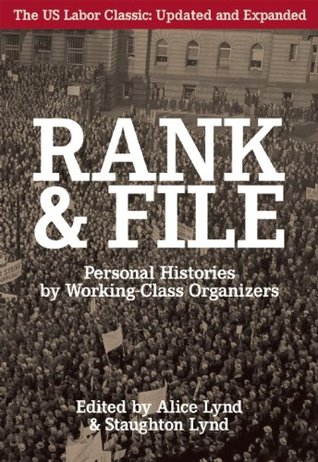
by
Alice Lynd,
Staughton Lynd
(editors)
9
People Who Cannot Be Bought
by Christine Ellis
(missing author)
by Christine Ellis
(missing author)
0
terms
4
notes
18
So the armed caravan in broken down jalopies left our town and headed towards a nearby town where scabs worked the mine. When they arrived at the mine they found the entrance to the mine guarded by southern white women and teenagers armed with shotguns and rifles.
Instead of shooting it out right there on the spot, the union leaders wisely put their guns on the ground and approached the women and youth with outstretched hands. A spokesman said, "We mean you no harm. We don't want to shoot you. We know your men are working for low wages but in doing so they do harm to you and to us. Our children are hungry. All we want is for your men to come out with us. If we all stick together all of us will gain. Our children won't go hungry and neither will yours. We want you in our union so that together we can improve our wages.''
The women and youths listened, put down their guns and allowed a delegation of union miners to go into the mine and talk to the men who were scabbing. The delegation succeeded in getting the men to come out. Then the southerners who had been scabbing joined the caravan and they went from one scab-operated mine to another, only now it was white southerners who acted as spokesmen and convinced the others to come out. In one day the companies were defeated-no one scabbed and the strike was settled and the enmity between southern whites and the immigrants gradually wore itself out.
So the armed caravan in broken down jalopies left our town and headed towards a nearby town where scabs worked the mine. When they arrived at the mine they found the entrance to the mine guarded by southern white women and teenagers armed with shotguns and rifles.
Instead of shooting it out right there on the spot, the union leaders wisely put their guns on the ground and approached the women and youth with outstretched hands. A spokesman said, "We mean you no harm. We don't want to shoot you. We know your men are working for low wages but in doing so they do harm to you and to us. Our children are hungry. All we want is for your men to come out with us. If we all stick together all of us will gain. Our children won't go hungry and neither will yours. We want you in our union so that together we can improve our wages.''
The women and youths listened, put down their guns and allowed a delegation of union miners to go into the mine and talk to the men who were scabbing. The delegation succeeded in getting the men to come out. Then the southerners who had been scabbing joined the caravan and they went from one scab-operated mine to another, only now it was white southerners who acted as spokesmen and convinced the others to come out. In one day the companies were defeated-no one scabbed and the strike was settled and the enmity between southern whites and the immigrants gradually wore itself out.
27
I tried to go up to the house. So one of the detectives jumped up on the steps of the house with a sawed-off machine gun and he says, "The first son-of-a-bitch that sets foot on these stairs is going to have his head shot off.''
Well, you can't let that go unchallenged! So I stepped forward, and behind me comes a young white man, and behind him comes a black man and his wife. And the four of us marched up, right in the face of the sawed-off gun.
When we four went on the stairs the people came out of their houses. They came swarming out and they surrounded the police. And the detective didn't dare kill us. He just held his gun uselessly in his hand. The four of us stood triumphantly up at the top of the stairs and were kicking on the door.
And then the chief, or whoever was in charge, said, "Now look. We've arrested hundreds of people here today. The hell with it." He took off his hat. He said, "Take up a collection. Whatever we collect, that's going to be the rent." They took up a collection among all the policemen and everybody who was there.
<3
I tried to go up to the house. So one of the detectives jumped up on the steps of the house with a sawed-off machine gun and he says, "The first son-of-a-bitch that sets foot on these stairs is going to have his head shot off.''
Well, you can't let that go unchallenged! So I stepped forward, and behind me comes a young white man, and behind him comes a black man and his wife. And the four of us marched up, right in the face of the sawed-off gun.
When we four went on the stairs the people came out of their houses. They came swarming out and they surrounded the police. And the detective didn't dare kill us. He just held his gun uselessly in his hand. The four of us stood triumphantly up at the top of the stairs and were kicking on the door.
And then the chief, or whoever was in charge, said, "Now look. We've arrested hundreds of people here today. The hell with it." He took off his hat. He said, "Take up a collection. Whatever we collect, that's going to be the rent." They took up a collection among all the policemen and everybody who was there.
<3
31
I have to tell you about the Sears, Roebuck sales. Let's say, Farmer Smith's farm is up for sale and he has 200 or 300 acres of land. He has a tractor, he has a couple of horses, he has cows, he has a wagon, he has a buggy, maybe he has a car, he has furniture, all the different implements. Everything is brought out.
All the neighbors from miles around gather. The auctioneer gets up and he says, "What am I offered for this first-rate Jersey cow?" "Ten cents!" "Does anybody raise the price? Ten cents offered, ten cents, ten cents, ten cents." Nobody offers more than ten cents. "This first-class Jersey cow is sold for ten cents."
"What am I offered for this tractor?" "Fifteen cents."
"What am I offered for this stove?" "Five cents."
"What am I offered for this. . .?"
And then they would get the bills of sale from the auctioneer and everybody would tum back these bills of sale to the farmer and help him put back all his stuff.
The farmers, without anybody telling them how to organize, knew how to organize. [...]
I have to tell you about the Sears, Roebuck sales. Let's say, Farmer Smith's farm is up for sale and he has 200 or 300 acres of land. He has a tractor, he has a couple of horses, he has cows, he has a wagon, he has a buggy, maybe he has a car, he has furniture, all the different implements. Everything is brought out.
All the neighbors from miles around gather. The auctioneer gets up and he says, "What am I offered for this first-rate Jersey cow?" "Ten cents!" "Does anybody raise the price? Ten cents offered, ten cents, ten cents, ten cents." Nobody offers more than ten cents. "This first-class Jersey cow is sold for ten cents."
"What am I offered for this tractor?" "Fifteen cents."
"What am I offered for this stove?" "Five cents."
"What am I offered for this. . .?"
And then they would get the bills of sale from the auctioneer and everybody would tum back these bills of sale to the farmer and help him put back all his stuff.
The farmers, without anybody telling them how to organize, knew how to organize. [...]
155
I was a senior in high school when the sit-down strike of 1936 happened. It was winter, Akron's coldest winter up to that time. They had shanties set up along the "longest picket line in the world," built out of waste wood. They each had a name: "Mae West," or "Orphan Annie," or "Toonerville Trolley." We used to sit in the huts and drink Dago Red and coffee with the guys on strike. And they held a mass meeting in Central High School auditorium. This was in my high school. And I'll tell you, watching them pour into that auditorium was like watching the storming of the Winter Palace. We had a lot of physical evidence to make us accept the doctrine of the class struggle. The only catch was that we wanted it to be our class struggle, not the property of a commissar.
And when they came down the street for a collection for the striking rubber workers, they went to the pool rooms, they went to the butcher shop, they went to my grandfather's store, and they went to the whorehouse. Everybody chipped in. Everybody knew, "These are our boys. If they don't make it, we don't make it." The idea of community solidarity was pretty well impressed on me at that time. In those days, when somebody carried the title of "committeeman" it had all the weight, in our neighborhood, of "coun- cilman" or "alderman" today.
I was a senior in high school when the sit-down strike of 1936 happened. It was winter, Akron's coldest winter up to that time. They had shanties set up along the "longest picket line in the world," built out of waste wood. They each had a name: "Mae West," or "Orphan Annie," or "Toonerville Trolley." We used to sit in the huts and drink Dago Red and coffee with the guys on strike. And they held a mass meeting in Central High School auditorium. This was in my high school. And I'll tell you, watching them pour into that auditorium was like watching the storming of the Winter Palace. We had a lot of physical evidence to make us accept the doctrine of the class struggle. The only catch was that we wanted it to be our class struggle, not the property of a commissar.
And when they came down the street for a collection for the striking rubber workers, they went to the pool rooms, they went to the butcher shop, they went to my grandfather's store, and they went to the whorehouse. Everybody chipped in. Everybody knew, "These are our boys. If they don't make it, we don't make it." The idea of community solidarity was pretty well impressed on me at that time. In those days, when somebody carried the title of "committeeman" it had all the weight, in our neighborhood, of "coun- cilman" or "alderman" today.