
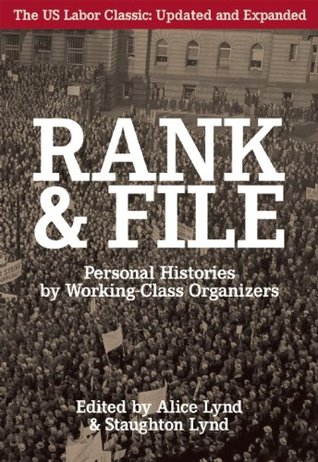
by
Alice Lynd,
Staughton Lynd
(editors)
I was a senior in high school when the sit-down strike of 1936 happened. It was winter, Akron's coldest winter up to that time. They had shanties set up along the "longest picket line in the world," built out of waste wood. They each had a name: "Mae West," or "Orphan Annie," or "Toonerville Trolley." We used to sit in the huts and drink Dago Red and coffee with the guys on strike. And they held a mass meeting in Central High School auditorium. This was in my high school. And I'll tell you, watching them pour into that auditorium was like watching the storming of the Winter Palace. We had a lot of physical evidence to make us accept the doctrine of the class struggle. The only catch was that we wanted it to be our class struggle, not the property of a commissar.
And when they came down the street for a collection for the striking rubber workers, they went to the pool rooms, they went to the butcher shop, they went to my grandfather's store, and they went to the whorehouse. Everybody chipped in. Everybody knew, "These are our boys. If they don't make it, we don't make it." The idea of community solidarity was pretty well impressed on me at that time. In those days, when somebody carried the title of "committeeman" it had all the weight, in our neighborhood, of "coun- cilman" or "alderman" today.