
by
Joan Copjec
(editor)
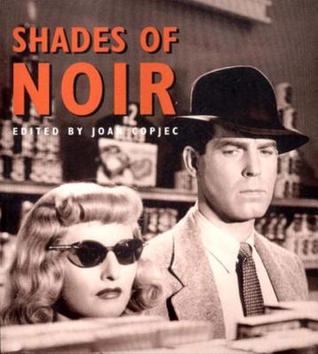
Shades of Noir: A Reader
Shades of Noir: A Reader
by
Joan Copjec
(editor)
by
Joan Copjec
(editor)
Shades of Noir: A Reader
by
Joan Copjec
(editor)
by
Joan Copjec
(editor)
19
If the thesis of populism and the jeremiad is accepted for the hard-boiled novel and film noir, a great consistency in themes treated from the end of the 1920s through to the Cold War can be noted.44 The overly vast systems reacted against include the justice system and the police as well as the mafia, unions, nazi networks within the country and, later, communists: all of them are felt to threaten free enterprise and free competition. A film like Racket Busters (Lloyd Bacon, 1938) is symptomatic in this respect: Bogart plays a racketeer who organizes strikes whilst George Brent plays a small shopkeeper who wants to keep his independence.45 The essential point here is not whether it is a question of detective films, gangster films, or propaganda films. The point in common must be that it is always a question of a fight to the death between an individual and a network that threatens fundamental freedoms (among which that of commerce is not, in this system, the least important). Thenceforth it is no longer necessary to isolate the private detective from his immediate cousins, whose position and function he shares. He is no different from the lawyer of the 1930s who, tempted by the easy money held out by a gangster in need of his services, ends up turning against his employer in the name of morality in order to bring about the triumph of the law: the best example is doubtless The Mouthpiece (Elliot Nugent and James Flood, 1932), with Warren William in the main role (an actor who, by the internal logic of events, is to be found in the second version of The Maltese Falcon). Nor is he different from the journalist who exposes a conspiracy or an abuse of power (The Big Clock, John Farrow, 1948), the isolated polIceman who fights alone against all (The Big Heat, Fritz Lang, 1953), or the victim who has to make his own way out of the trap in which he has got himself caught (Double Indemnity, Billy Wilder, 1944). On a small or on a grand scale, the idea is that of the 'combo' dominating and exerting its influence, it being understood that the combo is undemocratic and (it is the same thing) un-American. It can, then, be seen that paranoia is not an American malediction consequent upon some unspecified spell cast over the whole country, that would then allow a magical explanation of film noir: on the contrary, it is a matter of a contradiction inherent in the economic and political system of the United States, in which the citizen must constantly be reassured of his rights in the face of economic concentrations and federal power, the inhabitant of the small town in the face of the big city, the wage-earner in the face of the rich. The advent of the private detective in its modern American form at the moment of the Depression indicates the urgency with which these contradictions pressed at that time. In the films of the 1950s, traces of these contradictions can still be found in the form of the grotesque and the poor (often they are one and the same, as in The Enforcer, Windust-Walsh, 1950), who help to situate the hero at an equal distance from the proletarians and those living in misery, on the one hand, and, on the other, from the rich bourgeoisie, these two extremes being presented as two symmetrical traps into which he risks falling. We may then understand that film criticism repeats the gesture of the films noirs themselves, for in granting them the status of a Hollywood genre, it sees the films as playing the same role in the Hollywood system as the private detective plays in American society.
If the thesis of populism and the jeremiad is accepted for the hard-boiled novel and film noir, a great consistency in themes treated from the end of the 1920s through to the Cold War can be noted.44 The overly vast systems reacted against include the justice system and the police as well as the mafia, unions, nazi networks within the country and, later, communists: all of them are felt to threaten free enterprise and free competition. A film like Racket Busters (Lloyd Bacon, 1938) is symptomatic in this respect: Bogart plays a racketeer who organizes strikes whilst George Brent plays a small shopkeeper who wants to keep his independence.45 The essential point here is not whether it is a question of detective films, gangster films, or propaganda films. The point in common must be that it is always a question of a fight to the death between an individual and a network that threatens fundamental freedoms (among which that of commerce is not, in this system, the least important). Thenceforth it is no longer necessary to isolate the private detective from his immediate cousins, whose position and function he shares. He is no different from the lawyer of the 1930s who, tempted by the easy money held out by a gangster in need of his services, ends up turning against his employer in the name of morality in order to bring about the triumph of the law: the best example is doubtless The Mouthpiece (Elliot Nugent and James Flood, 1932), with Warren William in the main role (an actor who, by the internal logic of events, is to be found in the second version of The Maltese Falcon). Nor is he different from the journalist who exposes a conspiracy or an abuse of power (The Big Clock, John Farrow, 1948), the isolated polIceman who fights alone against all (The Big Heat, Fritz Lang, 1953), or the victim who has to make his own way out of the trap in which he has got himself caught (Double Indemnity, Billy Wilder, 1944). On a small or on a grand scale, the idea is that of the 'combo' dominating and exerting its influence, it being understood that the combo is undemocratic and (it is the same thing) un-American. It can, then, be seen that paranoia is not an American malediction consequent upon some unspecified spell cast over the whole country, that would then allow a magical explanation of film noir: on the contrary, it is a matter of a contradiction inherent in the economic and political system of the United States, in which the citizen must constantly be reassured of his rights in the face of economic concentrations and federal power, the inhabitant of the small town in the face of the big city, the wage-earner in the face of the rich. The advent of the private detective in its modern American form at the moment of the Depression indicates the urgency with which these contradictions pressed at that time. In the films of the 1950s, traces of these contradictions can still be found in the form of the grotesque and the poor (often they are one and the same, as in The Enforcer, Windust-Walsh, 1950), who help to situate the hero at an equal distance from the proletarians and those living in misery, on the one hand, and, on the other, from the rich bourgeoisie, these two extremes being presented as two symmetrical traps into which he risks falling. We may then understand that film criticism repeats the gesture of the films noirs themselves, for in granting them the status of a Hollywood genre, it sees the films as playing the same role in the Hollywood system as the private detective plays in American society.
25
Film noir is thus possible only under several conditions: the break caused by the war for the European public, particularly in Paris, which allowed pre-war American production to be forgotten even as it emphasized the real differences between pre and post-war visual elements (style of the decor, objects and actors); a misunderstanding of the import of the social critique presented by the fictions and the character of the private detective; both attraction to and repulsion from American culture; a Poujadist climate in France; the formal link of black and white (a survival in the American system whereas it continues to be the general rule in Europe); Bogart's becoming a star; and, in return, on the part of Anglo-American film criticism, over-valuation of French film criticism at the very moment when a reappropriation of this cinema was attempted. Film noir presents a fine example of cinema history and aesthetic reflection that is founded on distribution (in France at a certain point in time) and critical discourse, and not on production (in the United States during several decades), in a complete ignorance of the larger cultural context. This is not only because the history of cinema that already exists works with very short periods (neo-realism, the Soviet school of the 1920s, etc.), but also because no one has sufficiently reflected on the ideological conditions that could have presided over the advent of a kind of fiction. The result is a sort of imaginary enclosure in which what appeared to be evident to spectators becomes a venerable concept for feminists and historians, and in which the resulting critical work ends up occulting the films themselves and their production.
As an object or corpus of films, film noir does not belong to the history of cinema; it belongs as a notion to the history of film criticism, or, if one prefers, to the history of those who wanted to love the American cinema even in its middling production and to form an image of it. Film noir is a collector's idea that, for the moment, can only be found in books.
46
I think, for example, of some of the truly wondrous effects in The Lady in the Lake which can scarcely be conveyed by the socio-spatial notations we have devised so far, since they derive from the swooping sense of a radical shift in worlds. Such an effect is produced, for instance, after Marlowe makes his way down from Fawn Lake, where he has discovered a dead body, explored the tourist village and the cabins, had lengthy encounters with the local sheriff, and finally interrogated the rather seedy bellhops in the hotel in San Bernadino where the fleeing suspect is likely to have spent the night. The very next day, in Bay City (Santa Monica), he visits the expensive home of one of those playboys we have already mentioned, which stands across the street from the equally expensive home (or 'office') of a shady society doctor. The shift from Fawn Lake to Bay City is so extraordinary as to make us imagine we have opened the pages of a different novel. We experience something like a generic-ontological discontinuity, a well-nigh phenomenological substitution of worlds, which cannot, for that very reason, be described in purely social terms. Lavery, for instance, has visited the lake; and the Kingsleys, whose cabin Marlowe went to see, clearly inhabit both worlds, which can scarcely be seen as city and country in the older agricultural sense, but at best in terms of an opposition between tourist industry and workplace. Still, what used to be called nature must somehow be in play here, if only because of the deployment of mountain roads and the extraordinary images of the drowned body, which first 'waves' hesitatingly beneath the water and then boils up to the surface along with accompanying objects ('an ancient rotted plank popped suddenly through the surface, struck out a full foot of its jagged end, and fell back with a flat slap and floated off [LL, VI, 499]). And the ending - the soldiers on guard on the bridge across the Puma Lake dam bears witness to an unusual semic combination of history, nature and human production rare even in Chandler.
cool
57
In 1935 the popular English novelist and playwright J. B . Priestley, travelling in the United States, was alarmed by rumours of a new terrain in the American way of crime. 'It is not a tropical underworld of hot blood and passion, of people too barbaric for the bourgeois virtues,' he wrote in Midnight on the Desert. Rather,
It is a chilly, grey, cellar-like, fungus world, of greed, of calculated violence and a cold sensuality. The more austere writers of American detective stories, such as Dashiell Hammett, seem to show us that world . . . How big is this particular America? Does it exist only in a few big cities. And if there is not much of it, why do we hear so much about it?
Priestley had a sharp, prophetic eye for noir effects - he called them telegrams from hell - in newsprint, between hard covers, and on screen, where he claimed to find 'great slabs' of this new regime on display. Perhaps it helped that he was a middlebrow from abroad with little American cultural capital to prejudice his views. Later, in the post-war forties, when film noir was in its classic phase and the Partisan Review critics were busy discovering America, Mary McCarthy would dismiss noir as a childish mythology in which only a gullible existentialist like Simone de Beauvoir could believe. 'We admired and liked our country; we preferred it to that imaginary country, land of the peaux rouges of Caldwell and Steinbeck, dumb paradise of violence and the detective story, which had excited the sensibilities of our visitor and of the up-to-date French literary world.'2 In contrast to McCarthy, who literally could not see what was in front of her eyes ('there were no good Hollywood movies' in 1947, she declared firmly, and no decent players either), Priestley in 1935 had somehow managed to write a passable trailer for a cycle of doomy harsh-shadowed somnabulistic films that was actually ten years in the future.
love mary mccarthy but i will defend noir forever
58
The most familiar interpretation of film noir presents it as a sort of dark allegory of the post-war 1940s, starring such abstractions as 'the loss of wartime unity' and postwar economic conditions. Or, as Sylvia Harvey writes in her much-quoted article from 1 980: 'The hard facts of economic life are transmuted, in these movies, into corresponding moods and feelings. Thus the feelings of loss and alienation expressed by the characters in film noir can be seen as the product both of post-war depression and the reorganisation of the American economy.' 4 Though there are far more nuanced versions, for example by Dana Polan, this remains in its essentials the standard historical interpretation. 5 (By film nair and raman nair, we mean the works that are customarily taxonomized as such, for example in standard works such as the encyclopaedic Film Nair, of Silver and Ward. The controversy over whether film nair represents a genre or a movement [as opposed to the more interesting matter of whether it exists at all], not to mention the terminological niceness that would deny the title of nair to any film with an equivocal, let alone happy ending, threatens to become as tiresome as the ancient and now extinct argument over the possibility of bourgeois tragedy.) 6
The most familiar interpretation of film noir presents it as a sort of dark allegory of the post-war 1940s, starring such abstractions as 'the loss of wartime unity' and postwar economic conditions. Or, as Sylvia Harvey writes in her much-quoted article from 1 980: 'The hard facts of economic life are transmuted, in these movies, into corresponding moods and feelings. Thus the feelings of loss and alienation expressed by the characters in film noir can be seen as the product both of post-war depression and the reorganisation of the American economy.' 4 Though there are far more nuanced versions, for example by Dana Polan, this remains in its essentials the standard historical interpretation. 5 (By film nair and raman nair, we mean the works that are customarily taxonomized as such, for example in standard works such as the encyclopaedic Film Nair, of Silver and Ward. The controversy over whether film nair represents a genre or a movement [as opposed to the more interesting matter of whether it exists at all], not to mention the terminological niceness that would deny the title of nair to any film with an equivocal, let alone happy ending, threatens to become as tiresome as the ancient and now extinct argument over the possibility of bourgeois tragedy.) 6
64
The reconstruction of a long-ago public 'mood', like for that matter the interpretation of an existing one, is a species of myth making that deals with a notably inchoate subject; but as with any other kind of fiction, some reconstructions carry more conviction than others. Consider this famous passage from C. Wright Mills's White Collar:
The Second World War was understood by most sensitive observers as a curiously unreal business. Men went away and fought, all over the world; women did whatever was expected of women during war; people worked hard and long and bought war bonds; everybody believed in America and in her cause: there was no rebellion. Yet it all seemed a purposeless kind of efficiency. Some kind of numbness seemed to prohibit awareness of the magnitude and depth of what was happening; it was without dream and so without nightmare, and if there was anger and fear, and there was, still no chords of feeling and conviction were deeply touched. People sat in the movies between production shifts, watching with aloofness and even visible indifference, as children were 'saturation bombed' in the narrow cellars of Europe . . . There were no plain targets of revolt; and the cold metropolitan manner had so entered the soul of overpowered men that they were made completely private and blase, deep down and for good.
damn this is good i ought to read this
65
[...] The nightclub symbolically concentrated everything that seemed phantasmal about the prosperity of the post-war forties and naturally figures as one of film noir's standard settings. This complex mood of apprehension goes farther towards explaining the characteristic air of grim and baffled fatality in film noir than any passing downturn, as in 1947 or 1949, that actually occurred. Henry Adams's description of New York in 1905 applied even more exactly - uncannily so - forty years later. 'The outline of the city became frantic in its effort to explain something that defied meaning . . . Prosperity never before imagined, power not yet wielded by man, speed never reached by anything but a meteor, had made the world irritable, nervous, querulous, unreasonable and afraid: It was obvious that the new world of 1945 would be one of huge scale and bureaucratic rationality, and post-war film noir registers both resignation and resentment at the prospect. (Some alarmists on the right terrified themselves with the fear of a social-democratic planet, and that fear, too, found its way into film noir with the figure of the labour racketeer.) Yet a more than vestigial fear lingered that somehow the worst conditions of the Depression would return. In August 1932 ajournalist had asked John Maynard Keynes if there had ever before been a calamity like the Depression. He replied, 'Yes. It was called the Dark Ages, and it lasted four hundred years.'
[...] The nightclub symbolically concentrated everything that seemed phantasmal about the prosperity of the post-war forties and naturally figures as one of film noir's standard settings. This complex mood of apprehension goes farther towards explaining the characteristic air of grim and baffled fatality in film noir than any passing downturn, as in 1947 or 1949, that actually occurred. Henry Adams's description of New York in 1905 applied even more exactly - uncannily so - forty years later. 'The outline of the city became frantic in its effort to explain something that defied meaning . . . Prosperity never before imagined, power not yet wielded by man, speed never reached by anything but a meteor, had made the world irritable, nervous, querulous, unreasonable and afraid: It was obvious that the new world of 1945 would be one of huge scale and bureaucratic rationality, and post-war film noir registers both resignation and resentment at the prospect. (Some alarmists on the right terrified themselves with the fear of a social-democratic planet, and that fear, too, found its way into film noir with the figure of the labour racketeer.) Yet a more than vestigial fear lingered that somehow the worst conditions of the Depression would return. In August 1932 ajournalist had asked John Maynard Keynes if there had ever before been a calamity like the Depression. He replied, 'Yes. It was called the Dark Ages, and it lasted four hundred years.'
69
Raymond Chandler, writing in 1950, attributed the 'authentic power' of romans noirs (a phrase he did not use) to
the smell of fear which these stories managed to generate. Their characters lived in a world gone wrong, a world in which, long before the atom bomb, civilization had created the machinery for its own destruction, and was learning to use it with all the moronic delight of a gangster trying out his first machine gun. The law was something to be manipulated for power and profit. The streets were dark with something more than night.
Apocalypse is the most compelling parallel, at least for our apocalyptically minded times, between the old urban melodramas and the roman noir. For as George Steiner writes with customary plangency, 'It is precisely from the 1 830s onward', that is, from the very moment when Balzac began elaborating his vision of the city as logic, grammar, ideology and body of fate, 'that one can observe the emergence of a characteristic "counterdream" - the vision of the city laid waste, the fantasies of Scythian and Vandal invasion, the Mongol steeds slaking their thirst in the fountains of the Tuileries Gardens. An odd school of painting develops: pictures of London, Paris, or Berlin seen as colossal ruins, famous landmarks burnt, eviscerated, or located in romantic emptiness among charred stumps and dead water. Romantic fantasy anticipates Brecht's vengeful promise that nothing shall remain of the great cities except the wind that blows through them.' As Steiner conscientiously notes, it required exactly a hundred years of progress before Europe realized its fantasy.
72
When the Depression came and the bottom dropped out of the market for jazz-baby novels, Woolrich turned to suspense writing for the pulps. His success was immediate, but there were anxious years. (He once wrote a story about a hack writer desperately trying to write a novella in a single night, from which the legend grew that Woolrich had been reduced to that extremity himself.) Thereafter, as his biographer Francis Nevins Jr says, the Depression was the dominant reality in his fiction:
The New York that Woolrich lived in like a hermit in a cave and wrote about like one who knew its every square block as well as he knew his own name is a city of subways, automats, movie palaces, cheap furnished rooms, cold stone streets, doorways thick with shadows, people sick with terror, loving, clawing, killing, smoking too much, drinking too much, each one trying and failing to keep at bay the certainty of death which marked Woolrich's work and scarred his life.
heh
74
Always in Woolrich, life is ruled by chance, but its workings hide - barely - the machinations of a more sinister order beyond the visible. 'The hidden identities, mysteries, evils of melodrama are never the result of chance or fate,' says Peter Brooks, 'but of conscious plotting: evil is concerted, volitional - which is not to say it is motivated. Indeed, the more it is unmotivated the more it becomes a pure product of will, demonstrating that the world is inhabited by a Satanism as real as it is gratuitous.'4 7 Woolrich's city is fallen, guilty, complicitous, animated by a Jansenist sense of evil (Woolrich was a lapsed Catholic), and ruled by a sinister demiurgic force that thwarts and deforms individual life. The midnight streets, furnished rooms, low bars, dance halls, precinct offices, rain, heat, shadows, whiskey fumes and cigarette smoke - all the familiar elements of New York noir's mise en scene - are the sometimes overstrained vehicles for an imagination fundamentally melodramatic and manichean. Which is not to say that Woolrich was (only) a kind of allegorist: these details have their own mad verisimilitude and hypnagogic intensity, brought out by the pell-mell, often lurid, and occasionally ludicrous rush of his prose. They are very much rooted in the experience of the Depression, when the fear (or, in other quarters, hope) arose that capitalism and its incarnation in the modern metropolis had entered some permanent crisis. In Woolrich's fiction the Depression has become a sort of eternal unrelieved dark night of body and soul.
fun