
by
Joan Copjec
(editor)
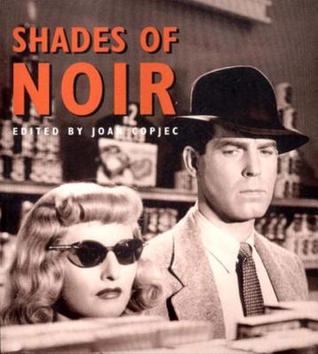
Shades of Noir: A Reader
Shades of Noir: A Reader
by
Joan Copjec
(editor)
by
Joan Copjec
(editor)
Shades of Noir: A Reader
by
Joan Copjec
(editor)
by
Joan Copjec
(editor)
In 1935 the popular English novelist and playwright J. B . Priestley, travelling in the United States, was alarmed by rumours of a new terrain in the American way of crime. 'It is not a tropical underworld of hot blood and passion, of people too barbaric for the bourgeois virtues,' he wrote in Midnight on the Desert. Rather,
It is a chilly, grey, cellar-like, fungus world, of greed, of calculated violence and a cold sensuality. The more austere writers of American detective stories, such as Dashiell Hammett, seem to show us that world . . . How big is this particular America? Does it exist only in a few big cities. And if there is not much of it, why do we hear so much about it?
Priestley had a sharp, prophetic eye for noir effects - he called them telegrams from hell - in newsprint, between hard covers, and on screen, where he claimed to find 'great slabs' of this new regime on display. Perhaps it helped that he was a middlebrow from abroad with little American cultural capital to prejudice his views. Later, in the post-war forties, when film noir was in its classic phase and the Partisan Review critics were busy discovering America, Mary McCarthy would dismiss noir as a childish mythology in which only a gullible existentialist like Simone de Beauvoir could believe. 'We admired and liked our country; we preferred it to that imaginary country, land of the peaux rouges of Caldwell and Steinbeck, dumb paradise of violence and the detective story, which had excited the sensibilities of our visitor and of the up-to-date French literary world.'2 In contrast to McCarthy, who literally could not see what was in front of her eyes ('there were no good Hollywood movies' in 1947, she declared firmly, and no decent players either), Priestley in 1935 had somehow managed to write a passable trailer for a cycle of doomy harsh-shadowed somnabulistic films that was actually ten years in the future.
love mary mccarthy but i will defend noir forever