
by
Joan Copjec
(editor)
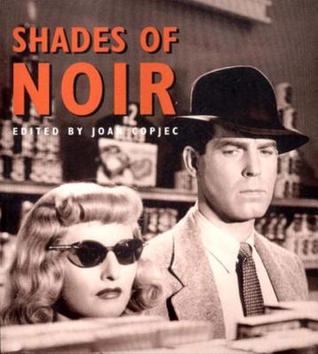
Shades of Noir: A Reader
Shades of Noir: A Reader
by
Joan Copjec
(editor)
by
Joan Copjec
(editor)
Shades of Noir: A Reader
by
Joan Copjec
(editor)
by
Joan Copjec
(editor)
Film noir is thus possible only under several conditions: the break caused by the war for the European public, particularly in Paris, which allowed pre-war American production to be forgotten even as it emphasized the real differences between pre and post-war visual elements (style of the decor, objects and actors); a misunderstanding of the import of the social critique presented by the fictions and the character of the private detective; both attraction to and repulsion from American culture; a Poujadist climate in France; the formal link of black and white (a survival in the American system whereas it continues to be the general rule in Europe); Bogart's becoming a star; and, in return, on the part of Anglo-American film criticism, over-valuation of French film criticism at the very moment when a reappropriation of this cinema was attempted. Film noir presents a fine example of cinema history and aesthetic reflection that is founded on distribution (in France at a certain point in time) and critical discourse, and not on production (in the United States during several decades), in a complete ignorance of the larger cultural context. This is not only because the history of cinema that already exists works with very short periods (neo-realism, the Soviet school of the 1920s, etc.), but also because no one has sufficiently reflected on the ideological conditions that could have presided over the advent of a kind of fiction. The result is a sort of imaginary enclosure in which what appeared to be evident to spectators becomes a venerable concept for feminists and historians, and in which the resulting critical work ends up occulting the films themselves and their production.
As an object or corpus of films, film noir does not belong to the history of cinema; it belongs as a notion to the history of film criticism, or, if one prefers, to the history of those who wanted to love the American cinema even in its middling production and to form an image of it. Film noir is a collector's idea that, for the moment, can only be found in books.