
by
Joan Copjec
(editor)
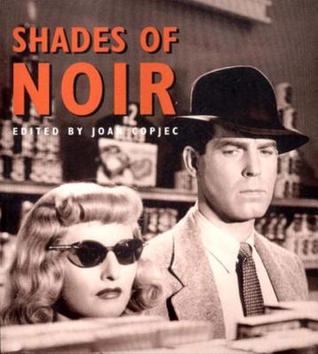
Shades of Noir: A Reader
Shades of Noir: A Reader
by
Joan Copjec
(editor)
by
Joan Copjec
(editor)
Shades of Noir: A Reader
by
Joan Copjec
(editor)
by
Joan Copjec
(editor)
Always in Woolrich, life is ruled by chance, but its workings hide - barely - the machinations of a more sinister order beyond the visible. 'The hidden identities, mysteries, evils of melodrama are never the result of chance or fate,' says Peter Brooks, 'but of conscious plotting: evil is concerted, volitional - which is not to say it is motivated. Indeed, the more it is unmotivated the more it becomes a pure product of will, demonstrating that the world is inhabited by a Satanism as real as it is gratuitous.'4 7 Woolrich's city is fallen, guilty, complicitous, animated by a Jansenist sense of evil (Woolrich was a lapsed Catholic), and ruled by a sinister demiurgic force that thwarts and deforms individual life. The midnight streets, furnished rooms, low bars, dance halls, precinct offices, rain, heat, shadows, whiskey fumes and cigarette smoke - all the familiar elements of New York noir's mise en scene - are the sometimes overstrained vehicles for an imagination fundamentally melodramatic and manichean. Which is not to say that Woolrich was (only) a kind of allegorist: these details have their own mad verisimilitude and hypnagogic intensity, brought out by the pell-mell, often lurid, and occasionally ludicrous rush of his prose. They are very much rooted in the experience of the Depression, when the fear (or, in other quarters, hope) arose that capitalism and its incarnation in the modern metropolis had entered some permanent crisis. In Woolrich's fiction the Depression has become a sort of eternal unrelieved dark night of body and soul.
fun