
by
Joan Copjec
(editor)
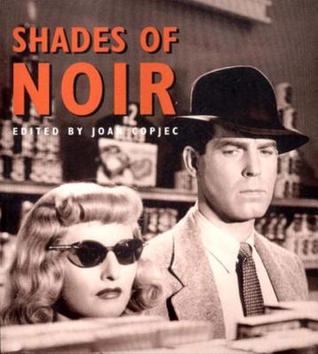
Shades of Noir: A Reader
Shades of Noir: A Reader
by
Joan Copjec
(editor)
by
Joan Copjec
(editor)
Shades of Noir: A Reader
by
Joan Copjec
(editor)
by
Joan Copjec
(editor)
Raymond Chandler, writing in 1950, attributed the 'authentic power' of romans noirs (a phrase he did not use) to
the smell of fear which these stories managed to generate. Their characters lived in a world gone wrong, a world in which, long before the atom bomb, civilization had created the machinery for its own destruction, and was learning to use it with all the moronic delight of a gangster trying out his first machine gun. The law was something to be manipulated for power and profit. The streets were dark with something more than night.
Apocalypse is the most compelling parallel, at least for our apocalyptically minded times, between the old urban melodramas and the roman noir. For as George Steiner writes with customary plangency, 'It is precisely from the 1 830s onward', that is, from the very moment when Balzac began elaborating his vision of the city as logic, grammar, ideology and body of fate, 'that one can observe the emergence of a characteristic "counterdream" - the vision of the city laid waste, the fantasies of Scythian and Vandal invasion, the Mongol steeds slaking their thirst in the fountains of the Tuileries Gardens. An odd school of painting develops: pictures of London, Paris, or Berlin seen as colossal ruins, famous landmarks burnt, eviscerated, or located in romantic emptiness among charred stumps and dead water. Romantic fantasy anticipates Brecht's vengeful promise that nothing shall remain of the great cities except the wind that blows through them.' As Steiner conscientiously notes, it required exactly a hundred years of progress before Europe realized its fantasy.