
by
Joan Copjec
(editor)
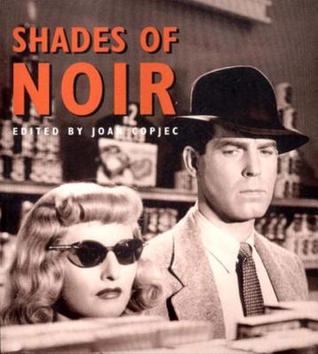
Shades of Noir: A Reader
Shades of Noir: A Reader
by
Joan Copjec
(editor)
by
Joan Copjec
(editor)
Shades of Noir: A Reader
by
Joan Copjec
(editor)
by
Joan Copjec
(editor)
78
Seeking clues to explain what actually happened in the interval between Quinn's two visits, he and Bricky make separate forays into the darkened streets. In defiance of the conventional logic of mystery plots, these characters follow one clue after another, each leading to a dead end. These loose threads afford brief glimpses of other narratives - sometimes ordinary (the man whose wife had just delivered a child), sometimes desperate (the woman who had just committed a murder) - a random sampling of life on the streets of the guilty city. Dana Polan has noted how explicit Woolrich is 'in showing the ambivalent possibility of this new space of modernity for the fragmentation of narrativity . . . where each narrative denouement exists alongside the possibility of an equally significant but opposed alternate denouement. Modernity here is the possibility of a generation of endless narratives, all equally possible expansions of initial premises.' In this account, Woolrich's text becomes available for reading as 'a kind of meditation on novel writing'. The idea that Deadline at Dawn belongs in the company of, say, Calvino's If on a Winter's Night is charming and, on reflection, even plausible.
Seeking clues to explain what actually happened in the interval between Quinn's two visits, he and Bricky make separate forays into the darkened streets. In defiance of the conventional logic of mystery plots, these characters follow one clue after another, each leading to a dead end. These loose threads afford brief glimpses of other narratives - sometimes ordinary (the man whose wife had just delivered a child), sometimes desperate (the woman who had just committed a murder) - a random sampling of life on the streets of the guilty city. Dana Polan has noted how explicit Woolrich is 'in showing the ambivalent possibility of this new space of modernity for the fragmentation of narrativity . . . where each narrative denouement exists alongside the possibility of an equally significant but opposed alternate denouement. Modernity here is the possibility of a generation of endless narratives, all equally possible expansions of initial premises.' In this account, Woolrich's text becomes available for reading as 'a kind of meditation on novel writing'. The idea that Deadline at Dawn belongs in the company of, say, Calvino's If on a Winter's Night is charming and, on reflection, even plausible.
91
Finally, a large part of the appeal of film noir in the forties, when Woolrich's peculiar vision was so often screened is also an explanation of why film noir faded in the dull sunshine of the fifties; it is a matter of 'Art and Evil', as Robert Lowell phrased it in an unfinished essay of 1955 about the literary-moral atmosphere after World War Two:
Old classics no longer pleased; but presently we discovered with relief that supposedly sound authors were much worse than they seemed. We discovered the black, nihilistic, homosexual, almost disintegrating Shakespeare of Measure for Measure, Troilus, Hamlet and Timon. We discovered a black, gin-drinking Tennyson. We discovered a black, wolfish, wife-deserting Dickens, whose grotesque Hieronymus Bosch world struck us as God's plenty, a richer creation than any English writer's since Shakespeare. Then, a funny thing happened ; just as we had labeled our times the Age of Anxiety, and had managed to point out an ample and redeeming shadow of darkness in just about every writer who had ever lived - just at this point we suddenly found we were midway in a second solid, sensible, wealthy, optimistic, child-bearing era, one not unlike the times of Queen Victoria and Prince Albert. Out of the black earth of our evil authors and evil visions, we had somehow rebuilt our own booming 1870s, '80s, and '90s, complete with their dynasties of Republican Presidents.
91
What became of film noir was the fifties. In so far as it represented merely a congerie of fashions, its formal possibilities, or at least those that were formalizable and profitable, were soon exhausted ; the studios, for whom it had always represented simply a device to hold a skittish audience, turned to other devices (and eventually returned to old ones, as late film noir became neo-). Snubbed by Hitchcock in 1955, Woolrich was a whiskey-sodden wreck and beyond caring when Francois Truffaut, eager to lionize, invited him to the premiere of The B ride Ware Black in 1968. Woolrich died a millionaire, and one of the five mourners at his funeral was a representative from Chase Manhattan Bank, who brought flowers. As for the infernal machines, his plots, which profitably live on - movie adaptations in Italy, Argentina, Japan, Germany, and endless television reruns - Habeant sua lata libelli.
this is ctually haunting
114
[...] the way in which Lang expressed a sense of respect for - and reciprocity with - his audience throughout his entire career:
I was always opposed to the American line, 'An audience has the mentality of a sixteen year-old chambermaid.' If this would be true, I would be ashamed to work for such an audience. I like audiences, but I don't think you should give an audience something fifty steps ahead of them. I asked myself - why is the first work of a writer, of a screenwriter, or of a playwright almost always a success? Because he still belongs to an audience. The more he goes away from the audience, the more he loses contact. What I tried to do my whole life long was not to lose contact with the audience.
fritz lang
121
Whether it is a genre, a cycle of films, a tendency or a movement, film noir has been extraordinarily successful as a term. As 'the genre that never was' -- since the term was not used by the studios themselves, or by audiences at the time, except perhaps in France where the term originated -- the claims for the category lie in a post hoc analysis of of similarities and in a set of elements that provide a 'core' of characteristics that are identified in certain films. The term has succeeded despite the lack of any straightforward unity in the set of films it attempts to designate. Unlike terms such as the 'western', or the 'gangster' film, which are relatively uncontroversial (and were industry categories), film noir has a more tenuous critical status. This tenuousness is matched by a tenacity of critical use, a devotion among aficionados that suggest a desire for the very category as such, a wish that it exist in order to 'have' a certain set of films all together. Film noir as a genre is in a certain sense a fantasy: it is something that is never given a pure or complete form; the 'first' film noir, The Maltese Falcon (John Huston, 1 94 1 ) , is usually described as 'atypical', while it is the much later Out of the Past (Jacques Tourneur, 1 947) which is often cited as the quintessential noir film. Though only ever realized in some incomplete form, the 'true' form is nevertheless discerned across a series of films. The desire for film noir can be seen, too, in the tendency by film reviewers to discover contemporary examples - colour cinematography notwithstanding - a recent example is Denis Hopper's film The Hot Spot (1990). What is centred by this fantasy is almost always a masculine scenario, that is, the film noir hero is a man struggling with other men, who suffers alienation and despair, and is lured by fatal and deceptive women.
Whether it is a genre, a cycle of films, a tendency or a movement, film noir has been extraordinarily successful as a term. As 'the genre that never was' -- since the term was not used by the studios themselves, or by audiences at the time, except perhaps in France where the term originated -- the claims for the category lie in a post hoc analysis of of similarities and in a set of elements that provide a 'core' of characteristics that are identified in certain films. The term has succeeded despite the lack of any straightforward unity in the set of films it attempts to designate. Unlike terms such as the 'western', or the 'gangster' film, which are relatively uncontroversial (and were industry categories), film noir has a more tenuous critical status. This tenuousness is matched by a tenacity of critical use, a devotion among aficionados that suggest a desire for the very category as such, a wish that it exist in order to 'have' a certain set of films all together. Film noir as a genre is in a certain sense a fantasy: it is something that is never given a pure or complete form; the 'first' film noir, The Maltese Falcon (John Huston, 1 94 1 ) , is usually described as 'atypical', while it is the much later Out of the Past (Jacques Tourneur, 1 947) which is often cited as the quintessential noir film. Though only ever realized in some incomplete form, the 'true' form is nevertheless discerned across a series of films. The desire for film noir can be seen, too, in the tendency by film reviewers to discover contemporary examples - colour cinematography notwithstanding - a recent example is Denis Hopper's film The Hot Spot (1990). What is centred by this fantasy is almost always a masculine scenario, that is, the film noir hero is a man struggling with other men, who suffers alienation and despair, and is lured by fatal and deceptive women.
122
In a widely quoted passage James Damico proposes a model of film noir's plot structure and character type:
Either because he is fated to do so by chance, or because he has been hired for a job specifically associated with her, a man whose experience of life has left him sanguine and often bitter meets a not-innocent woman of similar outlook to whom he is sexually and fatally attracted. Through this attraction, either because the woman induces him to it or because it is the natural result of their relationship, the man comes to cheat, attempt to murder, or actually murder a second man to whom the woman is unhappily or unwillingly attached (generally he is her husband or lover), an act which often leads to the woman's betrayal of the protagonist, but which in any event brings about the sometimes metaphoric, but usually literal destruction of the woman, the man to whom she is attached, and frequently the protagonist himself.
This same core theme is presented by Marc Vernet in his discussion of the openings of films noirs, though it is now identified as having an 'incest form' :
The 'triangle' has often been pointed out as a principal form of relation among the characters: the young hero desires and conquers a rich woman who is quite often tied to an older man or some other representative of patriarchal authority (Double Indemnity, The Lady From Shanghai, Out of the Past, The Big Sleep, The Maltese Falcon). However, in most of these films the woman is made guilty and despite her protestations she is either abandoned or killed by the hero. In this manner, the resolution of the intrigue is guaranteed by the annulment of the incestuous relations.
135
What I am attempting to challenge here is the tendency to characterize film noir as always a masculine film form. Even though this masculine bias is considered critieally, the tendency is still to see women characters as occupying a subordinate position in the films. This obscures the extent to which these films afforded women roles which are active, adventurous and driven by sexual desire. Nor is this observation necessarily discounted by the fact that these roles were frequently undertaken by villainesses. As Janey Place has pointed out, in these films 'women are deadly but sexy, exciting, and strong'. If the women die as a result, they suffer a fate no different from that of the men: the Production Code was egalitarian on this point. Moreover, for the woman as well as the man the crucial relation is between desire and death; of Double Indemnity, Claire Johnston notes, 'the eroticisation of death in the final scene of the flashback, confirms a universe where access to desire is only through repression'. The fantasy of the woman's dangerous sexuality is a feminine as well as masculine fantasy, and its pleasures lie precisely in its forbiddenness. To argue that it is only patriarchy, or the Production Code, that requires its punishment is to misunderstand that it is the fantasy itself that demands the punishment, for in the punishment the reality of the forbidden wish is acknowledged.
What I am attempting to challenge here is the tendency to characterize film noir as always a masculine film form. Even though this masculine bias is considered critieally, the tendency is still to see women characters as occupying a subordinate position in the films. This obscures the extent to which these films afforded women roles which are active, adventurous and driven by sexual desire. Nor is this observation necessarily discounted by the fact that these roles were frequently undertaken by villainesses. As Janey Place has pointed out, in these films 'women are deadly but sexy, exciting, and strong'. If the women die as a result, they suffer a fate no different from that of the men: the Production Code was egalitarian on this point. Moreover, for the woman as well as the man the crucial relation is between desire and death; of Double Indemnity, Claire Johnston notes, 'the eroticisation of death in the final scene of the flashback, confirms a universe where access to desire is only through repression'. The fantasy of the woman's dangerous sexuality is a feminine as well as masculine fantasy, and its pleasures lie precisely in its forbiddenness. To argue that it is only patriarchy, or the Production Code, that requires its punishment is to misunderstand that it is the fantasy itself that demands the punishment, for in the punishment the reality of the forbidden wish is acknowledged.
136
Neither films noirs nor the thriller novels they drew upon are a preserve of male writers. A number of films were scripted, co-written or adapted by women or derived from stories by women - including Desperate, Railroaded and Raw Deal, all directed by Anthony Mann (his collaboration with women writers was extensive: 'Follow Me Quietly', an unpublished short story by Mann and Francis Rosewald was scripted for the film by Lillie Hayward) . In a Lonely Place is based on the novel by Dorothy B. Hughes; Private Hell was co-scripted b y Ida Lupino and Collier Young; additional dialogue in The Pretender was by Doris Miller, and Chandler's novel The High Window, filmed as The Brasher Doubloon, was scripted by Dorothy Hannah and adapted by Dorothy Bennett and Leonard Praskins. The Reckless Moment was based closely on the story 'The Blank Wall' by Elisabeth Sanxay Holding, who was described by Raymond Chandler as 'the top suspense writer of them all'.
Neither films noirs nor the thriller novels they drew upon are a preserve of male writers. A number of films were scripted, co-written or adapted by women or derived from stories by women - including Desperate, Railroaded and Raw Deal, all directed by Anthony Mann (his collaboration with women writers was extensive: 'Follow Me Quietly', an unpublished short story by Mann and Francis Rosewald was scripted for the film by Lillie Hayward) . In a Lonely Place is based on the novel by Dorothy B. Hughes; Private Hell was co-scripted b y Ida Lupino and Collier Young; additional dialogue in The Pretender was by Doris Miller, and Chandler's novel The High Window, filmed as The Brasher Doubloon, was scripted by Dorothy Hannah and adapted by Dorothy Bennett and Leonard Praskins. The Reckless Moment was based closely on the story 'The Blank Wall' by Elisabeth Sanxay Holding, who was described by Raymond Chandler as 'the top suspense writer of them all'.
137
The following discussion seeks to explore the question of the woman's voice and her story in relation to film noir by taking two films, Raw Deal and Secret beyond the Door, which exhibit a feature singularly associated with film noir, namely, first-person narration. Voice-over narration, together with the narrative device of flashback, was comparatively rare prior to the 1940s in American film, but it became common in that decade, then fell in popularity in the fifties and again in the sixties. This popularity was not confined to the film noir, or even to the detective film, and it precedes the film noir slightly - being strongly established from 1 940, and gaining pre-eminence with Welles's Citizen Kane and Ford's How Green Was My Valley in 1941 ; the first films noirs to use it are Laura, Double Indemnity, The Mask of Dimitrios and Murder, My Sweet, all released in 1944. Subsequently voice-over is more commonly used for films in other genres. It is nevertheless featured in many of the films that have become the key examples of film noir, including not only those just listed above, but also Gilda, The Killers, The Postman Always Rings Twice and Out of the Past.
In film noir the use of voice-over narration is associated with the male hero, often a detective or 'tough guy' investigator whose dialogue is 'hard-boiled' - clipped and cynical. It functions to place the spectator subjectively with the character, allowing us to enter his world through his words. The authority of the voice-over tends to be assumed by convention; but it also conventionally includes the voicing of hesitations and doubts about the hero's perception and interpretation of events, including self-doubt (notably in Gilda, and in Dead Reckoning). The flashback voice-over narration of Mildred Pierce, as of Possessed also starring Joan Crawford, markedly lacks a hard-boiled style and as a result is associated with melodramas or 'woman's pictures', many of which also use this device in this period. In Raw Deal, however, the first-person, present-tense narration by a woman does follow the hard-boiled style of the male film noir hero - though in this film the narrator is not the ostensible protagonist of the film.
170
The thesis that modern bureaucracies and detective fiction spring from the same source lends itself to a Foucauldian interpretation. It could be argued that statistics and the bureaucracies that are sustained by them are, like detective fiction, techniques of surveillance, mechanisms of a disciplinary form of power. Each of these techniques isolates minute, differentiating and therefore incriminating details which give access to the most intimate secrets of the individuals they investigate. It is, in fact, the very passion for counting, recording and tabulating that deposits many of the clues used by detectives to track their suspects. Laundry lists, insurance records, telephone bills, parking tickets, the criminal and the criminal act always turn up as figures in some bureaucracy's accounting. When Walter Neff attempts to avoid detection, he establishes his alibi by making a long-distance call that he knows will be recorded and thus help to place him at home at the hour of the crime. Keyes begins to unravel the case when he notes that Mr Dietrichson did not put in a claim for his broken leg, though he was insured against such an accident. In detective fiction, to be is not to be perceived, it is to be recorded. This is one of the fundamental differences between the realist novel (with its emphasis on the intersubjective network of perceptions) and detective fiction.
The thesis that modern bureaucracies and detective fiction spring from the same source lends itself to a Foucauldian interpretation. It could be argued that statistics and the bureaucracies that are sustained by them are, like detective fiction, techniques of surveillance, mechanisms of a disciplinary form of power. Each of these techniques isolates minute, differentiating and therefore incriminating details which give access to the most intimate secrets of the individuals they investigate. It is, in fact, the very passion for counting, recording and tabulating that deposits many of the clues used by detectives to track their suspects. Laundry lists, insurance records, telephone bills, parking tickets, the criminal and the criminal act always turn up as figures in some bureaucracy's accounting. When Walter Neff attempts to avoid detection, he establishes his alibi by making a long-distance call that he knows will be recorded and thus help to place him at home at the hour of the crime. Keyes begins to unravel the case when he notes that Mr Dietrichson did not put in a claim for his broken leg, though he was insured against such an accident. In detective fiction, to be is not to be perceived, it is to be recorded. This is one of the fundamental differences between the realist novel (with its emphasis on the intersubjective network of perceptions) and detective fiction.