
by
Joan Copjec
(editor)
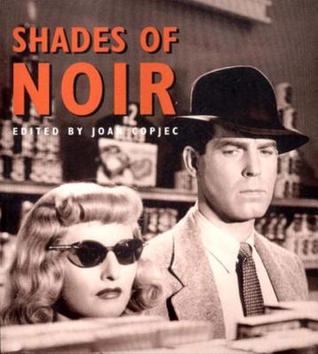
Shades of Noir: A Reader
Shades of Noir: A Reader
by
Joan Copjec
(editor)
by
Joan Copjec
(editor)
Shades of Noir: A Reader
by
Joan Copjec
(editor)
by
Joan Copjec
(editor)
189
But there exists further evidence. Since it is the cloaking of the enunciative instance, its marked retreat from the phenomenal field, that defines the very space of classical detection, we would expect the surfacing of the enunciation to produce within film noir a wholly different sort of space. This is exactly what happens; the infinite, inexhaustible space of the older model - exemplarily realized in the paradox of the locked room - gives way in film noir to its inverse; the lonely room, such as the one in which Neff utters his confession. For Neff sits in one of those vacant office buildings, those plain and, for the moment, uninhabited spaces that constitute the characteristic architecture of film noir. Office buildings late at night, in the early hours of the morning; abandoned warehouses; hotels mysteriously untrafficked; eerily empty corridors: these are the spaces that supplant the locked room. One is struck first of all by the curious depopulation of these spaces, and then by their spareness. In The Big Heat (Fritz Lang, 1953), Debbie Marsh, looking around the woefully underdecorated hotel room in which Dave Bannion temporarily resides, delivers an accurate appraisal of this typically noir interior. 'Oh, early nothing!' she quips. But it would be wrong to stop at the observation that these lonely rooms are simply empty of people and decoration. More fundamentally, what film noir presents to us are spaces that have been emptied of desire. Or: the emptiness of the room indicates less that there is nothing in them than that nothing more can be got out of them. They are no longer interpretable. In the strict sense: that is, they will never yield anything new and cannot, therefore, hide anything.
But there exists further evidence. Since it is the cloaking of the enunciative instance, its marked retreat from the phenomenal field, that defines the very space of classical detection, we would expect the surfacing of the enunciation to produce within film noir a wholly different sort of space. This is exactly what happens; the infinite, inexhaustible space of the older model - exemplarily realized in the paradox of the locked room - gives way in film noir to its inverse; the lonely room, such as the one in which Neff utters his confession. For Neff sits in one of those vacant office buildings, those plain and, for the moment, uninhabited spaces that constitute the characteristic architecture of film noir. Office buildings late at night, in the early hours of the morning; abandoned warehouses; hotels mysteriously untrafficked; eerily empty corridors: these are the spaces that supplant the locked room. One is struck first of all by the curious depopulation of these spaces, and then by their spareness. In The Big Heat (Fritz Lang, 1953), Debbie Marsh, looking around the woefully underdecorated hotel room in which Dave Bannion temporarily resides, delivers an accurate appraisal of this typically noir interior. 'Oh, early nothing!' she quips. But it would be wrong to stop at the observation that these lonely rooms are simply empty of people and decoration. More fundamentally, what film noir presents to us are spaces that have been emptied of desire. Or: the emptiness of the room indicates less that there is nothing in them than that nothing more can be got out of them. They are no longer interpretable. In the strict sense: that is, they will never yield anything new and cannot, therefore, hide anything.
194
Slavoj Zizek, following up remarks made by Lacan in his 'Seminar on "The Purloined Letter" ', has noted that one of the differences between classical detection and the hardboiled/noir variety is that in the former the detective accepts money for his services, while in the latter he does not. 30 It is Al Roberts (in Detour), however, who supplies the most revealing reason for the noir protagonist's inability to deal with symbolic currency. Reluctant to accept a ten-dollar tip for his piano-playing, he spits out his definition of money: 'a piece of paper crawling with germs'. What happens, I have tried to argue, is this: the neutral, dead system of symbolic community and exchange that had supported the classical world has given way in film noir to a world that crawls with private enjoyment and thus rots the old networks of communication. Something similar happens to numbers. Where formerly the counting of people, statistics, had estab-lished a network of relations that protected - and protected us from - private enjoyment, film noir allows us to witness the spoiling of this network that takes place when privacy comes to the surface. Seen from Keyes's perspective, statistics enable the discovery of new facts; from Neffs perspective they threaten annihilation since, to him, they represent the existence of other people. And in the noir world, this is the greatest horror.
Slavoj Zizek, following up remarks made by Lacan in his 'Seminar on "The Purloined Letter" ', has noted that one of the differences between classical detection and the hardboiled/noir variety is that in the former the detective accepts money for his services, while in the latter he does not. 30 It is Al Roberts (in Detour), however, who supplies the most revealing reason for the noir protagonist's inability to deal with symbolic currency. Reluctant to accept a ten-dollar tip for his piano-playing, he spits out his definition of money: 'a piece of paper crawling with germs'. What happens, I have tried to argue, is this: the neutral, dead system of symbolic community and exchange that had supported the classical world has given way in film noir to a world that crawls with private enjoyment and thus rots the old networks of communication. Something similar happens to numbers. Where formerly the counting of people, statistics, had estab-lished a network of relations that protected - and protected us from - private enjoyment, film noir allows us to witness the spoiling of this network that takes place when privacy comes to the surface. Seen from Keyes's perspective, statistics enable the discovery of new facts; from Neffs perspective they threaten annihilation since, to him, they represent the existence of other people. And in the noir world, this is the greatest horror.
200
What do, then, Angel Heart and Blade Runner have in common? Both films deal with memory and subverted personal identity: the hero, the hard-boiled investigator, is sent on a quest (in pursuit of a former pop singer suddenly and mysteriously proclaimed dead, in the one case, and of a group of replicants at large in the Los Angeles of 2012, in the other) whose final outcome is that he himself was from the very beginning implicated in the object of his quest. In Angel Heart, the hero ascertains that the dead singer is none other than himself (in an occult ritual performed long ago, he exchanged hearts and souls with an ex-soldier who he now thinks he is). In Blade Runner, he is told that he is himself a replicant. The outcome of the quest is therefore in both cases the radical undermining of self-identity masterminded by a mysterious, allpowerful agency, in the first case the Devil himself ('Louis Cipher') , in the second case the Tyrell corporation, which succeeds in fabricating replicants who remain unaware of their replicant status, who misperceive themselves as humans. The world depicted in both films is the world in which corporate capital has succeeded in penetrating and dominating the very fantasy kernel of our being: none of our features are really 'ours'; even our memories and fantasies are artificially planted. It is as if Fredric Jameson's thesis - that postmodernism is the epoch in which capital finally colonizes the last-resort holdouts against its all-inclusive logic - were here brought to its hyperbolic conclusion. The fusion of capital and knowledge brings about a new type of proletarian, the absolute proletarian, as it were, bereft of the last pockets of private resistance: every thing, Up to the most intimate memories, is planted, so that what remains is literally the void of pure substanceless subjectivity (substanzlose Subjektivitiit Marx's definition of the proletarian). Ironically, one might say that Blade Runner is a film about the emergence of class-consciousness.
What do, then, Angel Heart and Blade Runner have in common? Both films deal with memory and subverted personal identity: the hero, the hard-boiled investigator, is sent on a quest (in pursuit of a former pop singer suddenly and mysteriously proclaimed dead, in the one case, and of a group of replicants at large in the Los Angeles of 2012, in the other) whose final outcome is that he himself was from the very beginning implicated in the object of his quest. In Angel Heart, the hero ascertains that the dead singer is none other than himself (in an occult ritual performed long ago, he exchanged hearts and souls with an ex-soldier who he now thinks he is). In Blade Runner, he is told that he is himself a replicant. The outcome of the quest is therefore in both cases the radical undermining of self-identity masterminded by a mysterious, allpowerful agency, in the first case the Devil himself ('Louis Cipher') , in the second case the Tyrell corporation, which succeeds in fabricating replicants who remain unaware of their replicant status, who misperceive themselves as humans. The world depicted in both films is the world in which corporate capital has succeeded in penetrating and dominating the very fantasy kernel of our being: none of our features are really 'ours'; even our memories and fantasies are artificially planted. It is as if Fredric Jameson's thesis - that postmodernism is the epoch in which capital finally colonizes the last-resort holdouts against its all-inclusive logic - were here brought to its hyperbolic conclusion. The fusion of capital and knowledge brings about a new type of proletarian, the absolute proletarian, as it were, bereft of the last pockets of private resistance: every thing, Up to the most intimate memories, is planted, so that what remains is literally the void of pure substanceless subjectivity (substanzlose Subjektivitiit Marx's definition of the proletarian). Ironically, one might say that Blade Runner is a film about the emergence of class-consciousness.
220
[...] This is precisely equivalent to the emergence of the 'real' Laura in Otto Preminger's Laura (1944) : the police detective (Dana Andrews) falls asleep staring at the portrait of the allegedly dead Laura. Upon awakening, he finds the 'real' Laura by the side of the portrait, alive and well. This presence of the 'real' Laura accentuates the fact that the portrait is a mere 'imitation'; on the other hand, the 'real' Laura emerges as a non-symbolized fantasmatic surplus, a ghostlike apparition. Beneath the portrait, one can easily imagine the inscription 'This is not Laura'.
This, then, is the 'noir' that defines the noir universe: that crack in the half-open window that shakes our sense of reality and is as such correlative to the subject qua void, gap in reality. Eventually, everything that has been said is given a condensed expression in Frank Capra's It's a Wonderful Life (1946), a film whose unmistakable noir undertones belie the common reduction of Capra's universe to a New Deal populist humanism. When, out of utter despair, the hero (James Stewart) is on the brink of committing suicide, the angel Clarence stops him and submits him to a Kripkean mental experiment with possible universes: he sends him back to his small Massachusetts town, but renders him unrecognizable, depriving him of all aspects of his identity, including his past history, so that he can witness how things would have turned out had he never existed. In this way, the hero regains his optimism, since the catastrophic consequences of his absence are made evident to him: his brother has drowned long ago (the hero was not there to save him) , the good-hearted old pharmacist is rotting in jail (the hero was not there to warn him against inadvertently mixing in poison when preparing a prescription), his wife is a lone, despairing old maid, and, above all, his father's small loan society, providing credits to working-class families and thus serving as the last shield of the popular community against the ruthless local capitalist who wants to control the entire town, has gone bankrupt (the hero was not there to take his father's business over, so, instead of a town where solidarity prevails and every poor family has a modest home of their own, the hero finds himself in a bursting, violent American small town, full of rude drunkards and noisy nightclubs, totally controlled by the local magnate). What immediately strikes the eye here is the fact that the America encountered by the hero when he witnesses the way things would turn out in his absence is the actual America, that is, its features are those of the contemporary grim social reality (the dissolution of its communal solidarity, the boastful vulgarity of its nightlife, etcetera). The relationship of dream and reality is thus reversed : what the hero, in the mental experiment he is subjected to, experiences as a nightmarish dream is actual life; in other words, we encounter the real in the filmic dream, and it is precisely in order to escape this traumatic real that the hero takes refuge within the (diegetic) reality structured by the ideological fantasy of the idyllic community still able to resist the ruthless pressure of big capital. This is what Lacan means when he says that the traumatic real is encountered in dreams; this is the way ideology structures our experience of reality
229
I describe this situation here not to deplore or criticize it, nor to attempt to resolve the questions of cultural politics that flow from it; it is, for better and for worse, the set of circumstances we in the developed West, and the USA in particular, now inhabit. So it will serve both as the context from which we must think about the meaning and direction of some of the newest mutations in the nair sensibility, and, dialectically, as the subject of that sensibility's reflections back upon us. But before turning to consider those mutations, it may be worthwhile to rehearse briefly those aspects of film noir conceded to be its constitutive features, even by critics who otherwise disagree over where it belongs and what it means. These aspects typically involve a combination of iconographic, stylistic, narrative and thematic features: iconographically they stretch from the dark city streets and lurid jazzy bars to the privatized, alienated space of the car and the modern urban apartment, and down to the close-up level of the cigarette, drink, swanky dress, trenchcoat and slouch hat; stylistically, from the use of voice-over and flashback to expressionistic lighting and decentred and unstable compositions, often in deep space; narratively, they include a new emphasis on deviant psychological motivation, the deviousness and frustrating confusion of the male protagonist's project or quest, and the outright hostility, suspicion and sexual attraction between the often confused and weary male protagonist and the duplicitous, powerful femme fatale (with a good asexual wife-mother figure optionally dead or waiting in the wings) ; and thematically, they consist above all in the 'absurd' existential choice of moral behaviour according to one's own individual ethical code, in a hopelessly dark universe in which more consensual authorities are ineffectual, irrelevant, or corrupt.
I describe this situation here not to deplore or criticize it, nor to attempt to resolve the questions of cultural politics that flow from it; it is, for better and for worse, the set of circumstances we in the developed West, and the USA in particular, now inhabit. So it will serve both as the context from which we must think about the meaning and direction of some of the newest mutations in the nair sensibility, and, dialectically, as the subject of that sensibility's reflections back upon us. But before turning to consider those mutations, it may be worthwhile to rehearse briefly those aspects of film noir conceded to be its constitutive features, even by critics who otherwise disagree over where it belongs and what it means. These aspects typically involve a combination of iconographic, stylistic, narrative and thematic features: iconographically they stretch from the dark city streets and lurid jazzy bars to the privatized, alienated space of the car and the modern urban apartment, and down to the close-up level of the cigarette, drink, swanky dress, trenchcoat and slouch hat; stylistically, from the use of voice-over and flashback to expressionistic lighting and decentred and unstable compositions, often in deep space; narratively, they include a new emphasis on deviant psychological motivation, the deviousness and frustrating confusion of the male protagonist's project or quest, and the outright hostility, suspicion and sexual attraction between the often confused and weary male protagonist and the duplicitous, powerful femme fatale (with a good asexual wife-mother figure optionally dead or waiting in the wings) ; and thematically, they consist above all in the 'absurd' existential choice of moral behaviour according to one's own individual ethical code, in a hopelessly dark universe in which more consensual authorities are ineffectual, irrelevant, or corrupt.
229
In Bakhtinian criticism, the concept of the chronotope provides us with a useful tool for synthesizing and mediating all such features into a common image of a given narrative form, its quintessential phenomenal 'feel'. Vivian Sobchak's, 'Lounge Time: Post-war Crises and the Chronotope of Film Noir' usefully reconstructs film noir's chronotope:
The diacritical contrast that structures film noir . . . is between the impersonal, discontinuous rented space of cocktail lounge, nightclub, hotel, and roadside cafe, on the one hand, and the familiar, unfragmented secure space of domesticity on the other. The noir chronotope has no room for children or for rituals of family continuity: 'no weddings, no births, no natural deaths, no family intimacy and connection can be eventful here.' Even leisure is more suffered than enjoyed in the 'lounge-time' of the shadowed space of film noir. The characters generated by this chronotope are transient, without roots or occupation, in a world where murder is more natural than death. The chronotope of film noir . . . perversely celebrates the repressed hysteria of a postwar cultural moment when domestic and economic coherence were fractured, spatializing and concretizing a 'freedom' at once attractive, frightening, and ultimately illusory.