
by
Joan Copjec
(editor)
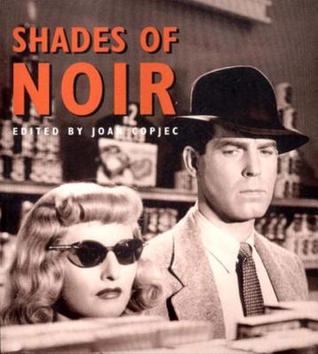
Shades of Noir: A Reader
Shades of Noir: A Reader
by
Joan Copjec
(editor)
by
Joan Copjec
(editor)
Shades of Noir: A Reader
by
Joan Copjec
(editor)
by
Joan Copjec
(editor)
The most familiar interpretation of film noir presents it as a sort of dark allegory of the post-war 1940s, starring such abstractions as 'the loss of wartime unity' and postwar economic conditions. Or, as Sylvia Harvey writes in her much-quoted article from 1 980: 'The hard facts of economic life are transmuted, in these movies, into corresponding moods and feelings. Thus the feelings of loss and alienation expressed by the characters in film noir can be seen as the product both of post-war depression and the reorganisation of the American economy.' 4 Though there are far more nuanced versions, for example by Dana Polan, this remains in its essentials the standard historical interpretation. 5 (By film nair and raman nair, we mean the works that are customarily taxonomized as such, for example in standard works such as the encyclopaedic Film Nair, of Silver and Ward. The controversy over whether film nair represents a genre or a movement [as opposed to the more interesting matter of whether it exists at all], not to mention the terminological niceness that would deny the title of nair to any film with an equivocal, let alone happy ending, threatens to become as tiresome as the ancient and now extinct argument over the possibility of bourgeois tragedy.) 6