
project/nye-play
Vivian Gornick,
Mario Levrero,
Jenny Erpenbeck,
Helen Garner,
Vladimir Nabokov
lol
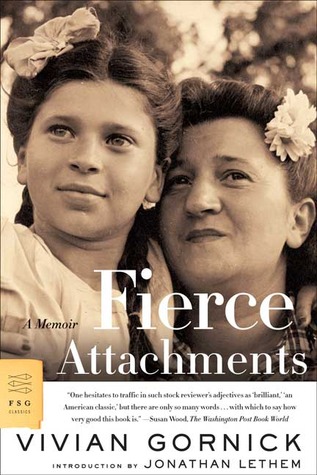
Imagine. I was living entirely in the moment, with no formal assurance beyond tomorrow morning’s telephone call, and I found myself interested; not sad tearful frightened or resentful, only interested. Here, I reasoned, is a circumstance where you clearly cannot make terms. The truth is, one never makes terms. This affair is only the bare, unfiltered truth. Can you take it in or will you founder on the absence of illusion? Indeed, it was stamina and self-control that were required to answer the question. I rose to the task. I began to grasp the idea of living without a future: we had few moments to waste on bad behaviour. I saw errant impulses die before they could make trouble. I saw reflexive anger give way to analytic understanding. I saw petty indulgence stifle itself and a kind of rough emotional justice prevail. All this I saw, and all this I was pleased to see. Then a day came when I also saw that learning to live without a future is a sterile exercise: what looks like life within a walled garden is really life inside a renovated prison yard. Joe’s wife remained an abstraction, but Joe’s marriage became a stunning confinement.
We occupied a universe composed of one room in one season: my bedroom on weekday afternoons. As time went on, we occupied this universe more and more fully. Hunger multiplied on hunger, desire on desire. We couldn’t get enough. Because we didn’t get enough. I was always wanting more. ‘Not more,’ a friend said evenly. ‘Enough. You want enough.’ In a year or two I realised that it wasn’t exactly more I wanted, or even enough. It was a larger world for our feelings to walk about in. Life requires space as well as air and light, room for exploration and self-discovery. The limits of exploration on the life of our feelings were set by Joe’s marriage, and those limits were close in. However deeply we might feel, our love could not make laws or map territory. There was no country of experience for it to cross, no coast to reach, no centre to penetrate. We were in possession of a small interior space somewhere in the midst of a fertile region of unknown proportion. Around this space stood boundaries of rigid stability. Love might intensify, but it could never expand to occupy a territory made in its own shape. The reality of the predetermined limit bit into me.

The urge to blame V. To say, ‘He is selfish. He wants to have everything, for the world to revolve around him. He will never choose me. He should never have begun this.’ The cowardice of this urge. The old longing to play the victim. What’s required here is a bracing of the self. After all, ‘we’ ‘love’ ‘each other’. These hackneyed words. Who’s we? What’s love? Do we know each other? Or is each of us only a screen for the other’s light show?

Two weeks ago, when Ingrid was taking Hans’s jacket to the dry cleaner’s, she found a passport photo of Katharina in the inside pocket and wouldn’t talk to him for three days. He didn’t tell Katharina. In October Katharina cried for the first time about the fact that he was married, and in November for the second time, and since then he’s avoided mentioning Ingrid’s name. And if Katharina now sometimes looks deadly earnest, he knows she’s making an effort and is repressing something she ought really to talk about. Anything the matter? No. Because everything is avoided that might make one or other of them sad, sadness suddenly comes to occupy a lot of space between them. He is old enough to know how the end likes to set its roots first imperceptibly, then ever more boldly, in the present. Without my marriage I wouldn’t be the man I am. That’s what he told Regina as well, the newscaster, and Marjut, the Finn. They went along with it until he’d had enough. Where Katharina is concerned, the sentence carries a different meaning, but she would deny it if he were to write it to her. Without his marriage, there wouldn’t be the danger, the secrecy, the circumstances that give rise to yearning. Not the content of their love, but factors that energize and quicken it. Just as if/ in a gallop/ an exhausted mare/ thirsted for the nearest well. Thirsting. Another one of those dead words. The marriage that threatens and attenuates their affair is also the ground that nourishes it. And probably, if Hans were honest, the other way around as well. Wasn’t Ingrid — when at the end of three silent days she started to speak again, and during the ensuing scene to cry, and when the makeup ran down her face and she picked up the nearest thing that came to hand, which happened to be a clothes brush, and threw it out of the window into the yard — wasn’t Ingrid in her desperation more beautiful and desirable than she’d appeared to him in a long time?
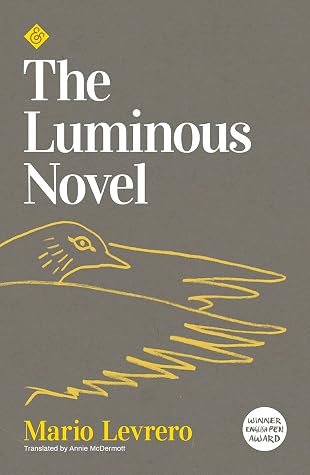
My doubts relate more to the fact that now, when I look back on that time, another completely different image occurs to me as the source of that impulse; and judging by this image, the initial impulse arose from a conversation I had with a friend. I’d told this friend about an experience of mine that had been extremely transcendental, and I’d told him how difficult it would be to turn it into a story. According to my theory, there are some extraordinary experiences that can’t be written about without becoming denatured; it’s impossible to set them down on paper. My friend insisted that if I wrote it just as I’d told it that night, I’d have a beautiful story; and that not only would I be able to write it, but that writing it was my duty.

[...] regardless of what happened to me or to her, in between, we never discussed anything, as we never thought of each other during the intervals in our destiny, so that when we met the pace of life altered at once, all its atoms were recombined, and we lived in another, lighter time-medium, which was measured not by the lengthy separations but by those few meetings of which a short, supposedly frivolous life was thus artificially formed. And with each new meeting I grew more and more apprehensive; no—I did not experience any inner emotional collapse, the shadow of tragedy did not haunt our revels, my married life remained unimpaired, while on the other hand her eclectic husband ignored her casual affairs although deriving some profit from them in the way of pleasant and useful connections. I grew apprehensive because something lovely, delicate, and unrepeatable was being wasted: something which I abused by snapping off poor bright bits in gross haste while neglecting the modest but true core which perhaps it kept offering me in a pitiful whisper. I was apprehensive because, in the long run, I was somehow accepting Nina’s life, the lies, the futility, the gibberish of that life. Even in the absence of any sentimental discord, I felt myself bound to seek for a rational, if not moral, interpretation of my existence, and this meant choosing between the world in which I sat for my portrait, with my wife, my young daughters, the Doberman pinscher (idyllic garlands, a signet ring, a slender cane), between that happy, wise, and good world … and what? Was there any practical chance of life together with Nina, life I could barely imagine, for it would be penetrated, I knew, with a passionate, intolerable bitterness and every moment of it would be aware of a past, teeming with protean partners. No, the thing was absurd. And moreover was she not chained to her husband by something stronger than love—the staunch friendship between two convicts? Absurd! But then what should I have done with you, Nina, how should I have disposed of the store of sadness that had gradually accumulated as a result of our seemingly carefree, but really hopeless meetings?
aaaahhh. this one lodges deep in my soul