
by
Lucia Berlin
project/teacher-story
Amia Srinivasan,
Jennifer Egan,
Lisa Taddeo,
Joy Williams,
Rachel Kushner,
Vladimir Nabokov,
Claire Dederer,
Martin Amis,
Simone de Beauvoir,
James Salter

“I have to go to the other patients. I’ll be back when the doctor comes.” She nods, resigned. She has that hopeless look you see on battered women. God forgive me, because I am a woman too, but when I see women with that look I want to slap them.
MC towards mother
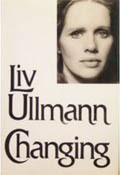
Seeing pictures of Mamma when she was young makes me sad. She is lovely, her eyes are happy and full of expectation.
Why doesn’t life turn out as we hope and plan?
Why is Time so merciless, stealing our opportunities if we are not swift enough to grasp them immediately?
Why is it so frightening to reach sixty because one was once sixteen and believed that time existed in infinite supply?
Why couldn’t one know that Time moves on with ever-increasing speed and plays havoc with all things we once thought we could leave for tomorrow?

Given that other people hold the key to survival in the world, histrionic patients tend to also hold the basic belief that it is necessary to be loved by everyone for everything one does. This leads to a very strong fear of rejection. Even entertaining the notion that rejection is possible is extremely threatening to these individuals, because this reminds the patient of his or her tenuous position in the world. Any indication of reje tion at all is devastating, even when the person doing the rejecting was not actually that important to the patient. Feeling inadequate yet desperate for approval as their only salvation, people with HPD cannot relax and leave the acquisition of approval to chance. Instead, they feel constant pressure to seek this attention in the ways they have learned are ef- fective, often by fulfilling an extreme of their sex-role stereotype. Female histrionics (as well as some of the males) seem to have been rewarded from an early age for cuteness, physical attractiveness, and charm rather than for competence or for any endeavor requiring systematic thought and planning. The more “macho” male histrionics have learned to play an extreme masculine role, being rewarded for virility, toughness, and power rather than interpersonal competence or problem-solving ability. Understandably, then, both male and female histrionics learn to focus attention on the playing of roles and “performing” for others.
"Female histrionics (as well as some of the males) seem to have been rewarded from an early age for cuteness, physical attractiveness, and charm rather than for competence or for any endeavor requiring systematic thought and planning" this sentence is relevant to her character i think

I care about fine wine but not about food, and because the terrine is efficient—comes in its own container and can be consumed unheated—I stole two jars of it from one of these travel centers, the weight of the jars giving a new tug to the leather straps of my handbag as I purchased my wine.
It wasn’t that I believed the wine I bought was payment enough for my jars of human cat food. Stealing is a way to stop time. Also, it refocuses the mind, the senses, if they become dulled, for instance by drinking. Stealing puts reality into sharper relief.
You’re in a highway travel center, people in a great flux and flow, coming and going and milling and choosing, the cashiers in a fugue state of next and next and next. And in order to locate the precise moment when you can take unseen, you slow it all down. You make time stop. You insert into reality what composers call a “fermata,” and while time is stopped, you put something in your bag.
In this way, I test my fitness. I test my ability to see. I gauge what other people see, and also, what they fail to see.
so good. inspo for MC but for seduction not stealing

As they watch her go, Bernadette reaches under the table and touches him, softly at first, then more boldly. It’s amazing, she thinks, how you can just do this to people. Like stealing. Luckily, the youngest girls don’t know it.
Jann looks at her and swallows. She decides that he is younger than she thought. She sips her beer, which tastes of smoke, and does not move her hand. “What does this remind you of?” she says.
He shakes his head. Color fills his cheeks.
“Let’s go upstairs,” says Bernadette.
Ellen found her mother seated on the living room floor, her hair in a scarf. She had the dreamy look she often wore after spending several hours by herself. “I’m rearranging,” she said. “Dusting.”
Around her lay things she had bought on her various trips: inlaid wood chests, corn-husk dolls, animals carved from ivory. In a glass dish were the colored marble eggs she had bought with Ellen’s father in Florence. Ellen felt a nervous fluttering under her ribs.
“I’ve lost perspective,” her mother said. “Can you see any difference?”
Ellen wished she were back at the age when she would howl shamelessly while her mother used a tweezer to pick bits of gravel from her skinned knees. Her mother looked as delicate now as the blown-glass vase she was holding.
“Mom,” Ellen said.
Her mother looked up. The room was very still. Ellen felt the weight of the old house, its dense curtains and clean, swept kitchen. Her mother’s world was pure, steadfast, decent. But it wasn’t enough for him.

It had not always been that way. Though she did not state, like London’s notorious Mrs. Wilson two hundred years earlier, that she would not reveal the circumstances that had made her the mistress of an older man at the age of fifteen, Teddy had had something of the same experience. The first great episode of her life had been with a writer, a detoured novelist more than twenty years older than she was. He had first seen her at a bus stop. She was not, even in those days, exactly beautiful, but there was a body that spoke, at the time, of much that youth could offer. He took her to get her first diaphragm and she was his mistress for three years until he left town and returned to literature and in the end a large house in New Jersey.
She had stayed in touch with him for a time, her real link to the grown-up world, and read his books, of course, but slowly his letters became less frequent until they simply stopped and along with them the foolish hope that he would come back someday.

Soon Lydia was round at Kensal Rise almost every day. She didn’t see much of Alex, though; mostly she was babysitting for Sandy or drinking coffee or wine at the kitchen table with Juliet, who poured out to her all the dissatisfactions of her marriage. Actually Lydia liked Juliet. Lydia was really very impressionable, although she appeared so disabused and knowing, and had such decided opinions. She was drawn into strong connection with women she met, studying them for clues as to how to grow up, what kind of person to be; she admired Juliet’s bright little house, her tidy cupboards, her competence and toughness – and was rather afraid of her, fascinated by the idea of her intimacy with Alex. She could not imagine achieving for herself any existence so strongly flavoured, so deep.

[...] There was an internal click as an actual idea of Cassirer's broke through. The sentence that had so addled me suddenly made sense [...]:
The same function which the image of God performs, the same tendency to permanent existence, may be ascribed to the uttered sounds of language.
He meant that words shaped our realities, our perceptions, giving them an authority God had for other generations. The indecipherable sentence had been circumnavigating my insides like a bluebottle fly for a week, and at last I got hold of it: words would define me, govern and determine me. Words warranted my devotion--not drugs, not boys. That's why I clung to the myth that poetry could somehow magically still my scrambled innards.
from The Philosophy of Symbolic Forms

As she spoke Nicola was looking, not at Keith, but at her bikini and what it framed. She rightly imagined that he was doing likewise. The interproximate breasts, concavities of throat and belly, white pyramid, the racing legs. Keith did not know, could not have guessed, would never have believed, that half an hour ago this body had stood naked before the bathroom mirror while its mistress wept - drenching the feet of the god of gravity. Beauty is in the eye of the beholder. Which is fun for the beholder; but what about the owner, the tenant? Nicola wondered whether she'd ever had a minute's pleasure from it. Even at sixteen, when you're excitedly realizing what you've got (and imagining it will last for ever), you're still noticing what you haven't got, and will never get. Beauty's hand is ever at its lips, bidding adieu. Yes, but bidding adieu in the mirror.