
by
Natasha Lunn
advice/living
Helen Garner,
Simone de Beauvoir,
Constance Debré,
Jennifer Egan,
Sally Rooney,
Jonathan Franzen,
Patricia Highsmith,
Vivian Gornick,
Mario Levrero
just like life advice. ideally philosophical rather than pragmatic

I needed to ask, what would a better way of seeing look like? And how do you move forward when uncertainty tempts you towards cynicism? The answers, I think, are in something the author Sheila Heti told me in an interview when I asked her about the question of whether or not to have children. The important thing, she explained, was not to make the ‘right’ or ‘best’ decision, but ‘to closely bind yourself to whatever you’re living’. She said, ‘You make your life meaningful by applying meaning to it – it’s not just inevitably meaningful as a result of the choices you’ve made.’ We were discussing this in the context of choice, but I think it applies to circumstance too. The romantic relationship or family I wanted would not make my life meaningful; only I could.
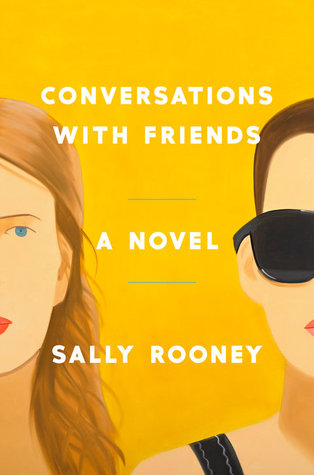
I closed my eyes. Things and people moved around me, taking positions in obscure hierarchies, participating in systems I didn't know about and never would. A complex network of objects and concepts. You live through certain things before you understand them. You can't always take the analytical position.

“Sweetie, I didn’t listen to Him, either. From now on, we’ll have to try to do better. That’s why I want us to pray together every day. I want us to change. I want us to be closer. I want us to experience the joy of God together.”
He shuddered.
“A terrible thing happened, but there can still be joy. I was looking at the birds outside—can’t we still take joy in Creation? Can’t we take joy in each other?”
He gave a cry of pain.
“Shh, shh.”
“I don’t deserve you!”
“Shh. I’m here now. I’m not going anywhere.”
“I don’t deserve joy!”
“No one does. It’s a gift from God.”

So, in every way, Clifford’s life was made simultaneously easier and more complicated. His pleasures were multiplied, while he had less and less time for himself. The flattery never stopped and he couldn’t help eating it up, while at the same time he believed what was said about him less and less and finally not at all.
Here’s the tragic heart of the problem—as I understood it. When the irritations, the problems, and the conflicts that existed before the big success are eased and removed, when the struggle is (apparently) over and one lives behind a permanent Don’t Disturb sign, it soon becomes evident that these troubles, now put behind, were the source and the genesis of the talent that brought on the success. Fame and money were insulating Clifford from the discomforts and challenges of his earlier years but, at the same time, “saving” him from those abrasions that were the source of his “genius.”
There’s a price for everything.
Now came the classic questions: “Suddenly I can do anything I want, so what do I do? I can go any which way; which way will I choose? What do I ask of life? What do I want to do with my years and energy? If I do have the talent they say I have, to what shall I turn it? Now that I have what appear to be unlimited choices, which choices shall I make?”

We hang up, and I go back to my closet to do another hour’s work. I’m looking forward to tonight—I always liked Bud Templeton, though I’ve hardly seen him in years. I still think of him as the tall, wry neurologist I loved to chat with over plastic cups of wine at school plays. We would congratulate each other on our daughters’ performances as orphans or lost boys, one eyebrow raised to show that, unlike some parents, we had this all in perspective. But perspective was what I lacked, it turns out, for my life had felt as permanent as childhood. I’ve even outgrown the clothes I wore as a young wife: summer suits, skirts below the knee, tall black boots—none of it fits; I’ve become a smaller version of myself, distilled from an earlier abundance I was not even aware of. I take unexpected pleasure now in packing these outfits away and stepping into a sleek, narrow dress I bought last week. I carry my wine to the window and wait, my face near the glass. The sky is clear and dark, the lights of the city trembling beneath it. As I watch them, I’m overwhelmed by a feeling I haven’t had in years: a sweet, giddy sense that anything might happen to me.
You must be logged in to see this comment.
“Always watching,” Silas says, looking at me. “Those big eyes, always moving.”
I nod, ashamed. “But I never do anything,” I say. And all of a sudden I know, I know why Angel left me.
Silas frowns. “Sure you do. You watch,” he says, “which is what’ll save you.”
I shrug. But the longer we sit, the more I realize he’s right—what I do is watch. I’m like Silas, I think. In twenty years I’ll still be alive.
On one side the sky is getting light, like a lid is being lifted up. I watch it, trying to see the day coming, but I can’t. All of a sudden the sky is just bright.
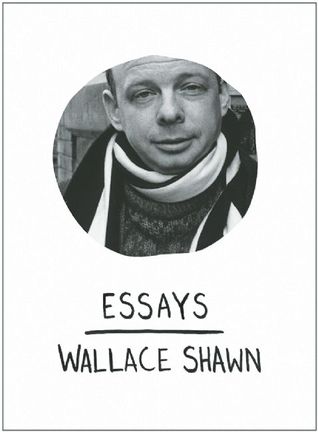
Yesterday I walked through a neighborhood of shabby apartment buildings on shabby streets, and I ate lunch in a lousy restaurant. The bread was hard, and the lettuce was rather stiff as well. But to tell you the truth, the experience wasn’t that bad. I could survive some lousiness, some uncomfortableness, some decline. Back on the street, I kept walking for a while and wondered what would happen if we allowed some of the fossils to simply lie there under the sand, if we decided not to try to dominate the world. We’d have no control over what would happen. We’d let go and fall. How far would we sink? How far? How far? Sure, it’s been great, the life of comfort, good lunches, predictability. But imagine how it would feel if we could be on a path of increasing compassion, diminishing brutality, diminishing greed—I think it might actually feel wonderful to be alive.
<3
MS: There is only one reason to be envious of the people who write very successful songs with three or four chords, and that is that they earn the kind of money that gives them a kind of freedom that Elliott Carter may not have. So it would be nice for Elliott Carter to go to the restaurants that Elton John can afford. But if the price was that he had to write music exactly like Elton John’s, then he would do without it. And that’s it. If I had to write the kind of sentences that Jacqueline Susann wrote, you know, write the kind of novels that she wrote, I wouldn’t be able to hold my head high anywhere! I’d slink into restaurants—very expensive restaurants—and I’d slink into expensive hotels. And I’d be ashamed to say what it was that I did.

[...] For Dostoevsky--as for such latter-day literary heirs of his as Denis Johnson, David Foster Wallace, Irvine Welsh, and Michel Houellebecq--the impossibility of pressing the Pleasure bar forever, the inevitable breaking of some bleak and remorse-filled dawn, is the flaw in nihilism through which humane narrative can slip and reassert itself. The end of the binge is the beginning of the story.

Just a lunch to celebrate Chollie and Danica’s upgrade in the Hamptons. Ten thousand square feet, live-in housekeeper, chef, and gardener. Stupid, Mathilde thought, their friends were idiots. With Antoinette gone, Lotto and she could buy this place many times over. Except that later, in the car, Lotto and she would laugh at their friends for this kind of idiotic waste, the kind he was raised within before his father kicked the bucket, the kind they both knew meant nothing but loud pride. Mathilde still cleaned both the country house and the apartment, she took out the garbage, she fixed the toilet, she squeegeed the windows, she paid the bills. She still cooked and washed up from the cooking and ate the leftovers for lunch the next day.
Unplug from the humble needs of the body and a person becomes no more than a ghost.
These women around her were phantom people. Skin taut on their faces. Taking three nibbles of the chef’s fine food and declaring themselves full. Jangling with platinum and diamonds. Abscesses of self.
<3