
by
Joan Copjec
(editor)
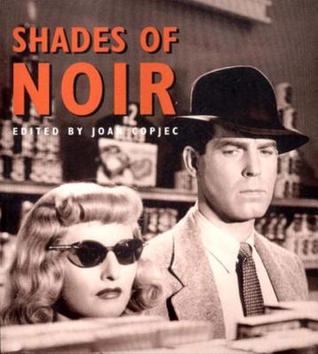
Shades of Noir: A Reader
Shades of Noir: A Reader
by
Joan Copjec
(editor)
by
Joan Copjec
(editor)
Shades of Noir: A Reader
by
Joan Copjec
(editor)
by
Joan Copjec
(editor)
Whether it is a genre, a cycle of films, a tendency or a movement, film noir has been extraordinarily successful as a term. As 'the genre that never was' -- since the term was not used by the studios themselves, or by audiences at the time, except perhaps in France where the term originated -- the claims for the category lie in a post hoc analysis of of similarities and in a set of elements that provide a 'core' of characteristics that are identified in certain films. The term has succeeded despite the lack of any straightforward unity in the set of films it attempts to designate. Unlike terms such as the 'western', or the 'gangster' film, which are relatively uncontroversial (and were industry categories), film noir has a more tenuous critical status. This tenuousness is matched by a tenacity of critical use, a devotion among aficionados that suggest a desire for the very category as such, a wish that it exist in order to 'have' a certain set of films all together. Film noir as a genre is in a certain sense a fantasy: it is something that is never given a pure or complete form; the 'first' film noir, The Maltese Falcon (John Huston, 1 94 1 ) , is usually described as 'atypical', while it is the much later Out of the Past (Jacques Tourneur, 1 947) which is often cited as the quintessential noir film. Though only ever realized in some incomplete form, the 'true' form is nevertheless discerned across a series of films. The desire for film noir can be seen, too, in the tendency by film reviewers to discover contemporary examples - colour cinematography notwithstanding - a recent example is Denis Hopper's film The Hot Spot (1990). What is centred by this fantasy is almost always a masculine scenario, that is, the film noir hero is a man struggling with other men, who suffers alienation and despair, and is lured by fatal and deceptive women.