
by
Joan Copjec
(editor)
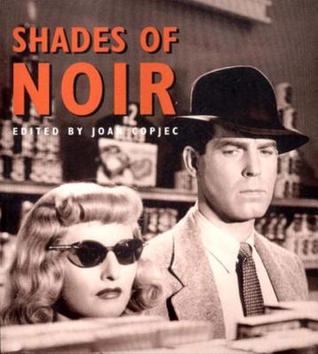
Shades of Noir: A Reader
Shades of Noir: A Reader
by
Joan Copjec
(editor)
by
Joan Copjec
(editor)
Shades of Noir: A Reader
by
Joan Copjec
(editor)
by
Joan Copjec
(editor)
What I am attempting to challenge here is the tendency to characterize film noir as always a masculine film form. Even though this masculine bias is considered critieally, the tendency is still to see women characters as occupying a subordinate position in the films. This obscures the extent to which these films afforded women roles which are active, adventurous and driven by sexual desire. Nor is this observation necessarily discounted by the fact that these roles were frequently undertaken by villainesses. As Janey Place has pointed out, in these films 'women are deadly but sexy, exciting, and strong'. If the women die as a result, they suffer a fate no different from that of the men: the Production Code was egalitarian on this point. Moreover, for the woman as well as the man the crucial relation is between desire and death; of Double Indemnity, Claire Johnston notes, 'the eroticisation of death in the final scene of the flashback, confirms a universe where access to desire is only through repression'. The fantasy of the woman's dangerous sexuality is a feminine as well as masculine fantasy, and its pleasures lie precisely in its forbiddenness. To argue that it is only patriarchy, or the Production Code, that requires its punishment is to misunderstand that it is the fantasy itself that demands the punishment, for in the punishment the reality of the forbidden wish is acknowledged.