
by
Joan Copjec
(editor)
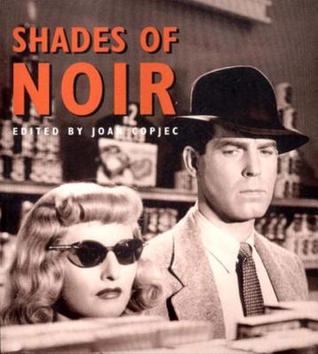
Shades of Noir: A Reader
Shades of Noir: A Reader
by
Joan Copjec
(editor)
by
Joan Copjec
(editor)
Shades of Noir: A Reader
by
Joan Copjec
(editor)
by
Joan Copjec
(editor)
In a widely quoted passage James Damico proposes a model of film noir's plot structure and character type:
Either because he is fated to do so by chance, or because he has been hired for a job specifically associated with her, a man whose experience of life has left him sanguine and often bitter meets a not-innocent woman of similar outlook to whom he is sexually and fatally attracted. Through this attraction, either because the woman induces him to it or because it is the natural result of their relationship, the man comes to cheat, attempt to murder, or actually murder a second man to whom the woman is unhappily or unwillingly attached (generally he is her husband or lover), an act which often leads to the woman's betrayal of the protagonist, but which in any event brings about the sometimes metaphoric, but usually literal destruction of the woman, the man to whom she is attached, and frequently the protagonist himself.
This same core theme is presented by Marc Vernet in his discussion of the openings of films noirs, though it is now identified as having an 'incest form' :
The 'triangle' has often been pointed out as a principal form of relation among the characters: the young hero desires and conquers a rich woman who is quite often tied to an older man or some other representative of patriarchal authority (Double Indemnity, The Lady From Shanghai, Out of the Past, The Big Sleep, The Maltese Falcon). However, in most of these films the woman is made guilty and despite her protestations she is either abandoned or killed by the hero. In this manner, the resolution of the intrigue is guaranteed by the annulment of the incestuous relations.