
by
Joan Copjec
(editor)
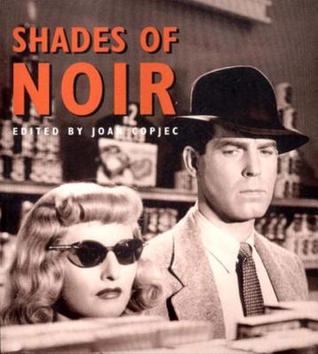
Shades of Noir: A Reader
Shades of Noir: A Reader
by
Joan Copjec
(editor)
by
Joan Copjec
(editor)
Shades of Noir: A Reader
by
Joan Copjec
(editor)
by
Joan Copjec
(editor)
121
Film Noir and Women
by ELIZABETH COWIE
by ELIZABETH COWIE
0
terms
4
notes
121
Whether it is a genre, a cycle of films, a tendency or a movement, film noir has been extraordinarily successful as a term. As 'the genre that never was' -- since the term was not used by the studios themselves, or by audiences at the time, except perhaps in France where the term originated -- the claims for the category lie in a post hoc analysis of of similarities and in a set of elements that provide a 'core' of characteristics that are identified in certain films. The term has succeeded despite the lack of any straightforward unity in the set of films it attempts to designate. Unlike terms such as the 'western', or the 'gangster' film, which are relatively uncontroversial (and were industry categories), film noir has a more tenuous critical status. This tenuousness is matched by a tenacity of critical use, a devotion among aficionados that suggest a desire for the very category as such, a wish that it exist in order to 'have' a certain set of films all together. Film noir as a genre is in a certain sense a fantasy: it is something that is never given a pure or complete form; the 'first' film noir, The Maltese Falcon (John Huston, 1 94 1 ) , is usually described as 'atypical', while it is the much later Out of the Past (Jacques Tourneur, 1 947) which is often cited as the quintessential noir film. Though only ever realized in some incomplete form, the 'true' form is nevertheless discerned across a series of films. The desire for film noir can be seen, too, in the tendency by film reviewers to discover contemporary examples - colour cinematography notwithstanding - a recent example is Denis Hopper's film The Hot Spot (1990). What is centred by this fantasy is almost always a masculine scenario, that is, the film noir hero is a man struggling with other men, who suffers alienation and despair, and is lured by fatal and deceptive women.
Whether it is a genre, a cycle of films, a tendency or a movement, film noir has been extraordinarily successful as a term. As 'the genre that never was' -- since the term was not used by the studios themselves, or by audiences at the time, except perhaps in France where the term originated -- the claims for the category lie in a post hoc analysis of of similarities and in a set of elements that provide a 'core' of characteristics that are identified in certain films. The term has succeeded despite the lack of any straightforward unity in the set of films it attempts to designate. Unlike terms such as the 'western', or the 'gangster' film, which are relatively uncontroversial (and were industry categories), film noir has a more tenuous critical status. This tenuousness is matched by a tenacity of critical use, a devotion among aficionados that suggest a desire for the very category as such, a wish that it exist in order to 'have' a certain set of films all together. Film noir as a genre is in a certain sense a fantasy: it is something that is never given a pure or complete form; the 'first' film noir, The Maltese Falcon (John Huston, 1 94 1 ) , is usually described as 'atypical', while it is the much later Out of the Past (Jacques Tourneur, 1 947) which is often cited as the quintessential noir film. Though only ever realized in some incomplete form, the 'true' form is nevertheless discerned across a series of films. The desire for film noir can be seen, too, in the tendency by film reviewers to discover contemporary examples - colour cinematography notwithstanding - a recent example is Denis Hopper's film The Hot Spot (1990). What is centred by this fantasy is almost always a masculine scenario, that is, the film noir hero is a man struggling with other men, who suffers alienation and despair, and is lured by fatal and deceptive women.
122
In a widely quoted passage James Damico proposes a model of film noir's plot structure and character type:
Either because he is fated to do so by chance, or because he has been hired for a job specifically associated with her, a man whose experience of life has left him sanguine and often bitter meets a not-innocent woman of similar outlook to whom he is sexually and fatally attracted. Through this attraction, either because the woman induces him to it or because it is the natural result of their relationship, the man comes to cheat, attempt to murder, or actually murder a second man to whom the woman is unhappily or unwillingly attached (generally he is her husband or lover), an act which often leads to the woman's betrayal of the protagonist, but which in any event brings about the sometimes metaphoric, but usually literal destruction of the woman, the man to whom she is attached, and frequently the protagonist himself.
This same core theme is presented by Marc Vernet in his discussion of the openings of films noirs, though it is now identified as having an 'incest form' :
The 'triangle' has often been pointed out as a principal form of relation among the characters: the young hero desires and conquers a rich woman who is quite often tied to an older man or some other representative of patriarchal authority (Double Indemnity, The Lady From Shanghai, Out of the Past, The Big Sleep, The Maltese Falcon). However, in most of these films the woman is made guilty and despite her protestations she is either abandoned or killed by the hero. In this manner, the resolution of the intrigue is guaranteed by the annulment of the incestuous relations.
135
What I am attempting to challenge here is the tendency to characterize film noir as always a masculine film form. Even though this masculine bias is considered critieally, the tendency is still to see women characters as occupying a subordinate position in the films. This obscures the extent to which these films afforded women roles which are active, adventurous and driven by sexual desire. Nor is this observation necessarily discounted by the fact that these roles were frequently undertaken by villainesses. As Janey Place has pointed out, in these films 'women are deadly but sexy, exciting, and strong'. If the women die as a result, they suffer a fate no different from that of the men: the Production Code was egalitarian on this point. Moreover, for the woman as well as the man the crucial relation is between desire and death; of Double Indemnity, Claire Johnston notes, 'the eroticisation of death in the final scene of the flashback, confirms a universe where access to desire is only through repression'. The fantasy of the woman's dangerous sexuality is a feminine as well as masculine fantasy, and its pleasures lie precisely in its forbiddenness. To argue that it is only patriarchy, or the Production Code, that requires its punishment is to misunderstand that it is the fantasy itself that demands the punishment, for in the punishment the reality of the forbidden wish is acknowledged.
What I am attempting to challenge here is the tendency to characterize film noir as always a masculine film form. Even though this masculine bias is considered critieally, the tendency is still to see women characters as occupying a subordinate position in the films. This obscures the extent to which these films afforded women roles which are active, adventurous and driven by sexual desire. Nor is this observation necessarily discounted by the fact that these roles were frequently undertaken by villainesses. As Janey Place has pointed out, in these films 'women are deadly but sexy, exciting, and strong'. If the women die as a result, they suffer a fate no different from that of the men: the Production Code was egalitarian on this point. Moreover, for the woman as well as the man the crucial relation is between desire and death; of Double Indemnity, Claire Johnston notes, 'the eroticisation of death in the final scene of the flashback, confirms a universe where access to desire is only through repression'. The fantasy of the woman's dangerous sexuality is a feminine as well as masculine fantasy, and its pleasures lie precisely in its forbiddenness. To argue that it is only patriarchy, or the Production Code, that requires its punishment is to misunderstand that it is the fantasy itself that demands the punishment, for in the punishment the reality of the forbidden wish is acknowledged.
136
Neither films noirs nor the thriller novels they drew upon are a preserve of male writers. A number of films were scripted, co-written or adapted by women or derived from stories by women - including Desperate, Railroaded and Raw Deal, all directed by Anthony Mann (his collaboration with women writers was extensive: 'Follow Me Quietly', an unpublished short story by Mann and Francis Rosewald was scripted for the film by Lillie Hayward) . In a Lonely Place is based on the novel by Dorothy B. Hughes; Private Hell was co-scripted b y Ida Lupino and Collier Young; additional dialogue in The Pretender was by Doris Miller, and Chandler's novel The High Window, filmed as The Brasher Doubloon, was scripted by Dorothy Hannah and adapted by Dorothy Bennett and Leonard Praskins. The Reckless Moment was based closely on the story 'The Blank Wall' by Elisabeth Sanxay Holding, who was described by Raymond Chandler as 'the top suspense writer of them all'.
Neither films noirs nor the thriller novels they drew upon are a preserve of male writers. A number of films were scripted, co-written or adapted by women or derived from stories by women - including Desperate, Railroaded and Raw Deal, all directed by Anthony Mann (his collaboration with women writers was extensive: 'Follow Me Quietly', an unpublished short story by Mann and Francis Rosewald was scripted for the film by Lillie Hayward) . In a Lonely Place is based on the novel by Dorothy B. Hughes; Private Hell was co-scripted b y Ida Lupino and Collier Young; additional dialogue in The Pretender was by Doris Miller, and Chandler's novel The High Window, filmed as The Brasher Doubloon, was scripted by Dorothy Hannah and adapted by Dorothy Bennett and Leonard Praskins. The Reckless Moment was based closely on the story 'The Blank Wall' by Elisabeth Sanxay Holding, who was described by Raymond Chandler as 'the top suspense writer of them all'.