
for/pq
Ingmar Bergman,
Martin Amis,
Michael Ondaatje,
Yara Rodrigues Fowler,
Lucia Berlin,
Elia Kazan,
Merritt Tierce,
Italo Calvino,
Karen Tei Yamashita

Jimmy plays at The Restaurant three nights a week, from seven until eleven or until the last guest leaves, whichever comes first. When he sees the last guests cross the threshold of the door out of the dining room into the lobby he’ll stop in the middle of his chill Jobim or his John Williams show tune, right in the middle of an arpeggio, stand up, shut the lid, grab his bag, walk out. The effect is as abrupt as turning off a stereo except that sometimes the last note he played drifts there in the air, along with the smells of butter and salt.
poetic
I’m good enough to get the once-over in the bar at The Restaurant, I see them thinking my smallness is appealing, my ass and face are cute enough, I see them thinking that short haircut might be sexy. I’m always in a backless cocktail dress and heels, I’m flat chested and a tad muscular so they ask me if I’m a dancer and say Call me sometime, let’s have a drink. It took me a while to understand you’re supposed to work that for your money but you can let the willingness fall right off your face when you turn around. It took me a while to understand that of course men fling their entreaties out in swarms, like schools of sperm, hoping one will stick. They’re expecting to be turned down so you shouldn’t feel any obligation.
But believe me that move is not original in the business. I knew a guy who did that in Morton’s one night, they have a spiel with a cart and all these props, and there’s a part where you have to hold up a potato and talk about what they can do with it. He held up the potato and—I can’t do this, he said, and put the potato down and left. He told me After you do it it feels like the stupidest thing because most likely you just end up in some other restaurant holding some other potato but way behind on your rent.

Not having any money gives a sharp clarity to everything. 100ft2, two pairs of jeans, three T-shirts, an old leather jacket and my old Rolex, just for a laugh, a single espresso to go, a baguette, a packet of cigarettes, my swimming pool pass. The world is turning into a skeleton without any flesh. I'm getting stronger, more focused. It's important to have limits so you don't lose yourself in the chaos. I've been stealing from Franprix and Bio c’ Bon, I don't pay my train fare, I jump the barrier, I've learned to ask my friends for a hundred euros, let them pay for my drinks, thank you friends, there are thousands of things I can do without, the doctor for example (but not cigarettes), I'm living on nothing, learning the techniques, getting through the days. Sometimes I steal to eat, sometimes it's just for the sake of it, for the beauty of the gesture. I'm training myself to be indestructible, I need to know that I am.
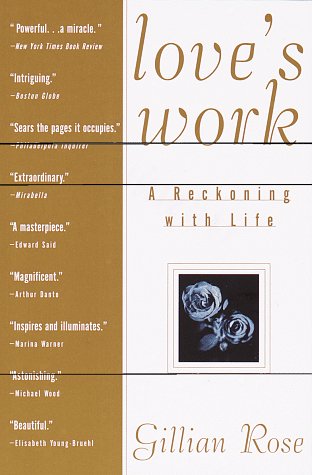
Enter Mr Bates. Mr Bates is the bowel specialist who operates with Mr Wong in cases of ovarian cancer, the pattern of whose metastases typically involves the bowel. A former Rhodesian, Mr Bates is large, alternately bluff and jovial; he belongs to a Scottish malt whisky fraternity. I first met him when I found myself in intensive care after the first operation. An unknown man, dressed in brightly coloured sports clothes (it was a Sunday), was bouncing up and down beside my cot. He enquired breezily, “How are you, young lady?” Through the haze of pain, I replied with outrage, “How dare you call me ‘young lady,‘” and demanded that the intruder introduce himself. This act of gross impropriety on my part in the mode of address, or rather, return of address, to a very senior consultant surgeon, who, moreover, like Mr Wong and the anaesthetist, was treating me gratis in a private hospital, enhanced my kudos in Mr Wong’s eyes, and he took every opportunity to remind me of this picaresque solecism. Mr Bates and I became wary sparring partners. I always greeted him with the appellation “Young Man,” and I presented him with unwanted volumes of Marx so that he might correct the vulgarity of his right-wing misapprehensions of the socialist theory of politics and society.
cute

[...] I was, I think, eight years old. The old folks gossiped and entrusted me to a young girl, who was to show me the park. We walked along the paths, crossed some little bridges which had railings made of birch poles - I remember that well. Then it happened. I looked at her thin bare shoulders, the narrowness of her arms above the elbow, and an emotion I had never experienced, a tenderness, a rapture, unnamable, welled up in my throat. I had no idea that this is called love. I think she must have said something, explaining, but I said not a word, strucky dumb by what had suddenly come over me.

Money
by
Martin Amis
by
Martin Amis
Money
by
Martin Amis
by
Martin Amis
Money
by
Martin Amis
by
Martin Amis
I had my reasons. Do you want to hear the good news first, or the bad news? The good news is that Martina called this morning and we’re having lunch tomorrow. The bad news is that the good news made me feel so relieved and excited that I ran out to a bar and drank a bunch of big ones. Yeah? you’ll say. And? Nothing new in that. Agreed, but the bad thing about the bad news is that the alcohol had a really bad effect on me. It didn’t make me drunk, which was what I was confidently expecting it to do. It made me hungover instead. It did. I kept incredulously ordering more drinks, in a doomed bid to stave off this conclusion. That’s why I had so many. All the more ironic, too, because I woke up this morning feeling bloody marvellous after a really late and heavy night with the TV and the B & F. Was the phenomenon a new jet-lag deal, or the terminal mutiny of my whole bodybag? Oh man, I’d better get to California soon, while the transplant people still have something to work on. Maybe I’d better wing out there right away and have them fix me up with a temporary. And the mind was suffering too. Yes, the mind had its sufferings also. It was crammed with sin and crime, the thoughts nowhere, all in freefall and turnaround. I’ve got to get this stuff out of my system. No, more than that, much more. I’ve got to get my system out of my system. That’s what I’ve got to do.
god!
So what can a poor boy do? You come out of the hotel, the Vraimont. Over boiling Watts the downtown skyline carries a smear of God’s green snot. You walk left, you walk right, you are a bank rat on a busy river. This restaurant serves no drink, this one serves no meat, this one serves no heterosexuals. You can get your chimp shampooed, you can get your dick tattooed, twenty-four hour, but can you get lunch? And should you see a sign on the far side of the street flashing BEEF-BOOZE – NO STRINGS, then you can forget it. The only way to get across the road is to be born there. All the ped-xing signs say DON’T WALK, all of them, all the time. That is the message, the content of Los Angeles: don’t walk. Stay inside. Don’t walk. Drive. Don’t walk. Run! I tried the cabs. No use. The cabbies are all Saturnians who aren’t even sure whether this is a right planet or a left planet. The first thing you have to do, every trip, is teach them how to drive.
i love him

6/22/41
There are some people we like instantly, before they have even had a chance to flatter us (which is the greatest encouragement to liking a person), because they have that quality of seeing in us what we desire to be, what we are trying to be, and of not seeing that which we are at the moment. We feel that they understand us, we begin to feel that we have attained what we desire ourselves to be, and being made happy by this we inevitably are very fond of the people who can make us feel this way.
jesus

Reading aloud from Jean-François Lyotard’s viciously difficult 1974 book, Libidinal Economy, Fisher relishes the work’s most polemical passages, as Lyotard seems to prophesy the patronising gaze cast upon James Turner Street, putting the producers on blast, who “dare not say the only important thing there is to say, that one can enjoy swallowing the shit of capital, its materials, its metal bars, its polystyrene, its books, its sausage pâtés, swallowing tonnes of it till you burst”. As far as Lyotard is concerned:
the English unemployed did not become workers to survive, they — hang on tight and spit on me — enjoyed the hysterical, masochistic, whatever exhaustion it was of hanging on in the mines, in the foundries, in the factories, in hell, they enjoyed it, enjoyed the mad destruction of their organic body which was indeed imposed upon them, they enjoyed the decomposition of their personal identity, the identity that the peasant tradition had constructed for them, enjoyed the dissolution of their families and villages, and enjoyed the new monstrous anonymity of the suburbs and the pubs in the morning and evening.
yeah i kind of love this