
by
Lucia Berlin
topic/love
Leonard Cohen,
Shirley Hazzard,
Lauren Elkin,
Jeffrey Eugenides,
James Salter,
Karen Tei Yamashita,
Jonathan Franzen,
Liv Ullmann,
Lucia Berlin
the other side of heartbreak

Max would carry each boy to bed and tuck him in. Kiss him sweet, the way he had kissed his father. Max slept as deeply as they. I thought he must be exhausted from what we were doing, his leaving his wife, taking on a family.
He taught them both to swim and to snorkel. He told them things. He told me things. Just things, about life, people he knew. We interrupted one another telling him things back. We lay on the fine sand on Caleta Beach, warm in the sun. Keith and Ben buried me in the sand. Max’s finger tracing my lips. Bursts of color from the sun against my closed sandy eyelids. Desire.
In the evenings we went to a park by the docks where they rented tricycles. Max and I held hands as the boys raced furiously around the park, flashing past pink bougainvillea, red canna lilies. Beyond them ships were being loaded on the docks.
We stayed very late, until the moon grew high and pale. Don and Max played chess by the light of a kerosene lantern. Caress of moths. Maria and I lay crosswise on a big hammock, talking softly about silly things like clothes, about our children, love. She and Don had been married only six months. Before she met him she had been very alone. I told her how in the morning I said Max’s name before I even opened my eyes. She said her life had been like a dreary record over and over each day and now in a second the record was turned over, music. Max overheard her and he smiled at me. See, amor, we’re the flip side now.
Jesse came out with some guacamole and chips, a fresh drink for me, beers for them. She slid to the ground and he sat. She leaned back against his knees. He held her throat with one fine long-fingered hand, drank his beer with the other.
I will never forget it, the way he held her throat. The two of them were never flirtatious or coy, never made erotic or even demonstrative gestures, but their closeness was electric. He held her throat. It wasn’t a possessive gesture; they were fused.
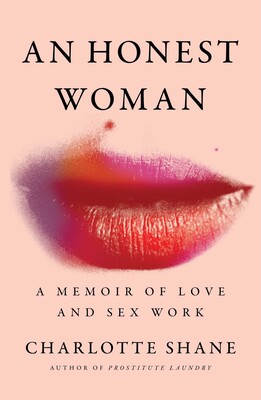
ANY EXPLANATION OF MY decision to marry might sound provincial and patriarchal. Perhaps my heart, desperate for superlative expression, reached down into its own depths and in lieu of inventing something new and iconoclastic, seized upon the most banal tradition. But we didn’t marry because of religious alignment or pressure from our families, not because I wanted a ring—we don’t wear rings—or kids or a wedding. (We don’t and didn’t have either.) I felt already pledged to him, and marriage seemed the starkest way to illustrate it because of what marriage (had) represented to me before him, which was nothing. I wanted to demonstrate—to myself and to him—that he was the only one I would do this for or want this with because he was the only one who could fill it with meaning. Our marriage matters to me not because I care about marriage but because I care about Sam.

For the anthology Homewrecker, in which A had a story years before becoming an Adulteress herself, the editor, Daphne Gottlieb, wrote: “I am a few years older now and I know this: There are tastes of mouths I could not have lived without; there are times I’ve pretended it was just about the sex because I couldn’t stand the way my heart was about to burst with happiness and awe and I couldn’t be that vulnerable . . . That waiting to have someone’s stolen seconds can burn you alive. That the shittiest thing you can do in the world is lie to someone you love; also that there are certain times you have no other choice—not honoring this fascination, this car crash of desire, is also a lie. That there is power in having someone risk everything for you. That there is nothing more frightening than being willing to take this freefall. That it is not as simple as we were always promised. Love—at least the pair-bonded, prescribed love—does not conquer all.”
“WHAT IS YOUR STRONGEST HAPPINESS?” I SAY TO A MAN for whom I care. We are in the new summer cottage. Rain is pouring down from a sky that is drearily gray. I had imagined us walking about naked and brown and beautiful and discovering new things from each other in the sun.
“My happiness?” he replies, and looks up from what he is reading. He does not know what I am thinking. Perhaps he is afraid he might not say what I expect to hear.
“My happiness—I think it is when I have worked in the sweat of my body a whole day on something hard and physical. When I’ve had to use my entire body, when I’ve become exhausted and my limbs are aching—and then finally I finish. Come in and sit down. Rest in the knowledge that I’ve achieved what I set out to do. Relax in the joy of a job well done.”
He does not ask what my happiness is. But the next day I know. We have had a sumptuous lunch. He praises my cooking and takes several helpings. And we lie on the bed and are close. Sated with tenderness. When we no longer have any fears or questions between us. Only tender pleasute in the other’s body and hands and face and expression. I am together with him, in the only way that I really live.
<3
IT IS A SHORT LOVE STORY THAT RESEMBLES SO MANY others.
It lasted five years.
When she had lived with him for a few years she began to observe him. She would sit quietly and experience him as an individual.
One who no longer existed only in relation to her.
Gradually, within her an understanding of him awakened. The more he retreated from her, the better she understood him—as if the distance gave her clarity.
The fear diminished and the loneliness was easier to bear when she saw his insecurity.
She would become filled with tenderness and look beyond his violence and his injustice.
She was no longer blind to his faults and weaknesses, as she had been at the beginning. But her understanding and respect for him grew.
The adoration disappeared. She noticed that his hair was gray; he was much older than she; he was wise and stimulating; he was vain and egotistical.
And she discovered to her surprise that this was love.
With sadness she realized that it would soon be over, that she had come to him when he was already on his way somewhere else.
She looked at their child and realized that she would soon have that responsibility alone.
The last year she fought for their relationship, even though she knew it was hopeless, and not right for either of them. And when it was all over she hoped that he would not be alone.
That the new woman would take better care of him than she had.
But of course it took her some time to reach that point.
She tried to recall who she had been when she came to the island five years before.
Something had been crushed in her, and something was more alive.
She had undergone a change.
And when bitterness and hate and despair were gone, she was sure she had experienced love and been enriched. But she would never be able to talk about it.
She had seen into another person and was full of tenderness for what she had found.
For a period of time they had taken each other's hands and been painfully connected.
But only when it was all over did they become true friends.
ahhhhh
AS LONG AS I LIVED ON THE ISLAND, I KEPT THINKING that I would be able to break through the isolation and find him on the other side.
We recognized so much in each other. Perhaps we were too much alike.
Sometimes he said that we were.
I used to dream about a great togetherness and was sure that we could achieve it.
But with the break came the final isolation—and I knew it would never happen.
And then something broke inside me.
The girl within me wept and wept. She made all of me, who after all was thirty, into a little thirteen-year-old again.
Until I had no more tears. and realized it was impossible to live as if my life could only be fulfilled through another person. Pointless to seek refuge in someone else from what was my loneliness and insecurity.
Ingmar was no longer in my life as before. That was a fact, and nothing could alter it.
But I still had myself, contact with my own being, everything in me that wanted to continue onward.
I missed Ingmar’s daily presence, but I knew I had his friendship and it was up to me, who at that moment needed it most, to find a new point of contact at which we could both meet.
With all the power I owned, I built a bridge between us, and after that everything was better.
For a time we used to phone each other several times a day. I read him pieces of my old compositions. He played me his favorite records.
Love has many faces.

[...] If he'd forgive her bagpipe udders and estuary leg veins, she'd forgive his unheroic privates, and they could pool their wretched mortalities and stand by each other for better or worse.

Sadness made Bradley look even older. Talking about any subject but the two of them was all it took—all it had ever taken—to illuminate their unsuitability for each other. What was best and most essential in her had been wasted on him. The converse was probably also true. She’d been too disturbed in Los Angeles to even know what love was. The real love had come later, in Arizona, and she was pierced, now, by homesickness for New Prospect. For the dear, creaky parsonage. Daffodils in the yard, Becky steaming up the bathroom, Russ buffing his shoes for a funeral. It was worth it, after all, to have aged thirty years. It was worth it to have taken the arduous steps to arrive in Bradley’s house, because the reward was clarity: God had given her a way of being. God had given her four children, a role she was skilled at playing, a husband who shared her faith. With Bradley, there had really only ever been fucking.