
by
James Salter
topic/love
Leonard Cohen,
Shirley Hazzard,
Lauren Elkin,
Jeffrey Eugenides,
James Salter,
Karen Tei Yamashita,
Jonathan Franzen,
Liv Ullmann,
Lucia Berlin
the other side of heartbreak
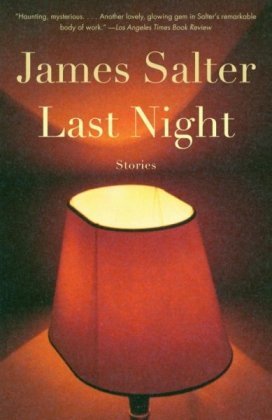
Westhampton, her tanned legs and pale heels. The feeling she gave him of being younger, even, God help him, debonair. He was playful. On the beach he wore a coconut hat. He had fallen in love, deeply, and without knowing it. He hadn’t realized he had been living a shallow life. He only knew that he was happy, happier than he had ever been, in her company. This warmhearted girl with her legs, her fragrance, and perfect little ears that were tuned to him. And she took some kind of pleasure in him! They were guests of the Senders and he slept in a separate room in the basement while she was upstairs, but they were under the same roof and he would see her in the morning.
— When are you going to marry her? everyone asked.
— She wouldn’t have me, he equivocated.

Selin smiled. The bookshop, she explained, sold large-format books, with magnified details on every page. She spread her arms to show how big. Two years ago, she went on, Ozan was diagnosed with early retinal deterioration. In front of his right eye was a black spot that was slowly spreading. He could still see clearly with his other eye, but it was a strain to look at things for a long time.
“But he won’t go blind?”
“He will,” Selin said. She was a step ahead of Lara now.
“I’m so sorry,” Lara said, too loudly. “That must be very difficult. But it’s so special that you stayed together. It’s really wonderful of you.”
They stood at a crossing, waiting for the green light. Selin looked at Lara but didn’t say anything. Then she pointed to the metro entrance ahead.
ahh the judgment seeps through
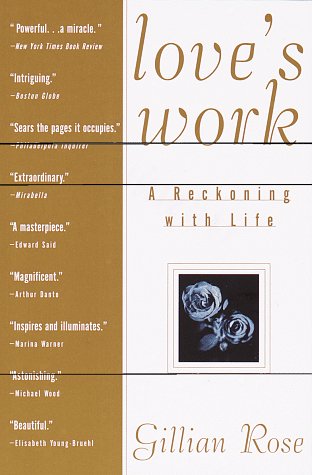
Love-making is never simply pleasure. Sex manuals or feminist tracts which imply the infinite plasticity of position and pleasure, which counsel assertiveness, whether in bed or out, are dangerously destructive of imagination, of erotic and of spiritual ingenuity. The sexual exchange will be as complicated as the relationship in general—even more so. Kiss, caress and penetration are the relation of the relation, body and soul in touch, two times two adds up: three times three is the equation. The three I harbour within me—body, soul and paraclete—press against the same triplicity in you. What I want, my overcharged imagination, released inside your body, taken up into mine, with attack and with abandon, succumbs so readily and with more joy than I could claim, to your passion, pudency and climax.
This is the counsel of despair which would keep the mind out of hell. The tradition is far kinder in its understanding that to live, to love, is to be failed, to forgive, to have failed, to be forgiven, for ever and ever. Keep your mind in hell, and despair not.
A crisis of illness, bereavement, separation, natural disaster, could be the opportunity to make contact with deeper levels of the errors of the soul, to loose and to bind, to bind and to loose. A soul which is not bound is as mad as one with cemented boundaries. To grow in love-ability is to accept the boundaries of oneself and others, which remaining vulnerable, woundable, around the bounds. Acknowledgement of conditionality is the only unconditionality of human love.
Exceptional, edgeless love effaces the risk of relation: that mix of exposure and reserve, of revelation and reticence. It commands the complete unveiling of the eyes, the transparency of the body. It denies that there is no love without power; that we are at the mercy of others and that we have others in our mercy. Existence is robbed of its weight, its gravity, when it is deprived of its agon. Instead of insinuating that illness may better prepare you for the earthly impossibilities, these enchiridions on Faith, Hope and Love would condemn you to seek blissful, deathless, cosmic emptiness—the repose without the revel.

If I overdwell on this it can’t be helped: love is important and the reasons you get it or fail to are important. The number of women in my generation who in retrospect anyone will apply the term “great love” to, in any connection, is going to be minute. I needed to know if I had a chance here. Love is strenuous. Pursuing someone is strenuous. What I say is if you find yourself condemned to wanting love, you have to play while you can play. Of course it would be so much easier to play from the male side. They never go after love qua love, ever. They go after women. And for men love is the distillate or description of whatever happened with each woman that was not actually painful in feeling-tone. There is some contradiction here which I can’t expel. What was moving me was the feeling of being worth someone’s absolute love, great love, even. And to me this means male love whether I like it or not. C’est ça. Here I am, there I was. I don’t know if getting love out of a man is more of a feat of strength now than it used to be or not, except that I do: it is. It’s hideous. It’s an ordeal beyond speech. When I’m depressed I feel like what was meant by one of his favorite quotations: A bitter feast was steaming hot and a mouth must be found to eat it. Men are like armored things, mountainous assemblages of armor and leather, masonry even, which you are told will self-dismantle if you touch the right spot, and out will flow passionate attention. And we know that this sometimes does happen for one of our sisters, or has happened. This comes full circle back to my attitude to kissing, which he never adjusted to. You want kisses, obviously. But you want kisses from a source, a person, who is in a state. This is why the plague of little moth kisses from men just planting their seniority on you is so intolerable. Of course even as I was machinating I was well aware I was in the outskirts of the suburbs of the thing you want or suspect is there. But at this moment in my life I was at the point where even the briefest experience of unmistakable love would be something I could clutch to myself as proof that my theory of myself was not incorrect. Theories can be reactionary and still be applicable.
Causing active ongoing pleasure in your mate is something people tend to restrict to the sexual realm or getting attractive food on the table on time, but keeping permanent intimate comedy going is more important than any other one thing. Naturally it was living with Denoon that gave me this notion in its developed form as opposed to the bare inkling I got during the evening in question. I’m not talking about having a sense of humor you apply to the ups and downs of living together. I’m talking about being comedically proactive. Ultimately I was better at this than Denoon was. I don’t know why being funny for someone was such a new idea for me. It had never occurred to me in connection with any other male I had been serious about. Denoon had early on made it clear I was free to include him and his foibles as ingredients and props in my routine if I felt like it, by not objecting when I did. So he was different. Or was it just that I was dealing for the first time in my life with an actual mature male, a concept which up until then I had considered an essentially literary construct and a way of not asking the question of whether or not in fact the real world reduced to a layer cake of differing grades of hysteria, with the hysteria of the ruling sex being simply more suppressed and expressing itself in ritualized forms like preparedness or memorizing lifetime batting averages that no one associates with hysteria. I was surprised at how pleased I felt to get such deep, easy, thorough laughter out of him.
hard agree

[...] I was, I think, eight years old. The old folks gossiped and entrusted me to a young girl, who was to show me the park. We walked along the paths, crossed some little bridges which had railings made of birch poles - I remember that well. Then it happened. I looked at her thin bare shoulders, the narrowness of her arms above the elbow, and an emotion I had never experienced, a tenderness, a rapture, unnamable, welled up in my throat. I had no idea that this is called love. I think she must have said something, explaining, but I said not a word, strucky dumb by what had suddenly come over me.
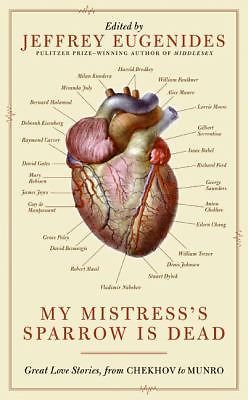
When it comes to love, there are a million theories to explain it. But when it comes to love stories, things are simpler. A love story can never be about full possession. The happy marriage, the requited love, the desire that never dims—these are lucky eventualities but they aren’t love stories. Love stories depend on disappointment, on unequal births and feuding families, on matrimonial boredom and at least one cold heart. Love stories, nearly without exception, give love a bad name.
We value love not because it ’s stronger than death but because it ’s weaker. Say what you want about love: death will finish it. You will not go on loving in the grave, not in any physical way that will at all resemble love as we know it on earth. The perishable nature of love is what gives love its profound importance in our lives. If it were endless, if it were on tap, love wouldn’t hit us the way it does.
The stories in this volume fall within the continuum laid out by Catullus’s first two Lesbia poems: from voyeuristic longing to disenchanted entanglement. The narrator of “Spring in Fialta” recounts the many missed romantic opportunities he ’s had with a woman named Nina, whom he ’d first met, and kissed, on a pitch-black Russian winter night years and years before. Nina recurs in the narrator’s life like a theme in a piece of music, and every time the strings announce her arrival, the cymbals clash and she disappears. I’d been under the impression lately that I was cooling ever so slightly on Nabokov, that sober middle age had made me less susceptible to his lush lyricism. But rereading “Spring in Fialta” reminded me how much better Nabokov is than everybody else. Not only does the story impart to the reader a profound wistfulness, in which the evanescence of love expands to suggest the fragility of life and time and memory itself, but Nabokov manages, at the same time, to weave into the story secondary and tertiary levels of meaning. There ’s what’s happening with the weather, for instance, the “cloudy and dull” spring of Fialta that, in the background of the narrated events, is slowly transforming, thawing, dripping, and brightening, in order to flash out at the end with the story’s tragic revelation. Along with this, Nabokov has studded the story with recurring details—of the circus coming to town, of speeding automobiles—all of which will figure in the denouement. The literary craft in all this mirrors the literary imagination (the seeing of patterns, the orchestrating of fate) that the narrator brings to his random meetings with Nina throughout the years, a literary imagination that every lover possesses and is a veritable Shakespeare of. “Spring in Fialta” isn’t only about a love fated never to be. It reenacts the story-making we inevitably engage in whenever we fall in love.
truly one of the best short stories in the canon
[...] One of Chekhov’s admirers, Serafima Remizova, was highly disappointed with this ending. “I read your story,” she wrote to Chekhov in a letter, “and I should like to ask you to write the continuation of it. You have abandoned your heroes . . . at the most critical moment in their lives, when they are about to make a decision. But which one? . . . It is important for someone like you, Anton Pavlovich, who can see into the human heart, to show . . . how happiness can be found in such a situation.”
But the inconclusiveness of Chekhov’s ending, his failure to show how happiness can be found in such a predicament (along with the suggestion that perhaps it can’t be found), is exactly what makes this story one of the greatest love stories of all time. It ends where the preliminaries of love end, after the stirrings of attraction, after the trysts and renunciations and the renunciations of those renunciations, when desire has attained its object and the real, the heavy problems begin.
I’ve read “The Lady with the Little Dog” countless times over the years and my interpretation continually changes. When I was younger (and more sophisticated), I was sure the ending was ironic. The emotional deadness of the lovers’ marriages was sure to infect their own new relationship in time. Reading the story now, older (and more innocent), I couldn’t help finding in Chekhov’s last line a glimmer of optimism. The story seemed to me, this time through, to be about that miracle you come across every once in a long while: two unexceptional people, for no demonstrable reasons, being exceptionally in love.