
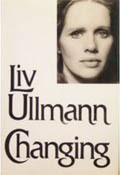
by
Liv Ullmann
60
It hurts to remember the last part of her life. An old people’s home. Tastefully furnished. All the colors harmonizing, staff in white aprons and patient smiles. Yet as soon as the bell rang for breakfast, lunch or supper, the fifty old ladies immediately had to leave their rooms and troop to the dining room. Sit at table with people whose company they had not sought. Converse about events in which they had no interest. Find friends when loneliness and waiting were the only things they had in common.
The panic if she had to spend a day in bed; three days in bed meant being transferred to the nursing-home wing. There was a long waiting list for residents’ rooms, and seldom did anyone return from the nursing home. One day Grandma, too, was moved there.
“It is much better for the old one to have constant supervision, be able to stay with others in the same situation.”
Relatives who only want the best for their dear ones, and send them to an institution where one is no longer “I” but “we.”
:(
It hurts to remember the last part of her life. An old people’s home. Tastefully furnished. All the colors harmonizing, staff in white aprons and patient smiles. Yet as soon as the bell rang for breakfast, lunch or supper, the fifty old ladies immediately had to leave their rooms and troop to the dining room. Sit at table with people whose company they had not sought. Converse about events in which they had no interest. Find friends when loneliness and waiting were the only things they had in common.
The panic if she had to spend a day in bed; three days in bed meant being transferred to the nursing-home wing. There was a long waiting list for residents’ rooms, and seldom did anyone return from the nursing home. One day Grandma, too, was moved there.
“It is much better for the old one to have constant supervision, be able to stay with others in the same situation.”
Relatives who only want the best for their dear ones, and send them to an institution where one is no longer “I” but “we.”
:(
74
It never occurred to me that there must have been a number of losers that day. Future colleagues whom I would meet a long time later in a tour bus. That we would lightly trade back and forth the young people we once were, with laughter and distance.
Then I only had Grandma. By morning I was with her, and I cried my heart out. Sobbed on a breast which never had harbored the dream that now was crushed within me. In the span of a night everything that was customary and familiar had been stripped away, and I was in the middle of a transition. There was something to be learned from this, something hard to understand: that one carries one’s fate within oneself, one’s fate is not dependent on this kind of failure or success.
To become conscious is a long process, to become open to sorrow, look upon it as part of living, of developing, of changing.
A year in Oslo, where the first few months of loneliness are what I remember best. Where not being able enough, talented enough, was the big sorrow. Months that seemed endless, without any goal or meaning. Carefully jotted down in a blue diary that I still have, written by a young girl who lived long ago. Pains that I no longer recall, joys that are no longer a part of me.
It never occurred to me that there must have been a number of losers that day. Future colleagues whom I would meet a long time later in a tour bus. That we would lightly trade back and forth the young people we once were, with laughter and distance.
Then I only had Grandma. By morning I was with her, and I cried my heart out. Sobbed on a breast which never had harbored the dream that now was crushed within me. In the span of a night everything that was customary and familiar had been stripped away, and I was in the middle of a transition. There was something to be learned from this, something hard to understand: that one carries one’s fate within oneself, one’s fate is not dependent on this kind of failure or success.
To become conscious is a long process, to become open to sorrow, look upon it as part of living, of developing, of changing.
A year in Oslo, where the first few months of loneliness are what I remember best. Where not being able enough, talented enough, was the big sorrow. Months that seemed endless, without any goal or meaning. Carefully jotted down in a blue diary that I still have, written by a young girl who lived long ago. Pains that I no longer recall, joys that are no longer a part of me.
76
There is the anticipation of coming to a new place every day, meeting a new audience each evening. Communicating with people who are not accustomed to the theatre. Acting for men and women who still consider it worthwhile bicycling or walking long distances to see a play. An audience packed into a little hall with uncomfortable benches. An aged stage and poor lighting.
We are the theatre group. We have eaten at a strange hotel, phoned home to children and spouses, made up at temporary dressing tables.
They are the public, who live their own lives down there in the darkness. Their breathing and their laughter and their stirrings are part of our experience of them. Now and then a chord is struck, we are one. The auditorium is still and the stage alive.
There is the anticipation of coming to a new place every day, meeting a new audience each evening. Communicating with people who are not accustomed to the theatre. Acting for men and women who still consider it worthwhile bicycling or walking long distances to see a play. An audience packed into a little hall with uncomfortable benches. An aged stage and poor lighting.
We are the theatre group. We have eaten at a strange hotel, phoned home to children and spouses, made up at temporary dressing tables.
They are the public, who live their own lives down there in the darkness. Their breathing and their laughter and their stirrings are part of our experience of them. Now and then a chord is struck, we are one. The auditorium is still and the stage alive.
89
I was dependent, and happy that he was the stronger and wished to look after me.
Sometimes we could feel a sudden hatred of the other, because one had run into a limitation that could not be defined. We believed in a future together, yet our dreams were different.
Our marriage lasted five years.
I can never be so young again with anyone else.
I was dependent, and happy that he was the stronger and wished to look after me.
Sometimes we could feel a sudden hatred of the other, because one had run into a limitation that could not be defined. We believed in a future together, yet our dreams were different.
Our marriage lasted five years.
I can never be so young again with anyone else.
96
I remember the opening scene of The Chalk Circle. At the first reading I thought I was to play a woman in a heroic situation. Her name was Grusha.
Revolution had come to the village where she lived in poverty. Everyone had fled the murder and fire that followed in the wake of war. While she herself was running away she found an infant abandoned by its mother. She stopped without knowing what she would do with the little bundle wrapped in silk and velvet, precious materials that she had never touched before.
My interpretation was to sit down and look tenderly and softly at the baby. Sing to it, pick it up, and then take it with me. “Think a bit deeper,” the director said. “Show her doubts, surely she must have had some? Her cowardice: don’t you feel it? And what about her ambivalence in the face of this new responsibility? The audience will sympathize with you anyway. Even if they don’t grasp everything you are trying to illustrate, they will recognize you as acting in a way they themselves might have acted. No spontaneous nobility. Not necessarily symbolizing goodness all the time.”
My intérpretation became this:
The woman is sitting with the baby, but puts it down as she realizes what a hindrance it will be on her flight. She stands up and walks away. Stops. Doubt. Turns back. Reluctantly sits down again. Looks at the little bundle. Looks away. Then, finally, she picks it up with a gesture of resignation and runs on. Without joy and without any great emotions, she starts a new life with the child. Rebukes it for the difficulties it has caused her. Laughs at its pitifulness and helplessness. Her maternal feelings are not immediately aroused; are not given any romantic expression.
Only then, when no situation or character is obviously good or evil, is it truly interesting to act.
I remember the opening scene of The Chalk Circle. At the first reading I thought I was to play a woman in a heroic situation. Her name was Grusha.
Revolution had come to the village where she lived in poverty. Everyone had fled the murder and fire that followed in the wake of war. While she herself was running away she found an infant abandoned by its mother. She stopped without knowing what she would do with the little bundle wrapped in silk and velvet, precious materials that she had never touched before.
My interpretation was to sit down and look tenderly and softly at the baby. Sing to it, pick it up, and then take it with me. “Think a bit deeper,” the director said. “Show her doubts, surely she must have had some? Her cowardice: don’t you feel it? And what about her ambivalence in the face of this new responsibility? The audience will sympathize with you anyway. Even if they don’t grasp everything you are trying to illustrate, they will recognize you as acting in a way they themselves might have acted. No spontaneous nobility. Not necessarily symbolizing goodness all the time.”
My intérpretation became this:
The woman is sitting with the baby, but puts it down as she realizes what a hindrance it will be on her flight. She stands up and walks away. Stops. Doubt. Turns back. Reluctantly sits down again. Looks at the little bundle. Looks away. Then, finally, she picks it up with a gesture of resignation and runs on. Without joy and without any great emotions, she starts a new life with the child. Rebukes it for the difficulties it has caused her. Laughs at its pitifulness and helplessness. Her maternal feelings are not immediately aroused; are not given any romantic expression.
Only then, when no situation or character is obviously good or evil, is it truly interesting to act.
100
It is summer of the year I have spent at home in Oslo.
I am sitting on a bench outside my house eating homemade waflles with jam, forgetting that I want to lose weight. The heat is buzzing in my head.
In Los Angeles no one would understand what it is like to have a feast of waffles in the sun after a long, dark winter. Life there is so remote from this.
It is summer of the year I have spent at home in Oslo.
I am sitting on a bench outside my house eating homemade waflles with jam, forgetting that I want to lose weight. The heat is buzzing in my head.
In Los Angeles no one would understand what it is like to have a feast of waffles in the sun after a long, dark winter. Life there is so remote from this.
103
“WHAT IS YOUR STRONGEST HAPPINESS?” I SAY TO A MAN for whom I care. We are in the new summer cottage. Rain is pouring down from a sky that is drearily gray. I had imagined us walking about naked and brown and beautiful and discovering new things from each other in the sun.
“My happiness?” he replies, and looks up from what he is reading. He does not know what I am thinking. Perhaps he is afraid he might not say what I expect to hear.
“My happiness—I think it is when I have worked in the sweat of my body a whole day on something hard and physical. When I’ve had to use my entire body, when I’ve become exhausted and my limbs are aching—and then finally I finish. Come in and sit down. Rest in the knowledge that I’ve achieved what I set out to do. Relax in the joy of a job well done.”
He does not ask what my happiness is. But the next day I know. We have had a sumptuous lunch. He praises my cooking and takes several helpings. And we lie on the bed and are close. Sated with tenderness. When we no longer have any fears or questions between us. Only tender pleasute in the other’s body and hands and face and expression. I am together with him, in the only way that I really live.
<3
“WHAT IS YOUR STRONGEST HAPPINESS?” I SAY TO A MAN for whom I care. We are in the new summer cottage. Rain is pouring down from a sky that is drearily gray. I had imagined us walking about naked and brown and beautiful and discovering new things from each other in the sun.
“My happiness?” he replies, and looks up from what he is reading. He does not know what I am thinking. Perhaps he is afraid he might not say what I expect to hear.
“My happiness—I think it is when I have worked in the sweat of my body a whole day on something hard and physical. When I’ve had to use my entire body, when I’ve become exhausted and my limbs are aching—and then finally I finish. Come in and sit down. Rest in the knowledge that I’ve achieved what I set out to do. Relax in the joy of a job well done.”
He does not ask what my happiness is. But the next day I know. We have had a sumptuous lunch. He praises my cooking and takes several helpings. And we lie on the bed and are close. Sated with tenderness. When we no longer have any fears or questions between us. Only tender pleasute in the other’s body and hands and face and expression. I am together with him, in the only way that I really live.
<3
109
SO MUCH HAS BEEN WRITTEN ABOUT OUR LIFE AT FARO. People who have never been there and never known us have written chapters.
But I remain dumb when someone asks me to talk about it.
I was young and had so many ideas about what life should be.
Pictures—which are fragments of our life together: walks on the beach, ‘when like children we buried coins in the sand so that we could find them again many years later. In case we were poor or war had come. A small pile of stones in memory of a summer day and of two people who knew how to play together.
Nights, when we lay close to each other and he whispered that I must be quiet, so that he, in the stillness, could long for me and ask me to talk to him again.
Our boundless need for each other, for what the other one should represent. The powerlessness when something went wrong. ’
We entered into each other’s lives too early and too late.
SO MUCH HAS BEEN WRITTEN ABOUT OUR LIFE AT FARO. People who have never been there and never known us have written chapters.
But I remain dumb when someone asks me to talk about it.
I was young and had so many ideas about what life should be.
Pictures—which are fragments of our life together: walks on the beach, ‘when like children we buried coins in the sand so that we could find them again many years later. In case we were poor or war had come. A small pile of stones in memory of a summer day and of two people who knew how to play together.
Nights, when we lay close to each other and he whispered that I must be quiet, so that he, in the stillness, could long for me and ask me to talk to him again.
Our boundless need for each other, for what the other one should represent. The powerlessness when something went wrong. ’
We entered into each other’s lives too early and too late.
110
We were so much alike. What he had not known about himself he began to see in me—as if in a mirror—despite the fact that I was a woman and much younger and perhaps unlike him in ways that he didn’t know. He saw his own vulnerability and his own anger in me. And when this was reflected back at him, he began to be healed. But like a mirror, I was always there as a reminder.
I wanted to be his, and if he had wanted me to change, I would have done anything. Maybe it is possible to change together—develop together. But if the mirror is too clear, one will not only see oneself as one is, one will also be forced to leave that other person who will always be a reminder of what one no longer wishes to be.
We were so much alike. What he had not known about himself he began to see in me—as if in a mirror—despite the fact that I was a woman and much younger and perhaps unlike him in ways that he didn’t know. He saw his own vulnerability and his own anger in me. And when this was reflected back at him, he began to be healed. But like a mirror, I was always there as a reminder.
I wanted to be his, and if he had wanted me to change, I would have done anything. Maybe it is possible to change together—develop together. But if the mirror is too clear, one will not only see oneself as one is, one will also be forced to leave that other person who will always be a reminder of what one no longer wishes to be.
112
THE FIRST SUMMER WAS PURE HAPPINESS.
We were making Persona on the island.
It was hot. I was experiencing another human being. He was experiencing me. And we didn’t need to talk about it. I was barefoot in sand so fine it felt as if it breathed beneath my feet.
During the day I would lie on the ground and read between takes. And my head felt heavy, almost as if I were unconscious.
I never wondered what might come of our relationship. It was as if I were living within soft walls of sunlight and desire and happiness.
No summer since has ever been like that. Not like that. We went for walks along the shore and never spoke, made no demands, were not afraid.
Once we wandered far from the others, discovered a small ridge of gray stones with barren, unfertile earth beyond. We sat and looked at the sea, which for once lay completely still in the sunlight.
He took my hand in his and said:
“I had a dream last night. That you and I are painfully connected.”
On the spot where we were sit ting he built his house.
And that changed his life. And mine.
THE FIRST SUMMER WAS PURE HAPPINESS.
We were making Persona on the island.
It was hot. I was experiencing another human being. He was experiencing me. And we didn’t need to talk about it. I was barefoot in sand so fine it felt as if it breathed beneath my feet.
During the day I would lie on the ground and read between takes. And my head felt heavy, almost as if I were unconscious.
I never wondered what might come of our relationship. It was as if I were living within soft walls of sunlight and desire and happiness.
No summer since has ever been like that. Not like that. We went for walks along the shore and never spoke, made no demands, were not afraid.
Once we wandered far from the others, discovered a small ridge of gray stones with barren, unfertile earth beyond. We sat and looked at the sea, which for once lay completely still in the sunlight.
He took my hand in his and said:
“I had a dream last night. That you and I are painfully connected.”
On the spot where we were sit ting he built his house.
And that changed his life. And mine.