
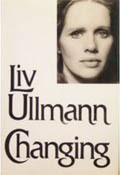
by
Liv Ullmann
I remember the opening scene of The Chalk Circle. At the first reading I thought I was to play a woman in a heroic situation. Her name was Grusha.
Revolution had come to the village where she lived in poverty. Everyone had fled the murder and fire that followed in the wake of war. While she herself was running away she found an infant abandoned by its mother. She stopped without knowing what she would do with the little bundle wrapped in silk and velvet, precious materials that she had never touched before.
My interpretation was to sit down and look tenderly and softly at the baby. Sing to it, pick it up, and then take it with me. “Think a bit deeper,” the director said. “Show her doubts, surely she must have had some? Her cowardice: don’t you feel it? And what about her ambivalence in the face of this new responsibility? The audience will sympathize with you anyway. Even if they don’t grasp everything you are trying to illustrate, they will recognize you as acting in a way they themselves might have acted. No spontaneous nobility. Not necessarily symbolizing goodness all the time.”
My intérpretation became this:
The woman is sitting with the baby, but puts it down as she realizes what a hindrance it will be on her flight. She stands up and walks away. Stops. Doubt. Turns back. Reluctantly sits down again. Looks at the little bundle. Looks away. Then, finally, she picks it up with a gesture of resignation and runs on. Without joy and without any great emotions, she starts a new life with the child. Rebukes it for the difficulties it has caused her. Laughs at its pitifulness and helplessness. Her maternal feelings are not immediately aroused; are not given any romantic expression.
Only then, when no situation or character is obviously good or evil, is it truly interesting to act.