
Bookmarker is a personal project by @dellsystem to help with retaining reading material. Source on GitHub.

Activity

You edited a note
3 months, 1 week ago
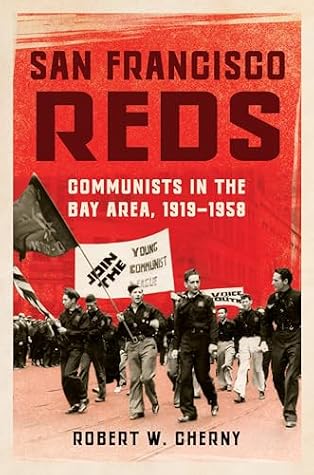
Angela Gizzi’s experience

For Brown and Yoneda, party membership led them into union activity. Angela Gizzi’s experience provides a different pattern. Her interest in the left led her to union activism and then to the CP. She was born in San Francisco’s North Beach, an Italian neighborhood. Her parents were middle-class Ita…

—p.92 San Francisco Reds: Communists in the Bay Area, 1919-1958 Life in the Party in the 1930s (89) by Robert W. Cherny
You added a note
3 months, 1 week ago

Angela Gizzi’s experience

For Brown and Yoneda, party membership led them into union activity. Angela Gizzi’s experience provides a different pattern. Her interest in the left led her to union activism and then to the CP. She was born in San Francisco’s North Beach, an Italian neighborhood. Her parents were middle-class Ita…

—p.92 Life in the Party in the 1930s (89) by Robert W. Cherny
You added a note
3 months, 1 week ago

party members formed “fractions”

In the early 1930s, party members formed “fractions” within union locals, which typically met before union meetings and formulated a position that CP members were to follow when the meeting started. However, as Dorothy Ray Healey later recalled, “Some of our closest allies were unhappy about it,” a…

—p.90 Life in the Party in the 1930s (89) by Robert W. Cherny
You added a note
3 months, 1 week ago

the funeral procession down Market Street

The 1934 strikes were important catalysts for many. Edith Arnstein’s family came to San Francisco during the Gold Rush and were related to several of the city’s elite German Jewish families. She later described the summer of 1934: “A long and bloody strike has divided the city. In middle-class home…

—p.89 Life in the Party in the 1930s (89) by Robert W. Cherny
You added a note
3 months, 1 week ago

proposition 1 proposed to restrict picketing project/panopticon

In the 1938 general election, a coalition of business and conservative groups tried to constrain the state’s robust union movement through a ballot initiative. Proposition 1 originated with the Industrial Association of San Francisco (which a U.S. Senate investigating committee chaired by Robert La…

—p.77 The Popular Front, 1934–1941 (64) by Robert W. Cherny