
Bookmarker is a personal project by @dellsystem to help with retaining reading material. Source on GitHub.

Activity

You added a note
3 months, 1 week ago
photos of attractive young women in skimpy outfits

The party soon completed its transition from persistent and vitriolic critic of Roosevelt and the New Deal to staunch supporter. On January 1, 1938, District 13 launched a new newspaper, People’s World (PW), a daily paper replacing the semiweekly WW. Al Richmond, the new managing editor, twenty-thr…

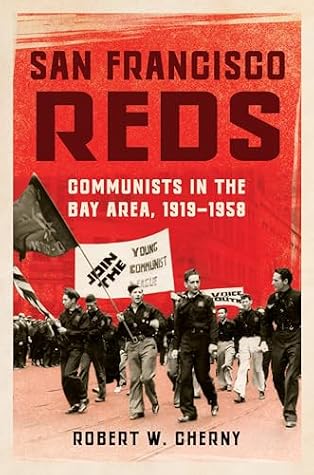
—p.76 San Francisco Reds: Communists in the Bay Area, 1919-1958 The Popular Front, 1934–1941 (64) by Robert W. Cherny
You added a note
3 months, 1 week ago

the California CP moved very close to the political mainstream

Though the CPUSA moved toward the Front populaire slowly and uncertainly in 1935 and 1936, the party was fully committed to working with New Deal Democrats by mid-1937. During 1937–1939 the California CP moved very close to the political mainstream—partly through circumstances over which the party …

—p.74 The Popular Front, 1934–1941 (64) by Robert W. Cherny
You added a note
3 months, 1 week ago

the Western Worker continued to attack Roosevelt and the New Deal

Throughout 1935 the Western Worker continued to attack Roosevelt and the New Deal, condemning the work-relief programs of the Works Progress Administration (WPA) as “a wage-cutting, anti-strike club held over the heads of every worker.” The Western Worker also condemned “the strike-breaking activit…

—p.69 The Popular Front, 1934–1941 (64) by Robert W. Cherny
You added a note
3 months, 1 week ago

moving away from the Third Period analysis

The West Coast strikes of 1934 came as the Executive Committee of the Comintern was moving away from the Third Period analysis and toward what in France was called the Front populaire, the People’s Front, and was usually called the Popular Front in the United States. Georgi Dimitrov, head of the Co…

—p.64 The Popular Front, 1934–1941 (64) by Robert W. Cherny
You added a note
3 months, 1 week ago

the striking unions agreed to arbitration

The striking unions agreed to arbitration. The CP generally opposed arbitration. In the end, the arbitration board granted the ILA’s major demands: the six- hour day, a wage increase (less than the union had wanted, but significant), and union control of dispatching through a jointly funded hiring …

—p.59 Prelude to the Popular Front, 1930–1935 (39) by Robert W. Cherny