
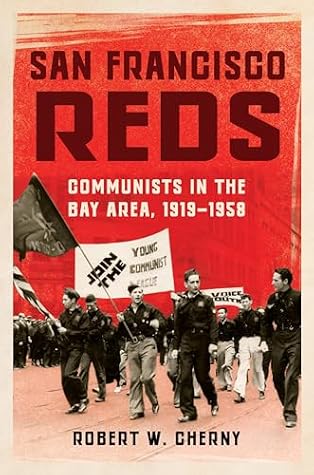
The 1934 strikes were important catalysts for many. Edith Arnstein’s family came to San Francisco during the Gold Rush and were related to several of the city’s elite German Jewish families. She later described the summer of 1934: “A long and bloody strike has divided the city. In middle-class homes the family is sharply divided, so that dinner tables are barricades—mothers and children on the side of the strikers, businessmen fathers on the side of the employers.” She recalled that she and a friend borrowed twenty-five dollars (equivalent to more than five hundred dollars in 2023) from her mother to contribute to the MWIU, and how, on the day of a dramatic funeral march down Market Street, she and her cousin watched from the sidewalk: “She says, ‘I am going to march.’ I join her. I hope our fathers are not watching. . . . We pledge our lives that Sperry and Bordoise have not laid down their lives in vain.” Angela Gizzi, daughter of middle-class Italian immigrants, left work to stand in respect during the funeral procession down Market Street; she called it “the most spectacular thing I’ve ever seen,” and said it made her “a radical.”