
project/secret-life
Jennifer Egan,
Simone de Beauvoir,
Esther Perel,
Vladimir Nabokov,
Vivian Gornick,
Leslie Jamison,
Sally Rooney,
Eric Bennett,
Mary Gaitskill,
Rachel Kushner

I had wearied of my bohemian existence and married Ka’bi Laretei, an up and coming pianist. We moved into a handsome villa in Djursholm, where I intended to live a well-organized bourgeois life. It was all a new and heroic production which rapidly turned into a new and heroic disaster, two people chasing after identity and security and writing each other’s parts, which they accepted in their great need to please each other. The masks quickly cracked and fell to the ground in the first storm and neither had the patience to look at the other’s face. Both shouted with averted eyes: look at me, look at me, but neither saw. Their efforts were fruitless. Two lonelinesses were a fact, failure, an inadmissible reality. The pianist went on tour, the producer produced and the child was entrusted to competent hands. Outwardly, the picture was of a stable marriage between successful contracting parties. The decor was tasteful and the lighting well arranged.
damn
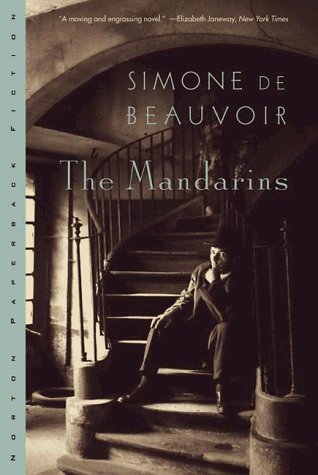
It's not easy. There was a time I did see him from a distance, but I was too young. I looked at him from too far off. Friends had pointed him out to me at the Sorbonne; they spoke of him a great deal, with a mixture of admiration and disapproval. It was whispered that he drank and frequented brothels. If that had been true, I think it would have attracted rather than repelled me; I was still rebelling against my pious childhood. In my mind, sin was a touching manifestation of the absence of God, and if someone had told me that Dubreuilh raped little girls I'd have taken him for a saint of sorts. But his vices were minor and his too-well-established fame irritated me. When I began taking his courses, I had already made up my mind that the 'great man' was a charlatan. Of course, he was different from all the other professors. He would come rushing into the room like a gust of wind; he was always four or five minutes late. He would survey us for a moment with his large, crafty eyes, and then he would begin speaking in either a very amiable or a very aggressive voice. There was something provocative in his surly face, his violent voice, his bursts of laughter which sometimes seemed to us a little insane. He wore very white shirts, his hands were always carefully manicured, and he was impeccably shaven; it was impossible, therefore, to attribute to negligence his zipper jackets, his pullovers, his clumsy shoes. He preferred comfort to decency with such an obvious lack of restraint that I thought it affected. I had read his novels and didn't like them at all; I expected them to bring to me some inspiring message, and all they ever spoke to me of were indifferent people, frivolous sentiments, and a lot of other things that didn't seem to me the least bit essential. As for his courses, they were interesting all right, but he never really said anything worthy of a genius. And he was always so cocksure of being right that I had an irresistible desire to contradict him. Oh, I was convinced, too, that the truth was to the left; ever since my childhood I had sniffed an odour of stupidity and lies in bourgeois thinking, a very foul-smelling odour. And then I had learned from the Gospel that all men are equal, are brothers; that's one thing I continue to believe in with an unshakable faith. But spiritually, after I had been for so long crammed full of absolutes, the void left in the heavens made a mockery of all morality I had been taught. But Dubreuilh believed there could be salvation here on earth. I let him know where I stood in my first essay. 'Revolution, fine,' I said, 'but what then?' When he gave me back my paper a week later as we were leaving the classroom, he ridiculed my efforts. According to him, my absolute was the abstract dream of a petty bourgeoise incapable of facing reality. Of course I couldn't hold my own against him, and he won every round. But that didn't prove anything, and I told him as much. We resumed our discussion the following week and this time he tried to convince me, rather than overwhelm me. I had to admit that in private discussion he didn't at all seem to feel that he was a great man. He began chatting with me, rather often after classes, sometimes he walked home with me occasionally taking a longer route than was necessary. And then we began going out together in the afternoons, the evenings. We stopped talking about morality and politics and other lofty subjects. He told me about the people he knew and the things he did, and most of all he would take me for walks, show me streets, squares, quays, canals, cemeteries, suburbs, warehouses, vacant sites, little cafes, and a hundred corners of Paris that were completely new to me. And I began to realize that I had never really seen things I believed I had always known; with him everything took on a thousand meanings — faces, voices, people's clothing, a tree poster, a neon sign, no matter, what. I reread all his novels. And I soon realized I had completely misunderstood them the first time. Dubreuilh gave the impression of writing capriciously, for his own pleasure, completely without motivation. And yet on closing the book, you felt yourself overwhelmed with anger, disgust, revolt; you wanted things to change. To read certain passages from his works, you would take him for a pure aesthete; he has a feeling for words, and he's interested in things for themselves, in rain and clear skies, in the games of love and chance, in everything. Only he doesn't stop there; suddenly you find yourself thrown in among people, and all their problems become your concern. That's why I'm so determined for him to continue writing; I know through my own experience what he can bring to his readers. There's no gap between his political ideas and his poetic emotions. Because he himself loves life so much, he wants all men to be able to share it abundantly. And because he loves people, everything that's part of their lives interests him deeply.
<3
He went upstairs and sat down at his desk. She really deserved being shown the manuscript. That way he would be rid of her for good. Of course, he'd have to cut the manuscript a bit before publication — unless she should die before then. But in the meantime, when he reread it, he felt revenged. 'In a way, literature is truer than life,' he said to himself. 'Dubreuilh played me for a sucker, Louis is a skunk, Paula poisons my life — and I go on smiling at them: On paper, you say exactly and completely what you feel.' Once more, he read through the description of the break up. How easy it is to break things off on paper! You hate, you shout, you kill, you commit suicide; you carry things to the very end. And that's why it's false. 'Yes, it's false,' he said to himself, 'but it's damned satisfying. In life you're constantly denying yourself, and others are always contradicting you. Paula exasperates me, and yet in a little while I'll take pity on her and she'll think that basically I still have some love for her. On paper, I make time stand still and I impose my convictions on the whole world; they become the only reality.' He unscrewed the top of his pen. Paula would never read those pages, and yet he exulted in them as if he had forced her to recognize herself in the portrait he had drawn of her; a woman acting the part of a lover and loving only her histrionics and her dreams; pretending to be noble, generous, self-sacrificing, when in fact she is without pride and without courage, steeped in the egoism of her feigned passions. That was how he saw her, and on paper she matched that picture exactly.
i feel validated by the fact that we clearly have the same preoccupations
I felt a need for distractions; those too-intense hours had tired me. In the streetcar, I dozed on Lewis's shoulder. I didn't try to figure out where I was in that city; it didn't seem to me as if it had fixed arteries and precise means of transportation like the others. It was necessary to conform to certain rituals that Lewis knew, and then places would surge up from nowhere. The Delisa Club surged up from nowhere, crowned with a mauve halo. There was a full-length mirror just inside the door and together we smiled at our reflections. The top of my head was on a level with his shoulder; we looked young and happy and I said gaily, 'What a handsome couple!' And then I felt a wrench in my heart. No, we weren't a couple, we'd never be a couple. We could have loved each other, I was sure of that. But at what point in time, at what place in the world? Nowhere on earth, in any case, and at no point in the future. 'We'd like to have dinner,' Lewis said. A- very dark-complexioned maitre d’hôtel, who looked like a heavyweight boxer, led us to a booth near the stage. Baskets filled with fried chicken were set before us. The musicians hadn't arrived yet, but the place was full - a few whites and many negroes, some of whom were wearing fezzes on their heads. 'Why are they wearing fezzes?'

“Did you ever see the green flash,” she asked him after class, “down at Ocean Beach?”
He had not, he told her. She explained that it was an optical effect at sunset, when rays from the top of the sinking sun turned green. She had never seen it either, she said.
“Are you sure it isn’t a story cooked up by the Irish drunks who live out there?”
She laughed. They were standing outside the school trailer. It was a June evening when the sun sets late. The light was gold from valley haze and low, slanting into her eyes, filling the irises.
Looking at someone who is looking at you was a drug as strong as any other.
“Move it, Hall!” an officer yelled. It was time for evening count. “Move your ass, now! I said go!”

AFTER THEY MARRIED SHE learned to feel their skin as double-sided. They felt a pause. Theirs was too much feeling to push through the crack that led down to the dim world of time and stuff. That world was gone. They held themselves alert only in those few million cells where they touched. She learned from those cells his awareness and his courtesy. Love so sprang at her, she honestly thought no one had ever looked into it. Where was it in literature? Someone would have written something. She must not have recognized it. Time to read everything again.
cute

What will you think about this from your deathbed? My husband’s wants had been consistent—to get married, to stay married, to have a child—while mine had become clear the hard way. I had, like so many fools before me, gotten right up to the edge of one life in order to learn I had to run in the opposite direction. If I had been more like him, maybe the deathbed question would have made me stay, but I wasn’t, so I left.
<3 same
She and Peter had begun dating at nineteen. She’d broken up with him twice in college. Both times, he’d convinced her to take him back, saying he couldn’t live without her. She didn’t really believe him capable of such extreme emotion. He’d always be stable and predictable, she felt.
She’d seen from the beginning that he was very ambitious. When she thought the worst of him, she thought that everything in his life—his friendliness, his interests in children’s charities and golf, every single one of his acquaintances—was in fact only his ambition in all its various forms, as if he were just one thing, really, like a little mechanical device clacking its way upward.
In his own way, Peter could be distant, simply because he was so focused on his work. But in his distance he assumed the best of her. So he seemed to have no sense that she was having an affair, once she was. She continued to sleep with Eleu after they returned to New York.

Secrecy is the number one organizing principle of an infidelity. An affair always lives in the shadow of the primary relationship, hoping never to be discovered. The secrecy is precisely what intensifies the erotic charge. “Sex and subterfuge make a delicious cocktail,”7 writes journalist Julia Keller. We all know from childhood the glee of hiding and keeping secrets. They make us feel powerful, less vulnerable, and more free. But this dark pleasure is frowned on in adulthood. “I’ve always been a what-you-see-is-what-you-get kind of person,” says Angela, a punctilious Irish American paralegal who realized, through her affair with a client, that she enjoys sneaking around. “Discovering that I could act in total breach of my own long-held values was both bewildering and exciting at the same time. Once I was speaking with my sister, who was rattling away about the wrongdoing of cheaters, all the while smiling inwardly at my own secret. Little did she know that she was looking into the face of the ‘villain.’”
Emotional involvement is the third element that may play a role in infidelity. Most affairs register an emotional component, to one degree or another. At the deep end of the spectrum we have the love affair, where the accompanying bouquet of passionate feelings is integral. “I thought I knew what love was, but I have never felt like this before” is a common refrain. People in this state talk to me about love, transcendence, awakening, destiny, divine intervention—something so pure that they could not pass it by, because “to deny those feelings would have been an act of self-betrayal.” For those involved in such an unparalleled love story, the term “affair” is inadequate, for it doesn’t begin to capture the emotional depth of the experience. “When you call it cheating, you reduce it to something vulgar,” Ludo says. “Because she had gone through something similar, Mandy was the first person with whom I’ve ever been able to open up about my father’s abuse. Yes, we had sex, but it was so much more than that.”