
project/panopticon-epigraphs
Alyssa Battistoni,
Italo Calvino,
John Steinbeck,
McKenzie Wark,
Clifford Odets,
Simone de Beauvoir,
Vivian Gornick,
C.L.R. James,
Michael Ondaatje
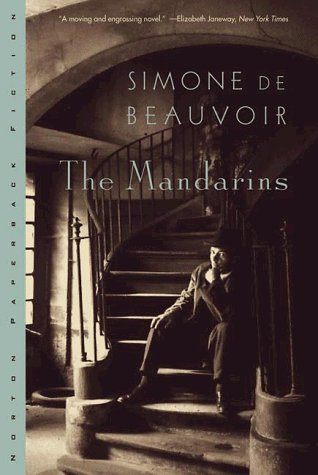
'And there could still be more,' she said, the cold blue of her eyes growing warmer. 'Why don't you just forget those old dreamers? They're not what we came here for. Let's keep on the move; let's enjoy ourselves while we can, while we still have flesh on our bones.'
He shrugged his shoulders. 'It's not so easy to enjoy oneself.'
'Well, let's try, anyhow. Let's drive through the mountains! Wouldn't that be wonderful? You like driving so much. But those meetings and investigations, all they ever do is bore you.'
'Yes, that's true.'
'Well, why do you always have to be doing things that bore you? That's no way to live.'
'Try to understand. Can I tell those poor old men that no one's interested in their misfortunes, that Portugal is too small, that no one gives a damn what happens to her?' Henri leaned over Nadine and smiled gently. 'Can I?'
To have been a Party member in Russia in 1930 wasn't a mistake,' Dubreuilh said.
'If you have no right to make a mistake, it was a crime.'
'It's not a question of right,' Dubreuilh replied.
'How dare you set yourselves up as judges?' Scriassine said, without listening to him. 'Do you know Volange's reasons, his explanations? Are you sure that all the people you accept on your team are better men than he?'
'We don't judge,' Henri said. 'We choose sides. There's a big difference.'

They took with them on this journey not only their own narrow, impoverished experience but a set of abstractions as well, abstractions with the power to transform. When these people sat down at the kitchen table to talk, Politics sat down with them, Ideas sat down with them, above all, History sat down with them. They spoke and thought within a context that had world-making properties. This context lifted them out of the nameless, faceless obscurity of the soul into which they had been born and gave them, for the first time in their lives, a sense of rights as well as of obligations. They had rights because they now knew who and what they were. They were not simply the disinherited of the earth, they were proletarians. They were not a people without a history, they had the Russian Revolution. They were not without a civilizing world view, they had Marxism.

Edna: I know this—your boss is making suckers outa you boys every minute. Yes, and suckers out of all the wives and the poor innocent kids who'll grow up with crooked spines and sick bones. Sure, I see it in the papers, how good orange juice is for kids. But damnit our kids get colds one on top of the They look like little ghosts. Betty never saw a grapefruit. I took her to the store last week and she pointed to a stack of grapefruits. "What's that!" she said. My God, Joe— the world is supposed to be for all of us.
Odets understood his inner demon, which brought about the struggle of his temperament and conscience. He dramatized it in his last plays, Clash by Night, The Country Girl, The Big Knife, and The Flowering Peach. But he is also there in Lorna's description of Joe Bonaparte, the cockeyed golden boy, with his urge to power: "You're a miserable creature. You want your arm in gelt up to the elbow. You'll take fame so people won't laugh or scorn your face. You'll give your soul for those things. But every time you turn your back your little soul kicks you in the teeth. It don't give in so easy." Indeed it doesn't: when Joe, in training for a big bout, sees someone carrying a violin case, he turns pale and loses the fight he might easily have won.
<3
frank (beginning to undress -- putting his coat on the back of a chair) No, I'm tired. I'll see you in the morning, before I leave.
Carp: Going away again?
Frank: South. Tex-tiles. There's hell down there in tex-tiles. (He sits on the other side of the room and looks at a paper.)
Carp: I don't begin to understand it -- tex-tiles! What's it his business if the workers in tex-tiles don't make good wages!
Mr. Bonaparte: Frank, he fight-a for eat, for good life. Why not!
<3

It was hegemony, Stuart Hall argued in 1983, that was key to understanding the disappointment of his own generation — why Thatcher and the new right had triumphed in remaking common sense after a decade of labor union revolt. Hegemony shaped how people acted when they weren’t thinking about it, what they thought was right and wrong, what they imagined the good life to be. A hegemonic project had to “occupy each and every front” of life, “to insert itself into the pores of the practical consciousness of human beings.” Thatcherism had understood this better than the left. It had “entered the struggle on every single front on which it calculated it could advance itself,” put forth a “theory for every single arena of human life,” from economics to language, morality to culture. The domains the left dismissed as bourgeois were simply the ones where the ruling class was winning. Yet creating hegemony was “difficult work,” Hall reminded us. Never fully settled, “it always has to be won.”
In other words, there is no economic deus ex machina that will bring the revolution. There are still people, in their stubborn, contradictory particularities, as they exist in concrete space and time. It is up to you to figure out how to act together, or not; how to find common ground, or not. Gramsci and Hall insist that you must look relentlessly at things and people as they are, face your prospects with brutal honesty, and act in ways that you think can have an effect. In these ways they are an organizer’s theorists.
Why was it so hard to see ourselves as people who might need a union? Gramsci had observed that any individual’s personality was “strangely composite,” made up of a mixture of beliefs, thoughts, and ideas gleaned from family history, cultural norms, and formal education, filtered through their own life experiences read through the prevailing ideology of the time. Hall had taken this up to argue that when the working class failed to espouse revolutionary thought, women to embrace feminism, or people of color to advocate antiracism, it wasn’t because they suffered from false consciousness. The idea that consciousness could be true or false simply made no sense: it was always, Hall stated, “complex, fragmentary, and contradictory.” This was just as true for those on the left as for anyone else. “A tiny bit of all of us is also somewhere inside the Thatcherite project,” Hall had warned in 1988. “Of course, we’re all one hundred per cent committed. But every now and then — Saturday mornings, perhaps, just before the demonstration—we go to Sainsbury’s and we’re just a tiny bit of a Thatcherite subject.”
The Thatcherite project was since then much advanced, and we had internalized its dictates. For our whole lives we had learned to do school very well; in graduate school we learned to exploit ourselves on weekends and vacations before putting ourselves “on the market.” Many of us still believed in meritocracy, despite learning every day how it was failing us. The worse the conditions of academic life became, the harder everyone worked, and the harder it became to contest them. Plus, we were so lucky to be there — at Yale! Compared to so many grad students, we had it good, and surely jobs were waiting on the other side for us, if for anyone. Who were we to complain? Organizing a union of graduate students at Yale seemed to many like an act of unbearable privilege — a bunch of Ivy League self-styled radicals doing worker cosplay.
We were all too busy, but the too-busyness wasn’t really about time, or at least not only. Being too busy meant people didn’t see why the union was worth making time for. Your job as an organizer was to find out what it was that people wanted to be different in their lives, and then to persuade people that it mattered whether they decided to do something about it. This is not the same thing as persuading people that the thing itself matters: they usually know it does. The task is to persuade people that they matter: they know they usually don’t.
new tag on organising?
It’s not easy to be the site of a battle for hegemony. It’s not a beatific Whitmanesque “I contain multitudes”; it’s an often painful struggle among your competing selves for dominance. You have one body and twenty-four hours in a day. An organizer asks what you’ll do with them, concretely, now. You may not like your own answer. Your inner Thatcherite will raise its voice. You can’t kill it off entirely; you will almost certainly find that it’s a bigger part of you than you thought. But organizing burrows into the pores of your practical consciousness and asks you to choose the part of yourself that wants something other than common sense. It’s unsettling. It can be alienating. And yet I also often felt I was finally reconciling parts of myself I’d tried to keep separate — what I thought, what I said, what I did. To organize, and to be organized, you have to keep in mind Hall’s lesson: there is no true or false consciousness, no true self that organizing discovers or undoes. You too, Hall reminds us, were made by this world you hope to change. The more distant the world you want to live in is from the world that exists, the more deeply you yourself will feel this disjuncture. “I’m not cut out for this,” people often say when they struggle with organizing. No one is: one isn’t born an organizer, but becomes one.