
topic/love
Leonard Cohen,
Shirley Hazzard,
Lauren Elkin,
Jeffrey Eugenides,
James Salter,
Karen Tei Yamashita,
Jonathan Franzen,
Liv Ullmann,
Lucia Berlin
the other side of heartbreak
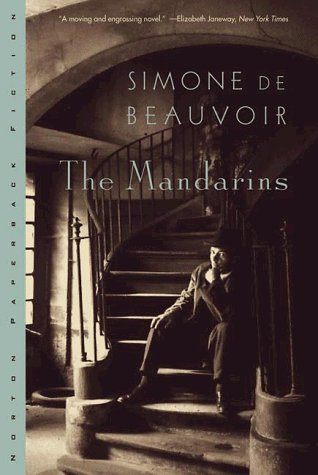
I closed my eyes; yes, I would surely sleep. I felt even more exhausted than after a fever-ridden night. 'Well, that's it,' I thought coldly. 'Nothing has happened, and that's normal. The abnormal thing was that one day something had happened. What? Why?' Actually, I had never understood that love is always undeserved. Lewis had loved me without any valid reason; it hadn't surprised me. Now, he no longer loved me; neither was that surprising, it was even very natural. Suddenly, the words exploded in my head: 'He doesn't love me any more.' It was I he didn't love; I wanted to howl until I died. I began to weep. Each morning he used to ask, 'Why are you laughing? What makes you so rosy and warm?' I would no longer laugh. 'Anne!' he used to say. Never again would he say it in that way. Never again would I see that loving, delighted look on his face.

AFTER THEY MARRIED SHE learned to feel their skin as double-sided. They felt a pause. Theirs was too much feeling to push through the crack that led down to the dim world of time and stuff. That world was gone. They held themselves alert only in those few million cells where they touched. She learned from those cells his awareness and his courtesy. Love so sprang at her, she honestly thought no one had ever looked into it. Where was it in literature? Someone would have written something. She must not have recognized it. Time to read everything again.
cute

However satisfying writing is—that mix of discipline and miracle, which leaves you in control, even when what appears on the page has emerged from regions beyond your control—it is a very poor substitute indeed for the joy and agony of loving.
The philosopher Gillian Rose wrote this in her last complete book before she died of ovarian cancer, but I didn’t know anything about Rose when I picked up the copy of Love’s Work that Sara had left in the living room. I was awake early that day, glad to be alone but also wondering how long I was going to be this glad to be alone. As if it was urgent business I needed to take care of, I surrendered most of the day to this short, circuitous mediation on love and death and sex and longing.
There is no democracy in any love relation: only mercy. To be at someone’s mercy is dialectical damage … You may be less powerful than the whole world, but you are always more powerful than yourself.
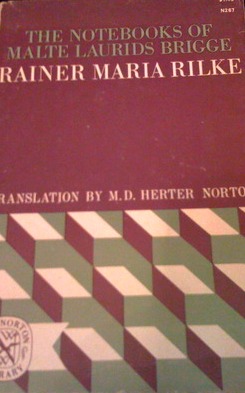
Nothing whatever had been agreed upon between us, but when the carriage turned into the park I could not refrain from getting out, perhaps simply because I did not want to drive up to the house like any stranger. Summer was already at its height. I headed into one of the side paths and toward a laburnum tree. And there was Abelone. Beautiful, beautiful Abelone.
I shall never forget how it was when you looked at me. How you wore that gaze of yours, holding it up, like something that was not fixed, upon your back-tilted face.
Ah, did not the climate change at all, did it not grow milder round about Ulsgaard with all our warmth? Do not certain roses bloom longer in the park now, even in December?
I shall tell nothing about you, Abelone. Not because we deluded one another: since you loved someone, even then, whom you have never forgotten, you lover, and I loved all women; but because only wrong is done in the telling.
<3

The first kiss plummeted him down a hole and popped him out into a world he thought he could get along in - as if he’d been pulling hard the wrong way and was now turned around headed downstream. They spent the whole afternoon among the daisies kissing. He felt glorious and full of more blood than he was supposed to have in him.
When the sun got too hot, they moved under a lone jack pine in the pasture of jeremy grass, he with his back against the bark and she with her cheek on his shoulder. The white daisies dabbed the field so profusely that it seemed to foam. He wanted to ask for her hand now. He was afraid to ask. She must want him to ask, or surely she wouldn’t lie here with him, breathing against his arm, his face against her hair-her hair faintly fragrant of sweat and soap ... "Would you care to be my wife, Gladys?” he astonished himself by saying.

I remember the year Martha said she didn’t love me any more. The baby was seven. The baby is a genius, we think. We knew it even then. She learned to read by the time she was three, and could also tell the difference between a buck track and a doe track. She’s an utter joy to be around. She, as much as the landscape around us, and in which we live, reminds us to love one another. But that year that Martha flat out told me she didn’t love me anymore—that was a tough one. I suppose in their own way, each year is tough, just as each of them is beautiful, but we didn’t know what to do about that one.
You can’t manufacture love: you can’t build it back up like a fire. You start out with a certain amount, and then hope it is strong enough and lasting enough to sustain itself against the hard winters and the assault of time. And it changes; it fluctuates —it either gets stronger or weaker. And sometimes all of the center can just go out. That core, that base, can just get cold, and stay cold, for too long. It’s one of the dangers.
It got right down to the very end. I was going to leave. It was as if my guts were open: as if ravens and eagles were already feeding on my heart. Still, I was going to let her— them —go. Off to that new direction in life that would not include me any more.
But we muscled through it; somehow we got back into love, or were perhaps carried back into it, unconscious, on a sled, as if pulled through the night by some higher being. The spring came, and we were still alive, and when the woods and meadows turned green again, we started to love each other again.
A harsh winter like that one never came back. Or has not, yet.
But although my devotion drives me to do this—my sense that I am a husband and husbands do this—my devotion is also something I want her to feel. It is, in fact, something to be returned in kind, erotically, devotion for devotion. And the real sense of satisfaction of this work is to do it not for her sake, but for her eyes. Not literally; not that she beholds my virile act and swoons. She is upstairs. She is unlikely later to be impressed by the resulting aesthetically questionable pile of sticks. But being married, devotion belongs between us, and spousal acts bear the stamp of the living, active, commitment-at-commitment, trust-at-trust; a project that invites, implies, calls out and unfolds each of its parts.
Imagine for a moment that I really didn’t care how she received and responded to my help. Imagine that she got the sense that I was indifferent to her reception of it. Whatever else this might make her feel, that I was either an angel or a self-involved douche—either way, I posit, it would make her feel like something less than a lover.
I went inside and made breakfast for the family: eggs, bacon, blueberries, leftover beet salad. If breakfast didn’t have a cook, server and served, and a real need for nourishment, it would be nothing. But like the glass of wine, it is the idea of a relationship that is eaten.

Whatever cities are brought down,
I will always bring you poems,
and the fruit of orchards
I pass by.
Strangers in your bed,
excluded by our grief,
listening to sleep-whispering,
will hear their passion beautifully explained,
and weep because they cannot kiss
your distant face.
Lovers of my beloved,
watch how my words put on her lips like clothes,
how they wear her body like a rare shawl.
Fruit is pyramided on the window-sill,
songs flutter against the disappearing wall.
The sky of the city
is washed in the fire
of Lebanese cedar and gold.
In smoky filigree cages
the apes and peacocks fret.
Now the cages do not hold,
in the burning street man and animal
perish in each other’s arms,
peacocks drown around the melting throne.
Is it the king
who lies beside you listening?
Is it Solomon or David
or stuttering Charlemagne?
Is that his crown
in the suitcase beside your bed?
When we meet again,
you all in white,
I smelling of orchards,
when we meet—
But now you awaken
and you are tired of this dream.
Turn toward the sad-eyed man.
He stayed by you all the night.
You will have something
to say to him.
aaahhh

As Ted Tice saw, it was not a matter of conquering her objections. She herself required a kind of conquering. And he had begun with devotion. Her demands would before long be tested by experience, as principle is tested by adversity, and it might be that she would temporize; but for the present imagined herself transcendant over what she had not encountered.
She wished to rise to some solitary height. From ignorance she had an unobstructed view of knowledge--which she saw, on its elevation, stately, pale, pure as the Acropolis. It could not be said that hers was a harmless vanity: like any human wish for distinction, it could easily be denounced or mocked; and, in its present elemental form, was clearly short on pity. Yet, as pretensions go, it was by no means the worst.
Ted Tice already understood his attachment to Caro as intensification of his strongest qualities, if not of his strengths: not a youthful adventure, fresh and tentative, but a gauge of all effort, joy, and suffering known or imagined. The possibility that he might never, in a lifetime, arouse her love in return was a discovery touching all existence. In his desire and his foreboding, he was like a man awake who watches a woman sleeping.
It had not occurred to Paul that Caro's influence might increase with her submission. Or that she would remain intelligent. When she leaned her head back to look at him, he was aware of her judgment persevering like a pulse--even forming the most tender, if least magical, part of love. He put a hand to her face, his own fingers trembling with a small, convulsive evidence of unfeigned life.