
by
The Point
(editor)
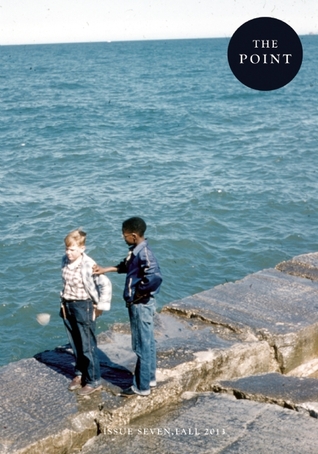
The Point, Issue 7: Fall 2013
The Point, Issue 7: Fall 2013
by
The Point
(editor)
by
The Point
(editor)
The Point, Issue 7: Fall 2013
by
The Point
(editor)
by
The Point
(editor)
47
essays:
The Lonely Intellecual
david shields's real problem. By Justin Evans
(missing author)
david shields's real problem. By Justin Evans
(missing author)
0
terms
2
notes
55
So should we just reject the “idea of harmony”? Adorno said not. The idea that a good work of art “embodies the contradictions, pure and uncompromised, in its innermost structure” doesn’t mean that it should contain contradiction as a general principle. True, good art doesn’t blithely lie about the continuing existence of disharmony by creating, as most pop music does, a naïvely harmonious tune. But nor does good art simply mirror our disharmonious society by creating irrationally dissonant works, as Shields seems sometimes to recommend. That’s just bad art, like my country cover of a metal song.
In between these two bad options, the best works of modern art express the broken relationship between individual and world by embodying the specific contradiction of our society: economic ends have taken precedence over human ones. So Adorno’s preference was for works constructed with painstaking care; such works (e.g., Beckett, Berg), perhaps despite themselves, hold onto the idea, the final goal, of social harmony. No matter how depressing their content, the forms of Endgame and Wozzeck are utopian. They’re internally inconsistent, but not in a capricious or random way; rather, their contradictions are an image of our own. They’re also moving and effective, incredible artistic achievements—and that achievement in itself is an imperfect image of what we could do, if our interests and our society matched up. Whether such works should take the form of fiction or nonfiction is an irrelevant and even an uninteresting question, from this perspective. Adorno’s continual plea was: don’t replicate the world by acting the way the world acts, because then you’ll just be a part of a bad society; but don’t lie about it, either, because change will only come when we understand the problem
So should we just reject the “idea of harmony”? Adorno said not. The idea that a good work of art “embodies the contradictions, pure and uncompromised, in its innermost structure” doesn’t mean that it should contain contradiction as a general principle. True, good art doesn’t blithely lie about the continuing existence of disharmony by creating, as most pop music does, a naïvely harmonious tune. But nor does good art simply mirror our disharmonious society by creating irrationally dissonant works, as Shields seems sometimes to recommend. That’s just bad art, like my country cover of a metal song.
In between these two bad options, the best works of modern art express the broken relationship between individual and world by embodying the specific contradiction of our society: economic ends have taken precedence over human ones. So Adorno’s preference was for works constructed with painstaking care; such works (e.g., Beckett, Berg), perhaps despite themselves, hold onto the idea, the final goal, of social harmony. No matter how depressing their content, the forms of Endgame and Wozzeck are utopian. They’re internally inconsistent, but not in a capricious or random way; rather, their contradictions are an image of our own. They’re also moving and effective, incredible artistic achievements—and that achievement in itself is an imperfect image of what we could do, if our interests and our society matched up. Whether such works should take the form of fiction or nonfiction is an irrelevant and even an uninteresting question, from this perspective. Adorno’s continual plea was: don’t replicate the world by acting the way the world acts, because then you’ll just be a part of a bad society; but don’t lie about it, either, because change will only come when we understand the problem
61
As it happens, I borrowed How Literature Saved My Life from the Los Angeles Public Library. A previous reader had left a post-it in the book. S/he’d written on it something that sounds like a thought David Shields would quote: “In a universe so indifferent to our fate—how best to endure—to go on.” My first thought was that the universe isn’t indifferent to our fate, any more than my desk is indifferent to my fate: the universe is not the kind of thing that could be interested or indifferent. My second thought was that I have a family and friends, none of whom are indifferent to my fate.
My third thought was to look up the sponsor of the Post-It, Kaletra. It’s a brand of AIDS medication.
There really are some people for whom life is a daily struggle. I’m pretty sure that the point and meaning of life is to ensure that as few as possible have to exist in that way. And that’s only possible if we stop assuming that we all do.
</3
As it happens, I borrowed How Literature Saved My Life from the Los Angeles Public Library. A previous reader had left a post-it in the book. S/he’d written on it something that sounds like a thought David Shields would quote: “In a universe so indifferent to our fate—how best to endure—to go on.” My first thought was that the universe isn’t indifferent to our fate, any more than my desk is indifferent to my fate: the universe is not the kind of thing that could be interested or indifferent. My second thought was that I have a family and friends, none of whom are indifferent to my fate.
My third thought was to look up the sponsor of the Post-It, Kaletra. It’s a brand of AIDS medication.
There really are some people for whom life is a daily struggle. I’m pretty sure that the point and meaning of life is to ensure that as few as possible have to exist in that way. And that’s only possible if we stop assuming that we all do.
</3