
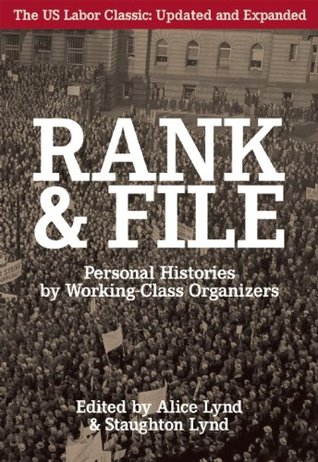
by
Alice Lynd,
Staughton Lynd
(editors)
35
How I Became Part of the Labor Movement
by John W. Anderson
(missing author)
by John W. Anderson
(missing author)
0
terms
4
notes
58
When the strike was called, it was reported that the editors of the three Detroit metropolitan newspapers had met and agreed that there would be no publicity given to the strike. And there was no publicity for the first three or four days. Following that there were a few headlines branding the strike as Communist-inspired and led. These headlines were of a nature that would antagonize public opinion. I, as chairman of the publicity committee, met with the city editor of the Detroit Times. With me were two other members of the committee. We had no experience at publicity work and had pre-pared no statement for the press. We were not successful in getting any favorable publicity for the strike.
You must be logged in to see this comment.
When the strike was called, it was reported that the editors of the three Detroit metropolitan newspapers had met and agreed that there would be no publicity given to the strike. And there was no publicity for the first three or four days. Following that there were a few headlines branding the strike as Communist-inspired and led. These headlines were of a nature that would antagonize public opinion. I, as chairman of the publicity committee, met with the city editor of the Detroit Times. With me were two other members of the committee. We had no experience at publicity work and had pre-pared no statement for the press. We were not successful in getting any favorable publicity for the strike.
You must be logged in to see this comment.
62
Soon after the busting up of the picket lines, I was walking from the 1ww hall and kitchen toward the plant. The Highland Park police picked me up and took me to police headquarters. I was brought before the chief of police, Dan Patch. He seemed a kindly man who was sympathetic to the workers on strike. He said he had attended some of the mass meetings and that I had a strong influence over my audience. After hearing me speak he was of the opinion that I was a potentially dangerous man. When he said the strike was instigated by Communists I asked him, "Was the Boston police strike of 1920 led by Communists?" He made no reply.
lol
Soon after the busting up of the picket lines, I was walking from the 1ww hall and kitchen toward the plant. The Highland Park police picked me up and took me to police headquarters. I was brought before the chief of police, Dan Patch. He seemed a kindly man who was sympathetic to the workers on strike. He said he had attended some of the mass meetings and that I had a strong influence over my audience. After hearing me speak he was of the opinion that I was a potentially dangerous man. When he said the strike was instigated by Communists I asked him, "Was the Boston police strike of 1920 led by Communists?" He made no reply.
lol
64
The number of pickets had declined to about two hundred at the Warren entrance of the Mack plant. One afternoon while the pickets were walking there, nuts, bolts and other metal objects were thrown from the upper floors on to the heads of the pickets. They picked up these objects and started throwing them back where they came from, breaking the windows.
As if they had been assembled for that purpose, several hundred Detroit policemen moved against the pickets and the spectators on the sidewalk. I was standing a half block from the plant. Soon I, like everyone in the area, was blinded and choking from tear gas. We hurled some of the tear gas bombs back at the police but the outnumbered pickets and their sympathizers were soon on the run. I saw shots being fired at the strikers as they fled from the scene although I don't believe any live ammunition was used at the time. Some strikers were injured by the policemen's clubs.
The number of pickets had declined to about two hundred at the Warren entrance of the Mack plant. One afternoon while the pickets were walking there, nuts, bolts and other metal objects were thrown from the upper floors on to the heads of the pickets. They picked up these objects and started throwing them back where they came from, breaking the windows.
As if they had been assembled for that purpose, several hundred Detroit policemen moved against the pickets and the spectators on the sidewalk. I was standing a half block from the plant. Soon I, like everyone in the area, was blinded and choking from tear gas. We hurled some of the tear gas bombs back at the police but the outnumbered pickets and their sympathizers were soon on the run. I saw shots being fired at the strikers as they fled from the scene although I don't believe any live ammunition was used at the time. Some strikers were injured by the policemen's clubs.
65
Equally important as the economic gains was the educational development of the workers. Willing slaves became rebellious men and women. An understanding of the economic power of the workers was impressed on the minds of most of us who took an active part in the strike. Several leaders of the strike were to become organizers of the UAW-CIO.
I had no radical ideas when the Briggs strike began. But we learned that it was only the radical parties that were on our side. The left-wing groups, the Communists, Socialists, the IWW and other groups of the left, were the inspiration and the leaders of strikes. The Republican and Democratic Parties and their official representatives in state and local government were on the side of the company. My joining the Socialist Party put me in contact with young people my own age who wanted to do something about changing society. It was in the SP that I was to meet May Wolf, Roy, Victor and Walter Reuther as well as several other socially-minded workers. My experience in the strike made me aware of the political and philosophical differences dividing worker organizations. I saw enough of the CP and its leadership in action so that I never became identified with it. The strike also brought me in contact with Frank Cedervall and the 1ww which I joined some months later.
Equally important as the economic gains was the educational development of the workers. Willing slaves became rebellious men and women. An understanding of the economic power of the workers was impressed on the minds of most of us who took an active part in the strike. Several leaders of the strike were to become organizers of the UAW-CIO.
I had no radical ideas when the Briggs strike began. But we learned that it was only the radical parties that were on our side. The left-wing groups, the Communists, Socialists, the IWW and other groups of the left, were the inspiration and the leaders of strikes. The Republican and Democratic Parties and their official representatives in state and local government were on the side of the company. My joining the Socialist Party put me in contact with young people my own age who wanted to do something about changing society. It was in the SP that I was to meet May Wolf, Roy, Victor and Walter Reuther as well as several other socially-minded workers. My experience in the strike made me aware of the political and philosophical differences dividing worker organizations. I saw enough of the CP and its leadership in action so that I never became identified with it. The strike also brought me in contact with Frank Cedervall and the 1ww which I joined some months later.