
View all notes
Available query params: commented=1, untagged=1
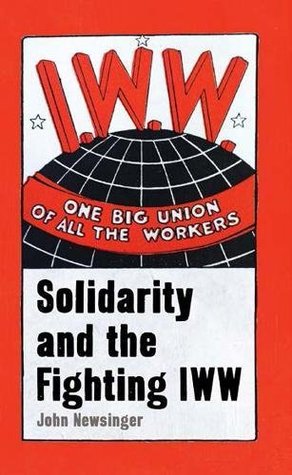
On Tuesday 27 June 1905, Bill Haywood of the Western Federation of Miners (WFM) called the first and founding convention of the IWW to order. He told the 200 delegates and observers assembled in Brand’s Hall, Chicago, that they had come together “to confederate the workers of this country into a working class movement that shall have for its purpose the emancipation of the working class”. It was their intention to give the working class “control of the machinery of production and distribution, without regard to capitalist masters”. They recognised that “there is a continuous struggle between the two classes”, the capitalist class and the working class, and consequently “this organisation will be formed, based and founded on the class struggle, having in view no compromise and no surrender”.
The convention brought delegates from 43 organisations representing some 60,000 workers together with a number of individuals, including Lucy Parsons, the African American anarchist and widow of one of the Haymarket martyrs (four US political prisoners who were hanged in Chicago in November 1887); Mother Jones, the mineworkers’ organiser; and Eugene Debs, the leader of the left wing of the reformist Socialist Party and himself a veteran trade unionist. Also attending the convention was Daniel De Leon, the autocratic leader of the Socialist Labour Party (SLP), a theoretically rigid and sectarian Marxist organisation. They gathered in response to what they saw as a crisis within the US labour movement where the conservative union leaders of the American Federation of Labour (AFL) were failing to defend the working class against the attacks of a rapacious, brutal capitalist class.
One place where the IWW had been successful was in Goldfield, Nevada, where the WFM had established an IWW local and unionised the whole town, starting with the newsboys. As the IWW newspaper proclaimed they had organised “miners, engineers, clerks, stenographers, teamsters, dishwashers, waiters”, all into One Big Union. Wages were driven up across the board and conditions improved, including the introduction of the eight-hour day. On 22 January 1906, the town shut down for two hours while a great rally was held, commemorating the “Bloody Sunday” massacre in St Petersburg the previous year, and pledging support for Haywood and Moyer. Vincent St John, one of the IWW leaders, told the crowd: “We will sweep the capitalist class out of the life of this nation”. This was the IWW dream successfully realised in one town.
In 1909, the socialist publisher Charles Kerr published Connolly’s powerful, closely argued pamphlet Socialism Made Easy, which combined propaganda for the socialist cause with a call for Industrial Unionism as the way forward. He insisted that “it is not the theorists who make history; it is history in its evolution that makes the theorists. And the roots of history are to be found in the workshops, fields and factories”. For Connolly, the real battle was not that fought at the ballot box but was “the battle being fought out every day for the power to control industry and the gauge of the progress of that battle is not to be found in the number of voters making a cross beneath the symbol of a political party, but in the number of these workers who enrol themselves in an industrial organisation with the definite purpose of making themselves masters of the industrial equipment of society in general”. This battle had a “political echo” though and the fight at the ballot box had to be fought. Nevertheless, the Socialist Party had to be subordinate to the Industrial Unions because, he insisted, it was they that “in the fullness of time will overthrow that political system, and replace it by the Industrial Republic”. Socialism Made Easy sold over 40,000 copies in the United States.

I started keeping a diary twenty-five years ago. It’s eight hundred thousand words long.
I didn’t want to lose anything. That was my main problem. I couldn’t face the end of a day without a record of everything that had ever happened.
I wrote about myself so I wouldn’t become paralyzed by rumination—so I could stop thinking about what had happened and be done with it.
More than that, I wrote so I could say I was truly paying attention. Experience in itself wasn’t enough. The diary was my defense against waking up at the end of my life and realizing I’d missed it.
Imagining life without the diary, even one week without it, spurred a panic that I might as well be dead. ♦
Living in a dream of the future is considered a character flaw. Living in the past, bathed in nostalgia, is also considered a character flaw. Living in the present moment is hailed as spiritually admirable, but truly ignoring the lessons of history or failing to plan for tomorrow are considered character flaws.
I still needed to record the present moment before I could enter the next one, but I wanted to know how to inhabit time in a way that wasn’t a character flaw.
Remember the lessons of the past. Imagine the possibilities of the future. And attend to the present, the only part of time that doesn’t require the use of memory. ♦

[...] these works expose what might be taken by such a reader as simply being "given" as a picture - and therefore something that might be relinquished - or chosen - as opposed to being merely reproduced or capitulated to. Although there is nothing wrong with their doing so, readers need not "identify" with the characters in a book in order for this process to occur; it would be better to say that, if the critics description is convincing enough, readers will be unable to escape recognizing the image of themselves in the book. To call that recognition philosophical is simply to refer back to the notion [...] of philosophy as a self-critical activity, whose aim is to produce a kind of (self-)knowledge, unlikely to be arrived at through either unexamined practical experience or "pure" logical analysis. [...]
on imaginative literaure as discussed by Robert Pippin and Stanley Cavell
[...] For Hegel, art was one of the organs through which a society could reflect on - by making explicit to itself - its form of life, which meant not only its habits of thought or speech but also the institutional structures and power relations that continuously shaped those habits. Much of Pippin's philosophical criticism is devoted to making explicit how novelists like James and Proust can help us recognize configurations of thought that are less eccentric than common, less a function of individual history than of "the situation of modernity itself". One of his recurrent points is that exclusively psychological readings of individual action can itself become a sociohistorical habit, so seemingly "natural" to us that we cease to see it as a choice?
That so much of our social and communal life has become so fine-grained and circumstantail that is it difficult, from any amount of distance, to see as anything other than the result of arbitrary pathology is in large part why Pippin believes the novel "might be the great modern philosophical form". He means that novels can show in a manner that philosophy cannot - or has not been inclined to - how ordinary people struggle to be recognized as moral agents and to do justice to the claims of others in th everyday social world. [...]
[...] Psychoanalytically speaking, the best literary works will be characterized in part by their bearing a message for their reader that is "unspeakable"; that this message is hiding in plain sight does not make it any easier to decipher.
Toril Moi, in her essay "Nothing Is Hidden", identifies this difference between the kind of criticism practiced by many in her academic discipline and philosophically therapeutic criticism: whereas the suspicious literary theorist presumes that the "text is hiding something from us," she writes, the Cavell/Wittgenstein critic presumes that "the problem is in me, in us". In other words, the artwork's value comes from showing readers something about themselves. [...]
he goes on to explain what he sees as the job of the therapeutic critic: not only to account for what is important about the work but also why readers might have missed it
At the same time that Hal's speech indicates his philosophical intelligence, it suggests the failure of philosophy to help him, therapeutically speaking. If it represents a graduate student's defense of his humanity, it also signals the poverty of the version of humanity being defended. If we as readers initially fail to see this poverty, I would propose it is because we share it.