
by
The Point
(editor)
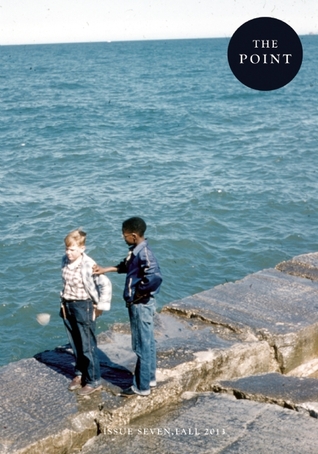
The Point, Issue 7: Fall 2013
The Point, Issue 7: Fall 2013
by
The Point
(editor)
by
The Point
(editor)
The Point, Issue 7: Fall 2013
by
The Point
(editor)
by
The Point
(editor)
15
But there’s a serious point in there too. In raging against Thatcher, our generation is, among other things, raging against the forces that shaped us—but rage as we might, they did still shape us, and they continue to do so. Brand himself is a case in point, as he well knows: he can lament the neoliberal erosion of the “unseen bond” of community all he wants, but at the end of the day he’s not exactly Mother Teresa. He admits to feeling nostalgia for the Thatcher years, bound up as they are with his childhood, yet “what is more troubling,” he owns, “is my inability to ascertain where my own selfishness ends and [Thatcher’s] neoliberal inculcation begins.”
Might something similar be true for all of us who grew up in the neoliberal era? If so, might not our loathing of Thatcher—or its positive correlate, our longing for the primordial community she supposedly shattered—be rooted in anxieties about our own moral stature? It certainly rings true of me; I am, undeniably, one of Thatcher’s inheritors. The bequest began in an oddly symbolic way: when I was seven or so, the other kids used to call me Thatcher on account of the similarity in our surnames (better that, admittedly, than a subsequent sobriquet that began with “f” and rhymed with “sucker”). Later on, in the complacent, pre-post-imperial environment of an elite boarding school, I came to rebel against the whole of Torydom; by blood I’m half-Indian and a quarter Irish and as a thirteen year-old I was sure that gave me the nobility of the oppressed. But it’s hard to maintain your victim status when you’re on your way “up” to Oxford, and although many do seem to pull it off I wasn’t equal to the challenge. As I gradually realized that I was and probably always would be on the winning side of Thatcher’s great divide, I came to feel complicit in the cruelty of her supposed meritocracy. Privilege may not have been a gift that I ever asked for, but it was a gift I would receive nonetheless. Just as my younger self used to bristle at the accusation that I was spoiled, unanswerable as it was, so my eyes still water at Billy Bragg’s reproach to Thatcher and her plummy progeny: “Just because you’re going forwards / Doesn’t mean I’m going backwards / Just because you’re better than me / Doesn’t mean I’m lazy.”
But there’s a serious point in there too. In raging against Thatcher, our generation is, among other things, raging against the forces that shaped us—but rage as we might, they did still shape us, and they continue to do so. Brand himself is a case in point, as he well knows: he can lament the neoliberal erosion of the “unseen bond” of community all he wants, but at the end of the day he’s not exactly Mother Teresa. He admits to feeling nostalgia for the Thatcher years, bound up as they are with his childhood, yet “what is more troubling,” he owns, “is my inability to ascertain where my own selfishness ends and [Thatcher’s] neoliberal inculcation begins.”
Might something similar be true for all of us who grew up in the neoliberal era? If so, might not our loathing of Thatcher—or its positive correlate, our longing for the primordial community she supposedly shattered—be rooted in anxieties about our own moral stature? It certainly rings true of me; I am, undeniably, one of Thatcher’s inheritors. The bequest began in an oddly symbolic way: when I was seven or so, the other kids used to call me Thatcher on account of the similarity in our surnames (better that, admittedly, than a subsequent sobriquet that began with “f” and rhymed with “sucker”). Later on, in the complacent, pre-post-imperial environment of an elite boarding school, I came to rebel against the whole of Torydom; by blood I’m half-Indian and a quarter Irish and as a thirteen year-old I was sure that gave me the nobility of the oppressed. But it’s hard to maintain your victim status when you’re on your way “up” to Oxford, and although many do seem to pull it off I wasn’t equal to the challenge. As I gradually realized that I was and probably always would be on the winning side of Thatcher’s great divide, I came to feel complicit in the cruelty of her supposed meritocracy. Privilege may not have been a gift that I ever asked for, but it was a gift I would receive nonetheless. Just as my younger self used to bristle at the accusation that I was spoiled, unanswerable as it was, so my eyes still water at Billy Bragg’s reproach to Thatcher and her plummy progeny: “Just because you’re going forwards / Doesn’t mean I’m going backwards / Just because you’re better than me / Doesn’t mean I’m lazy.”
17
Economists of all stripes agree that the underlying cause of growing inequality in Western societies is the integration of the global economy, which has simultaneously increased the earning power of the highly educated while decreasing that of the rest. At the top end, HSBC can proclaim itself the world’s local bank; at the bottom end, unskilled labor cannot compete abroad. Even if neoliberal tax cuts and privatizations have exacerbated the problem, they are by no means its source. This leaves leftist politicians, most of whom understand these facts perfectly well, in the depressing position of having to hold neoliberals to account for crimes against equality while having no idea how to avoid such crimes themselves. In such circumstances the only way to keep your hands clean is to stay out of politics altogether; that allows you to blame the whole thing on the political and financial elites who are really in charge, as per Occupy Wall Street. But the position of disdainful superiority is itself unstable. If millionaires on Wall Street are immoral for not wanting to give more of their wealth to the unemployed of Detroit, how can any of us justify not giving more of our own riches—for such they surely are—to the starving of Africa? And although globalization may produce rising inequality within Western societies as a side effect, wouldn’t protectionism harm the poor in the developing world? Insofar as economic inequality is the left’s principal field of battle in contemporary political life, the fact is that it has no real response to neoliberalism. Idealists without an ideal, moralists without morals, to be on the left today is frequently to be both helpless and hypocritical. Faced with such a predicament, hating Thatcher is the easy part.
Economists of all stripes agree that the underlying cause of growing inequality in Western societies is the integration of the global economy, which has simultaneously increased the earning power of the highly educated while decreasing that of the rest. At the top end, HSBC can proclaim itself the world’s local bank; at the bottom end, unskilled labor cannot compete abroad. Even if neoliberal tax cuts and privatizations have exacerbated the problem, they are by no means its source. This leaves leftist politicians, most of whom understand these facts perfectly well, in the depressing position of having to hold neoliberals to account for crimes against equality while having no idea how to avoid such crimes themselves. In such circumstances the only way to keep your hands clean is to stay out of politics altogether; that allows you to blame the whole thing on the political and financial elites who are really in charge, as per Occupy Wall Street. But the position of disdainful superiority is itself unstable. If millionaires on Wall Street are immoral for not wanting to give more of their wealth to the unemployed of Detroit, how can any of us justify not giving more of our own riches—for such they surely are—to the starving of Africa? And although globalization may produce rising inequality within Western societies as a side effect, wouldn’t protectionism harm the poor in the developing world? Insofar as economic inequality is the left’s principal field of battle in contemporary political life, the fact is that it has no real response to neoliberalism. Idealists without an ideal, moralists without morals, to be on the left today is frequently to be both helpless and hypocritical. Faced with such a predicament, hating Thatcher is the easy part.
29
And this brings us back to the question that socialism has always raised, from the Middle Ages to the twentieth century, namely ownership. Businesses tend to serve the interests of those who own them, whether shareholders, workers or communities. To make institutions serve people rather than profit, we will therefore have to think about alternative forms of ownership: scholars like Erik Olin Wright and John Roemer have shown that social ownership can come in many forms, and these should be studied with an open mind.2 What is vital, however, as we renew our assault on the neoliberal dogma of private ownership, is to remember that the ultimate goal is not to strengthen the central state or even simply to benefit the poor, but rather to free workers to use their own initiative to serve the common good as they see it.
And this brings us back to the question that socialism has always raised, from the Middle Ages to the twentieth century, namely ownership. Businesses tend to serve the interests of those who own them, whether shareholders, workers or communities. To make institutions serve people rather than profit, we will therefore have to think about alternative forms of ownership: scholars like Erik Olin Wright and John Roemer have shown that social ownership can come in many forms, and these should be studied with an open mind.2 What is vital, however, as we renew our assault on the neoliberal dogma of private ownership, is to remember that the ultimate goal is not to strengthen the central state or even simply to benefit the poor, but rather to free workers to use their own initiative to serve the common good as they see it.
30
Nowhere is this more evident than in the matter of career decisions. We—my circle, at any rate—tend to despise those who take the “easy option” of corporate labor. As opposed to what, though? It seems to me that to earn a free pass from today’s moralizers all you need to do is not sell out. It’s considered absolutely fine, for instance, to while away your twenties in grad school playing video games, watching reality TV and occasionally turning your thoughts to the writings of some obscure author. A life like that actually gives you some kind of moral purchase vis-à-vis a banker or a lawyer—at least you’re not increasing inequality. Even if we ignore the fact that a disdain for materialism has often been a marker of class distinction, it’s clear that there’s something fundamentally warped about this ethic. It tells us what is bad, but as to the good it is silent.
i mean this is sort of willfully ignorant. you could be fighting for something you actually believe in...
Nowhere is this more evident than in the matter of career decisions. We—my circle, at any rate—tend to despise those who take the “easy option” of corporate labor. As opposed to what, though? It seems to me that to earn a free pass from today’s moralizers all you need to do is not sell out. It’s considered absolutely fine, for instance, to while away your twenties in grad school playing video games, watching reality TV and occasionally turning your thoughts to the writings of some obscure author. A life like that actually gives you some kind of moral purchase vis-à-vis a banker or a lawyer—at least you’re not increasing inequality. Even if we ignore the fact that a disdain for materialism has often been a marker of class distinction, it’s clear that there’s something fundamentally warped about this ethic. It tells us what is bad, but as to the good it is silent.
i mean this is sort of willfully ignorant. you could be fighting for something you actually believe in...
37
Here’s something that’s weird but true: a photograph is unlike almost every other art form because it isn’t merely a representation of the world; it is a record of the world. Such is the form’s indexical ontology. When we look at a photograph of a tree, we see the physical reality—the miraculous interplay of physics and light—that transpired at the exact instant the photographer activated the camera. Unlike a painting of a tree, which is a stylized representation of the object, infused with the artist’s sensibility (and, probably, his or her tree-related feelings), a photograph records and ratifies the existence of the actual tree. While the precision of a photographic index depends on a number of factors—the camera in question, whether the photographer used a filter, the extent to which the photo was treated during darkroom emulsification or digital processing—a photograph still serves as a reliable
Here’s something that’s weird but true: a photograph is unlike almost every other art form because it isn’t merely a representation of the world; it is a record of the world. Such is the form’s indexical ontology. When we look at a photograph of a tree, we see the physical reality—the miraculous interplay of physics and light—that transpired at the exact instant the photographer activated the camera. Unlike a painting of a tree, which is a stylized representation of the object, infused with the artist’s sensibility (and, probably, his or her tree-related feelings), a photograph records and ratifies the existence of the actual tree. While the precision of a photographic index depends on a number of factors—the camera in question, whether the photographer used a filter, the extent to which the photo was treated during darkroom emulsification or digital processing—a photograph still serves as a reliable
45
Perhaps it is because the people in Mosse’s photos live halfway around the world and so their suffering seems proportionately remote? Or maybe we have become inured to this type of aestheticization? Maybe the abrupt ubiquity of Instagram and other digital stylizing devices has allowed us to constantly re-imagine our own lives to the point where something that happened only moments ago can get tinted with the patina of history, aged with the waterstains of nostalgia, or deported to the landscape of a pastel fantasia. But I’ve been trying to suggest that there’s something more urgent and concerning going on here, a conflict between two modes of presentation. One approach clears the way for reality to come to us. The other claims to fetch us from the basement of our complacency but actually just takes us by the hand and leads us to a glass window so beautifully stained that we can no longer see out of it. The difference, here, is moral before it is artistic. After all, it’s disturbingly easy to interpret suffering. To look at it, though, to simply bear witness, is more difficult—for it is then that we risk coming away hurt or humbled or changed.
cool
Perhaps it is because the people in Mosse’s photos live halfway around the world and so their suffering seems proportionately remote? Or maybe we have become inured to this type of aestheticization? Maybe the abrupt ubiquity of Instagram and other digital stylizing devices has allowed us to constantly re-imagine our own lives to the point where something that happened only moments ago can get tinted with the patina of history, aged with the waterstains of nostalgia, or deported to the landscape of a pastel fantasia. But I’ve been trying to suggest that there’s something more urgent and concerning going on here, a conflict between two modes of presentation. One approach clears the way for reality to come to us. The other claims to fetch us from the basement of our complacency but actually just takes us by the hand and leads us to a glass window so beautifully stained that we can no longer see out of it. The difference, here, is moral before it is artistic. After all, it’s disturbingly easy to interpret suffering. To look at it, though, to simply bear witness, is more difficult—for it is then that we risk coming away hurt or humbled or changed.
cool
55
So should we just reject the “idea of harmony”? Adorno said not. The idea that a good work of art “embodies the contradictions, pure and uncompromised, in its innermost structure” doesn’t mean that it should contain contradiction as a general principle. True, good art doesn’t blithely lie about the continuing existence of disharmony by creating, as most pop music does, a naïvely harmonious tune. But nor does good art simply mirror our disharmonious society by creating irrationally dissonant works, as Shields seems sometimes to recommend. That’s just bad art, like my country cover of a metal song.
In between these two bad options, the best works of modern art express the broken relationship between individual and world by embodying the specific contradiction of our society: economic ends have taken precedence over human ones. So Adorno’s preference was for works constructed with painstaking care; such works (e.g., Beckett, Berg), perhaps despite themselves, hold onto the idea, the final goal, of social harmony. No matter how depressing their content, the forms of Endgame and Wozzeck are utopian. They’re internally inconsistent, but not in a capricious or random way; rather, their contradictions are an image of our own. They’re also moving and effective, incredible artistic achievements—and that achievement in itself is an imperfect image of what we could do, if our interests and our society matched up. Whether such works should take the form of fiction or nonfiction is an irrelevant and even an uninteresting question, from this perspective. Adorno’s continual plea was: don’t replicate the world by acting the way the world acts, because then you’ll just be a part of a bad society; but don’t lie about it, either, because change will only come when we understand the problem
So should we just reject the “idea of harmony”? Adorno said not. The idea that a good work of art “embodies the contradictions, pure and uncompromised, in its innermost structure” doesn’t mean that it should contain contradiction as a general principle. True, good art doesn’t blithely lie about the continuing existence of disharmony by creating, as most pop music does, a naïvely harmonious tune. But nor does good art simply mirror our disharmonious society by creating irrationally dissonant works, as Shields seems sometimes to recommend. That’s just bad art, like my country cover of a metal song.
In between these two bad options, the best works of modern art express the broken relationship between individual and world by embodying the specific contradiction of our society: economic ends have taken precedence over human ones. So Adorno’s preference was for works constructed with painstaking care; such works (e.g., Beckett, Berg), perhaps despite themselves, hold onto the idea, the final goal, of social harmony. No matter how depressing their content, the forms of Endgame and Wozzeck are utopian. They’re internally inconsistent, but not in a capricious or random way; rather, their contradictions are an image of our own. They’re also moving and effective, incredible artistic achievements—and that achievement in itself is an imperfect image of what we could do, if our interests and our society matched up. Whether such works should take the form of fiction or nonfiction is an irrelevant and even an uninteresting question, from this perspective. Adorno’s continual plea was: don’t replicate the world by acting the way the world acts, because then you’ll just be a part of a bad society; but don’t lie about it, either, because change will only come when we understand the problem
61
As it happens, I borrowed How Literature Saved My Life from the Los Angeles Public Library. A previous reader had left a post-it in the book. S/he’d written on it something that sounds like a thought David Shields would quote: “In a universe so indifferent to our fate—how best to endure—to go on.” My first thought was that the universe isn’t indifferent to our fate, any more than my desk is indifferent to my fate: the universe is not the kind of thing that could be interested or indifferent. My second thought was that I have a family and friends, none of whom are indifferent to my fate.
My third thought was to look up the sponsor of the Post-It, Kaletra. It’s a brand of AIDS medication.
There really are some people for whom life is a daily struggle. I’m pretty sure that the point and meaning of life is to ensure that as few as possible have to exist in that way. And that’s only possible if we stop assuming that we all do.
</3
As it happens, I borrowed How Literature Saved My Life from the Los Angeles Public Library. A previous reader had left a post-it in the book. S/he’d written on it something that sounds like a thought David Shields would quote: “In a universe so indifferent to our fate—how best to endure—to go on.” My first thought was that the universe isn’t indifferent to our fate, any more than my desk is indifferent to my fate: the universe is not the kind of thing that could be interested or indifferent. My second thought was that I have a family and friends, none of whom are indifferent to my fate.
My third thought was to look up the sponsor of the Post-It, Kaletra. It’s a brand of AIDS medication.
There really are some people for whom life is a daily struggle. I’m pretty sure that the point and meaning of life is to ensure that as few as possible have to exist in that way. And that’s only possible if we stop assuming that we all do.
</3
69
If Lasch were around today, he would undoubtedly see Occupy Wall Street as a source of both optimism and despair—as many of us have. One of his interests would be the movement’s vacillation between two conflicting visions of work. Its populist ninety-nine-versus-one-percent rhetoric, as well as its emphasis on debt and widespread unemployment, seem to point to a society in which good and meaningful work might be available for all. Yet in the carnivalesque atmosphere of the protests, with their drum circles and festive feel, there was also a sense that all work was oppressive, that a revolution would entail liberation from work entirely. Forty years ago, Lasch had already criticized the tendency for certain radicals to “define personal liberation … as freedom from work, discipline and from authority in general”:
The trouble with this definition of the “cultural revolution” is that it tends to divert attention from work to leisure, thereby reinforcing one of the strongest and most dangerous tendencies of advanced capitalist society—the attempt to compensate for the meaninglessness of work by holding out the possibility of spiritual fulfillment through consumption. Contrary to a widespread cliché of popular sociology, “the challenge of leisure” is not the most important issue in advanced society. The most important issue remains work—the loss of autonomy on the job, the collapse of high standards of workmanship, the pervasive demoralization that results from the mass production of goods that are widely recognized as intrinsically worthless by those who produce them, and the general crisis of a culture historically oriented around the dignity of labor.
Counterculturalists, Lasch believed, tended to picture “utopia as generalized leisure, thereby reaffirming, instead of contradicting, the vision of industrial society itself.” Yet, Lasch contended, “centuries of experience … have taught us that work is one of the deepest of man’s needs.” The task confronting the left was therefore not to overthrow the work ethic—which was already under attack from within capitalist society—but to invest it with new meaning.
If Lasch were around today, he would undoubtedly see Occupy Wall Street as a source of both optimism and despair—as many of us have. One of his interests would be the movement’s vacillation between two conflicting visions of work. Its populist ninety-nine-versus-one-percent rhetoric, as well as its emphasis on debt and widespread unemployment, seem to point to a society in which good and meaningful work might be available for all. Yet in the carnivalesque atmosphere of the protests, with their drum circles and festive feel, there was also a sense that all work was oppressive, that a revolution would entail liberation from work entirely. Forty years ago, Lasch had already criticized the tendency for certain radicals to “define personal liberation … as freedom from work, discipline and from authority in general”:
The trouble with this definition of the “cultural revolution” is that it tends to divert attention from work to leisure, thereby reinforcing one of the strongest and most dangerous tendencies of advanced capitalist society—the attempt to compensate for the meaninglessness of work by holding out the possibility of spiritual fulfillment through consumption. Contrary to a widespread cliché of popular sociology, “the challenge of leisure” is not the most important issue in advanced society. The most important issue remains work—the loss of autonomy on the job, the collapse of high standards of workmanship, the pervasive demoralization that results from the mass production of goods that are widely recognized as intrinsically worthless by those who produce them, and the general crisis of a culture historically oriented around the dignity of labor.
Counterculturalists, Lasch believed, tended to picture “utopia as generalized leisure, thereby reaffirming, instead of contradicting, the vision of industrial society itself.” Yet, Lasch contended, “centuries of experience … have taught us that work is one of the deepest of man’s needs.” The task confronting the left was therefore not to overthrow the work ethic—which was already under attack from within capitalist society—but to invest it with new meaning.
72
Lasch was hesitantly hopeful. He noticed former New Left activists joining the workforce, and “rediscovering the importance of institutional ties.” Instead of denouncing all professional organizations as “purely imprisoning,” these new workers were growing more interested in the kinds of solidarity they might discover in the workplace, as sites of potential “ferment,” “fellowship” and “support for the creative use of one’s talents.” To Lasch, a “revolt against narrow professionalism and professional irresponsibility” was key to the unleashing of radicalism in America. But it had to be a “revolt not against the professions but within the professions.” One had to, in the language of our own times, occupy institutions of work in order to infuse them with new values. “What seems to be needed,” he mused,
is a fusion of community politics and trade union politics—two dissident traditions that have increasingly grown apart. The product of this fusion would not be simply a new unionism or a new kind of community organizing but a new form of politics altogether, centered on the factory—and on the research and development laboratory, the intellectual assembly line, the professions, the media—but always heedful of work in its larger social implications.
Today, as many students sink into crushing debt as the price for credentials that increasingly do not even guarantee professional employment, Lasch’s observations about the relationship between student life and work seem all the more applicable. His insights—about the connections between an alienating education and future work, and about the import of workspaces for building solidarity—offer new directions for the ninety-nine percent. Lasch’s reflections on student-worker dynamics indicate that the contemporary effort to delineate between the large, quite diverse group of have-nots and the increasingly small group of elites, must focus not only on the ability to own a home or participate in the consumer market, but also on the draining of meaning from work at all levels.
Lasch was hesitantly hopeful. He noticed former New Left activists joining the workforce, and “rediscovering the importance of institutional ties.” Instead of denouncing all professional organizations as “purely imprisoning,” these new workers were growing more interested in the kinds of solidarity they might discover in the workplace, as sites of potential “ferment,” “fellowship” and “support for the creative use of one’s talents.” To Lasch, a “revolt against narrow professionalism and professional irresponsibility” was key to the unleashing of radicalism in America. But it had to be a “revolt not against the professions but within the professions.” One had to, in the language of our own times, occupy institutions of work in order to infuse them with new values. “What seems to be needed,” he mused,
is a fusion of community politics and trade union politics—two dissident traditions that have increasingly grown apart. The product of this fusion would not be simply a new unionism or a new kind of community organizing but a new form of politics altogether, centered on the factory—and on the research and development laboratory, the intellectual assembly line, the professions, the media—but always heedful of work in its larger social implications.
Today, as many students sink into crushing debt as the price for credentials that increasingly do not even guarantee professional employment, Lasch’s observations about the relationship between student life and work seem all the more applicable. His insights—about the connections between an alienating education and future work, and about the import of workspaces for building solidarity—offer new directions for the ninety-nine percent. Lasch’s reflections on student-worker dynamics indicate that the contemporary effort to delineate between the large, quite diverse group of have-nots and the increasingly small group of elites, must focus not only on the ability to own a home or participate in the consumer market, but also on the draining of meaning from work at all levels.