
Bookmarker is a personal project by @dellsystem to help with retaining reading material. Source on GitHub.

Activity

You added a note
10 months, 1 week ago
a means of union among men

Thompson addresses Wallace's markings in his copy of Tolstoy's What Is Art? that highlight a passage in which Tolstoy says: "but [art] is a means of union among men, joining them together in the same feelings, and indispensable for the life and progress toward well-being of individuals and of human…

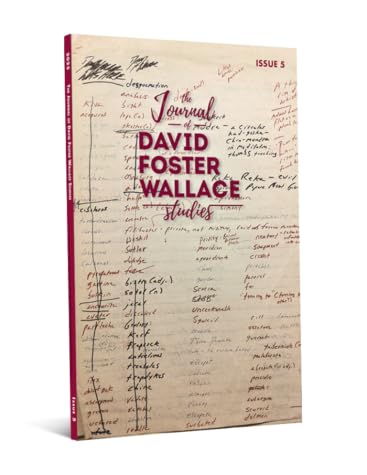
—p.125 The Journal of David Foster Wallace Studies (Vol 1, Issue 5) Community, Humanity, & Redemption: Infinite Jest and Fyodor Dostoevsky's Notes from a Dead House (121) missing author
You added a note
10 months, 1 week ago

rather than aiming to change the material conditions project/panopticon

This idea, that by being self-conscious about the way one observes and describes the everyday— the concrete and virtual environments of late 20th-century consumer capitalist society might constitute an ethical process is a long way from Lukács's idea that the only valid kind of fiction is that whic…

—p.108 Wallace and Description: The Inner Drama of the Observer (91) missing author
You added a note
10 months, 1 week ago

he chose fiction to make philosophy concrete

INTERPRET-ME fictions, thus, teach us that the abstract is concrete, the essence of everyday life. Wallace cites Voltaire's Candide (1759), Gombrowicz's Cosmos (1965), Hesse's The Glass Bead Game (1943), Sartre's Nausea (1948), Camus's The Stranger (1942), Pynchon's Gravity's Rainbow (1973), and Ma…

—p.69 Excerpt from The Problem of Free Will in David Foster Wallace (61) missing author
You added a note
10 months, 1 week ago

philosophical fiction over philosophy advice/writing

Wallace chose philosophical fiction over philosophy because he saw fiction as the better chance to connect with his readers. He wanted to confront philosophical problems by making them concrete. He counted on fiction's "ability to talk meaningfully to us." Because of this intent, his fiction exists…

—p.66 Excerpt from The Problem of Free Will in David Foster Wallace (61) missing author
You added a note
10 months, 1 week ago

the possibility of salvation from unbearable suffering why/dfw why/write

Two of Wallace's most famous nonfictional texts, "E Unibus Plu-ram" (1993) and This Is Water (2005), essential to Wallace's manifesto, are sociological to the core. In them, Wallace explores the causes of American social predicaments and submits solutions to them. This indicates the centrality of s…

—p.64 Excerpt from The Problem of Free Will in David Foster Wallace (61) missing author