
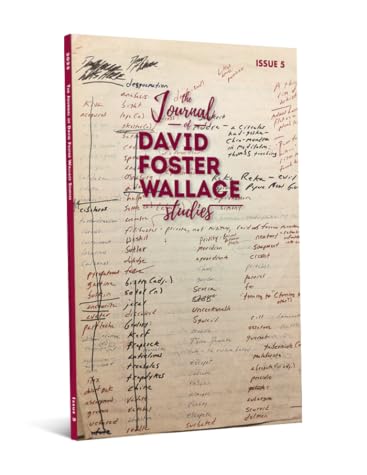
by
Matt Bucher
(editor)
INTERPRET-ME fictions, thus, teach us that the abstract is concrete, the essence of everyday life. Wallace cites Voltaire's Candide (1759), Gombrowicz's Cosmos (1965), Hesse's The Glass Bead Game (1943), Sartre's Nausea (1948), Camus's The Stranger (1942), Pynchon's Gravity's Rainbow (1973), and Markson's Wittgenstein's Mistress (1988) as notable examples of this genre, but the point of course is that his fiction belongs to it too. Like Dostoevsky before him, Wallace chose fiction precisely to care for philosophy by manifesting its pervasion of the daily concrete; he chose fiction to make philosophy concrete.
This is precisely the sense in which he quoted Wittgenstein's famous note to Norman Malcolm (from Malcolm's Ludwig Wittgenstein: A Memoir, 1988): "what is the use of studying philosophy if all that it does for you is to enable you to talk with some plausibility about some abstruse questions of logic, etc. and if it does not improve your thinking about the important questions of everyday life?"
In "The Empty Plenum," Wallace uses a technique that he will employ throughout his nonfiction: praising artists who actualize the ideals, ends, and features of his own art while never explicitly referring to his own goals or stating that someone represents a model for him. Instead, he lets the obvious and essential conformities between him and the artists he praises arise through this strategy of implication that pervades his nonfiction. Thus, he never writes "artist x produces valuable art because he strives to do y, as I myself try to do." Instead, in essay a, he says that "artist x produces valuable art because he does y;" in essay b, that "the contemporary human predicament needs art that does y;" and in interview c, that "I humbly attempt to do y,'26