
Bookmarker is a personal project by @dellsystem to help with retaining reading material. Source on GitHub.

Activity

You added a note
8 months, 3 weeks ago
he chose fiction to make philosophy concrete

INTERPRET-ME fictions, thus, teach us that the abstract is concrete, the essence of everyday life. Wallace cites Voltaire's Candide (1759), Gombrowicz's Cosmos (1965), Hesse's The Glass Bead Game (1943), Sartre's Nausea (1948), Camus's The Stranger (1942), Pynchon's Gravity's Rainbow (1973), and Ma…

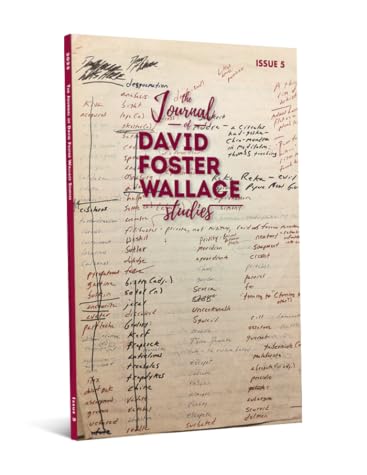
—p.69 The Journal of David Foster Wallace Studies (Vol 1, Issue 5) Excerpt from The Problem of Free Will in David Foster Wallace (61) missing author
You added a note
8 months, 3 weeks ago

philosophical fiction over philosophy advice/writing

Wallace chose philosophical fiction over philosophy because he saw fiction as the better chance to connect with his readers. He wanted to confront philosophical problems by making them concrete. He counted on fiction's "ability to talk meaningfully to us." Because of this intent, his fiction exists…

—p.66 Excerpt from The Problem of Free Will in David Foster Wallace (61) missing author
You added a note
8 months, 3 weeks ago

the possibility of salvation from unbearable suffering why/dfw why/write

Two of Wallace's most famous nonfictional texts, "E Unibus Plu-ram" (1993) and This Is Water (2005), essential to Wallace's manifesto, are sociological to the core. In them, Wallace explores the causes of American social predicaments and submits solutions to them. This indicates the centrality of s…

—p.64 Excerpt from The Problem of Free Will in David Foster Wallace (61) missing author
You added a note
8 months, 3 weeks ago

an other as well as a self

Although the fact that one "can't ever truly know what's going on inside somebody else" may doom such an endeavor to failure, the attempt, failed though it may be, leads one closer to establishing a self that can function in the world among others because, as Hayes-Brady writes, such an attempt for…

—p.54 "Verbal Chaos": Authorial Absence in Oblivion (37) by Mike Miley
You added a note
8 months, 3 weeks ago

who could love a text that only academics love?

Across these reviews, Wallace consistently prosecutes his own emerging aesthetic project. He engages largely with experimental and postmodern texts that, in one way or another, lose the plot, become too self-involved, too inward-looking. As his review of Acker suggests, there are certain literary a…

—p.28 David Foster Wallace's Deformation Professionelle (11) by Lee Konstantinou