
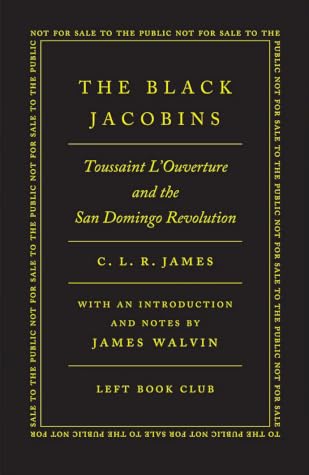
by
C.L.R. James
ix
The West Indian slave colonies had emerged, from the mid seventeenth century onwards, on the back of imported Africans toiling primarily on the sugar plantations. The sugar industry became a remarkable source of wealth and material well-being for those involved; for shippers and traders, for merchants and financiers, and for the domestic economies of the participating European maritime powers. By turns, the Spanish, Portuguese, Dutch, English and the French all sought to establish their own New World-based sugar industry. Of course, slaves produced a range of other tropical staples (notably tobacco, coffee and rice) but sugar remained their pre-eminent activity. The British islands, led by Barbados then, from the early eighteenth century, by Jamaica, established themselves as wealth-generating colonies – though not of course for the people who made it all possible: the Africans and their local-born offspring. This rise of slave-based British economic strength was paralleled by the emergence of British military and strategic power in the Atlantic. But by the mid eighteenth century they were challenged by the French, whose own slave islands (Martinique, Guadeloupe, San Domingo, St Lucia) disgorged growing prosperity to France and its maritime and mercantile groups.
The West Indian slave colonies had emerged, from the mid seventeenth century onwards, on the back of imported Africans toiling primarily on the sugar plantations. The sugar industry became a remarkable source of wealth and material well-being for those involved; for shippers and traders, for merchants and financiers, and for the domestic economies of the participating European maritime powers. By turns, the Spanish, Portuguese, Dutch, English and the French all sought to establish their own New World-based sugar industry. Of course, slaves produced a range of other tropical staples (notably tobacco, coffee and rice) but sugar remained their pre-eminent activity. The British islands, led by Barbados then, from the early eighteenth century, by Jamaica, established themselves as wealth-generating colonies – though not of course for the people who made it all possible: the Africans and their local-born offspring. This rise of slave-based British economic strength was paralleled by the emergence of British military and strategic power in the Atlantic. But by the mid eighteenth century they were challenged by the French, whose own slave islands (Martinique, Guadeloupe, San Domingo, St Lucia) disgorged growing prosperity to France and its maritime and mercantile groups.
xi
Warfare in St Domingue continued throughout the 1790s. Napoleon was determined to restore plantation slavery and to use St Domingue as a base for operations in the region. A huge new French army arrived, their main success being to lure L’Ouverture to a miserable death in France. But they faced a black guerrilla army determined to fight against the revival of slavery. The ex-slaves won, again. The depleted French forces departed for France and on 1 January 1804 L’Ouverture’s successor, Dessalines, declared Haitian independence.
Haiti was the first black republic outside Africa, and the second post-colonial society of the modern era (after the USA). En route the ex-slaves – their armies, their leaders, their guerrillas – had defeated invading British, Spanish and French armies. It had been a stunning reversal, not merely of European arms, but of the racial fundamentals which underpinned the Atlantic system. The European masters had been defeated by their African helots in an unprecedented turn-around of racial fortunes. Slave-owners everywhere realized and feared the implications of the events in Haiti. It formed, in a violent brew of international rivalries, racial antipathies and ideological clashes, the planters’ worst nightmares; of slaves seized of their own equality, armed and able to topple planters and colonial government alike.
Warfare in St Domingue continued throughout the 1790s. Napoleon was determined to restore plantation slavery and to use St Domingue as a base for operations in the region. A huge new French army arrived, their main success being to lure L’Ouverture to a miserable death in France. But they faced a black guerrilla army determined to fight against the revival of slavery. The ex-slaves won, again. The depleted French forces departed for France and on 1 January 1804 L’Ouverture’s successor, Dessalines, declared Haitian independence.
Haiti was the first black republic outside Africa, and the second post-colonial society of the modern era (after the USA). En route the ex-slaves – their armies, their leaders, their guerrillas – had defeated invading British, Spanish and French armies. It had been a stunning reversal, not merely of European arms, but of the racial fundamentals which underpinned the Atlantic system. The European masters had been defeated by their African helots in an unprecedented turn-around of racial fortunes. Slave-owners everywhere realized and feared the implications of the events in Haiti. It formed, in a violent brew of international rivalries, racial antipathies and ideological clashes, the planters’ worst nightmares; of slaves seized of their own equality, armed and able to topple planters and colonial government alike.
xviii
In 1789 the French West Indian colony of San Domingo supplied two-thirds of the overseas trade of France and was the greatest individual market for the European slave-trade. It was an integral part of the economic life of the age, the greatest colony in the world, the pride of France, and the envy of every other imperialist nation. The whole structure rested on the labour of half-a-million slaves.
In August 1791, after two years of the French Revolution and its repercussions in San Domingo, the slaves revolted. The struggle lasted for twelve years. The slaves defeated in turn the local whites and the soldiers of the French monarchy, a Spanish invasion, a British expedition of some 60,000 men, and a French expedition of similar size under Bonaparte’s brother-in-law. The defeat of Bonaparte’s expedition in 1803 resulted in the establishment of the Negro state of Haiti which has lasted to this day.
The revolt is the only successful slave revolt in history, and the odds it had to overcome is evidence of the magnitude of the interests that were involved. The transformation of slaves, trembling in hundreds before a single white man, into a people able to organize themselves and defeat the most powerful European nations of their day, is one of the great epics of revolutionary struggle and achievement. Why and how this happened is the theme of this book.
<3
In 1789 the French West Indian colony of San Domingo supplied two-thirds of the overseas trade of France and was the greatest individual market for the European slave-trade. It was an integral part of the economic life of the age, the greatest colony in the world, the pride of France, and the envy of every other imperialist nation. The whole structure rested on the labour of half-a-million slaves.
In August 1791, after two years of the French Revolution and its repercussions in San Domingo, the slaves revolted. The struggle lasted for twelve years. The slaves defeated in turn the local whites and the soldiers of the French monarchy, a Spanish invasion, a British expedition of some 60,000 men, and a French expedition of similar size under Bonaparte’s brother-in-law. The defeat of Bonaparte’s expedition in 1803 resulted in the establishment of the Negro state of Haiti which has lasted to this day.
The revolt is the only successful slave revolt in history, and the odds it had to overcome is evidence of the magnitude of the interests that were involved. The transformation of slaves, trembling in hundreds before a single white man, into a people able to organize themselves and defeat the most powerful European nations of their day, is one of the great epics of revolutionary struggle and achievement. Why and how this happened is the theme of this book.
<3
xix
In a revolution, when the ceaseless slow accumulation of centuries bursts into volcanic eruption, the meteoric flares and flights above are a meaningless chaos and lend themselves to infinite caprice and romanticism unless the observer sees them always as projections of the sub-soil from which they came. The writer has sought not only to analyse, but to demonstrate in their movement, the economic forces of the age; their moulding of society and politics, of men in the mass and individual men; the powerful reaction of these on their environment at one of those rare moments when society is at boiling point and therefore fluid.
<3
In a revolution, when the ceaseless slow accumulation of centuries bursts into volcanic eruption, the meteoric flares and flights above are a meaningless chaos and lend themselves to infinite caprice and romanticism unless the observer sees them always as projections of the sub-soil from which they came. The writer has sought not only to analyse, but to demonstrate in their movement, the economic forces of the age; their moulding of society and politics, of men in the mass and individual men; the powerful reaction of these on their environment at one of those rare moments when society is at boiling point and therefore fluid.
<3
3
Las Casas, a Dominican priest with a conscience, travelled to Spain to plead for the abolition of native slavery. But without coercion of the natives how could the colony exist? All the natives received as wages was Christianity and they could be good Christians without working in the mines.
The Spanish Government compromised. It abolished the repartimientos, or forced labour, in law while its agents in the colony maintained it in fact. Las Casas, haunted at the prospect of seeing before his eyes the total destruction of a population within one generation, hit on the expedient of importing the more robust Negroes from a populous Africa; in 1517, Charles V authorized the export of 15,000 slaves to San Domingo, and thus priest and King launched on the world the American slave-trade and slavery.
lol
Las Casas, a Dominican priest with a conscience, travelled to Spain to plead for the abolition of native slavery. But without coercion of the natives how could the colony exist? All the natives received as wages was Christianity and they could be good Christians without working in the mines.
The Spanish Government compromised. It abolished the repartimientos, or forced labour, in law while its agents in the colony maintained it in fact. Las Casas, haunted at the prospect of seeing before his eyes the total destruction of a population within one generation, hit on the expedient of importing the more robust Negroes from a populous Africa; in 1517, Charles V authorized the export of 15,000 slaves to San Domingo, and thus priest and King launched on the world the American slave-trade and slavery.
lol
9
The difficulty was that though one could trap them like animals, transport them in pens, work them alongside an ass or a horse and beat both with the same stick, stable them and starve them, they remained, despite their black skins and curly hair, quite invincibly human beings; with the intelligence and resentments of human beings. To cow them into the necessary docility and acceptance necessitated a régime of calculated brutality and terrorism, and it is this that explains the unusual spectacle of property-owners apparently careless of preserving their property: they had first to ensure their own safety.
For the least fault the slaves received the harshest punishment. [...]
The difficulty was that though one could trap them like animals, transport them in pens, work them alongside an ass or a horse and beat both with the same stick, stable them and starve them, they remained, despite their black skins and curly hair, quite invincibly human beings; with the intelligence and resentments of human beings. To cow them into the necessary docility and acceptance necessitated a régime of calculated brutality and terrorism, and it is this that explains the unusual spectacle of property-owners apparently careless of preserving their property: they had first to ensure their own safety.
For the least fault the slaves received the harshest punishment. [...]
20
Over and over again Toussaint read this passage: ‘A courageous chief only is wanted. Where is he?’ A courageous chief was wanted. It is the tragedy of mass movements that they need and can only too rarely find adequate leadership. But much else was wanted.
Men make their own history, and the black Jacobins of San Domingo were to make history which would alter the fate of millions of men and shift the economic currents of three continents. But if they could seize opportunity they could not create it. The slave-trade and slavery were woven tight into the economics of the eighteenth century. Three forces, the proprietors of San Domingo, the French bourgeoisie and the British bourgeoisie, throve on this devastation of a continent and on the brutal exploitation of millions. As long as these maintained an equilibrium the infernal traffic would go on, and for that matter would have gone on until the present day. But nothing, however profitable, goes on for ever. From the very momentum of their own development, colonial planters, French and British bourgeois, were generating internal stresses and intensifying external rivalries, moving blindly to explosions and conflicts which would shatter the basis of their dominance and create the possibility of emancipation.
god he's good [the passage comes from a revolutionary tract by the abbe raynal]
Over and over again Toussaint read this passage: ‘A courageous chief only is wanted. Where is he?’ A courageous chief was wanted. It is the tragedy of mass movements that they need and can only too rarely find adequate leadership. But much else was wanted.
Men make their own history, and the black Jacobins of San Domingo were to make history which would alter the fate of millions of men and shift the economic currents of three continents. But if they could seize opportunity they could not create it. The slave-trade and slavery were woven tight into the economics of the eighteenth century. Three forces, the proprietors of San Domingo, the French bourgeoisie and the British bourgeoisie, throve on this devastation of a continent and on the brutal exploitation of millions. As long as these maintained an equilibrium the infernal traffic would go on, and for that matter would have gone on until the present day. But nothing, however profitable, goes on for ever. From the very momentum of their own development, colonial planters, French and British bourgeois, were generating internal stresses and intensifying external rivalries, moving blindly to explosions and conflicts which would shatter the basis of their dominance and create the possibility of emancipation.
god he's good [the passage comes from a revolutionary tract by the abbe raynal]
23
The ignorance inherent in rural life prior to the industrial revolution was reinforced by the irascibility and the conceit of isolation allied to undisputed domination over hundreds of human beings. The plantations were often miles apart and, in those days of horse-traffic and few or bad roads in a mountainous country, communication with neighbours was difficult and rare. The planters hated the life and sought only to make enough money to retire to France or at least spend a few months in Paris, luxuriating in the amenities of civilization. With so much to eat and drink, there was a lavish hospitality which has remained a tradition, but the majority of the great houses, contrary to the legend, were poorly furnished, and their owners looked on them as rest-houses in the intervals of trips to Paris. Seeking to overcome their abundant leisure and boredom with food, drink, dice and black women, they had long before 1789 lost the simplicity of life and rude energy of those nameless men who laid the foundation of the colony. A manager and an overseer, and the more intelligent of their slaves were more than sufficient to run their plantations. As soon as they could afford it they left the island, if possible never to return, though they never formed in France so rich and powerful a social and political force as the West Indian interest in England.
The ignorance inherent in rural life prior to the industrial revolution was reinforced by the irascibility and the conceit of isolation allied to undisputed domination over hundreds of human beings. The plantations were often miles apart and, in those days of horse-traffic and few or bad roads in a mountainous country, communication with neighbours was difficult and rare. The planters hated the life and sought only to make enough money to retire to France or at least spend a few months in Paris, luxuriating in the amenities of civilization. With so much to eat and drink, there was a lavish hospitality which has remained a tradition, but the majority of the great houses, contrary to the legend, were poorly furnished, and their owners looked on them as rest-houses in the intervals of trips to Paris. Seeking to overcome their abundant leisure and boredom with food, drink, dice and black women, they had long before 1789 lost the simplicity of life and rude energy of those nameless men who laid the foundation of the colony. A manager and an overseer, and the more intelligent of their slaves were more than sufficient to run their plantations. As soon as they could afford it they left the island, if possible never to return, though they never formed in France so rich and powerful a social and political force as the West Indian interest in England.
24
To the men of divers races, classes and types who formed the early population of San Domingo had been added as the years passed a more unified and cohesive element, the offshoots of the French aristocracy. Deprived of political power by Richelieu and converted by Louis XIV into a decorative and administrative appendage of the absolute monarchy, the younger sons of French noblemen found in San Domingo some opportunity to rebuild their shattered fortunes and live the life of the country magnate now denied them in France. They came as officers in the army and officials, and stayed to found fortunes and families. They commanded the militia, administered a rude justice. Arrogant and spendthrift, yet they were a valuable section of white San Domingo society and knit together more firmly a society composed of such diverse and disintegrating elements. But even their education, traditions and pride were not proof against the prevailing corruption, and one could see a ‘relation of the de Vaudreils, a Châteauneuf, or Boucicaut, last descendant of the famous marshal of France, passing his life between a bowl of rum and a Negro concubine’.2
To the men of divers races, classes and types who formed the early population of San Domingo had been added as the years passed a more unified and cohesive element, the offshoots of the French aristocracy. Deprived of political power by Richelieu and converted by Louis XIV into a decorative and administrative appendage of the absolute monarchy, the younger sons of French noblemen found in San Domingo some opportunity to rebuild their shattered fortunes and live the life of the country magnate now denied them in France. They came as officers in the army and officials, and stayed to found fortunes and families. They commanded the militia, administered a rude justice. Arrogant and spendthrift, yet they were a valuable section of white San Domingo society and knit together more firmly a society composed of such diverse and disintegrating elements. But even their education, traditions and pride were not proof against the prevailing corruption, and one could see a ‘relation of the de Vaudreils, a Châteauneuf, or Boucicaut, last descendant of the famous marshal of France, passing his life between a bowl of rum and a Negro concubine’.2
26
In the towns the great merchants and the wealthy agents of the maritime bourgeoisie were included with the planters as big whites. On the plantations the managers and the stewards were either agents of the absentee owner, or were under the eye of the planter himself and, therefore, subordinate to him. These in the country, and in the towns the small lawyers, the notaries, the clerks, the artisans, the grocers, were known as the small whites.3 Included among the small whites was a crowd of city vagabonds, fugitives from justice, escaped galley slaves, debtors unable to pay their bills, adventurers seeking adventure or quick fortunes, men of all crimes and all nationalities. From the underworld of two continents they came, Frenchmen and Spaniards, Maltese, Italians, Portuguese and Americans. For whatever a man’s origin, record or character, here his white skin made him a person of quality and rejected or failures in their own country flocked to San Domingo, where consideration was achieved at so cheap a price, money flowed and opportunities of debauchery abounded.
No small white was a servant, no white man did any work that he could get a Negro to do for him. [...]
In the towns the great merchants and the wealthy agents of the maritime bourgeoisie were included with the planters as big whites. On the plantations the managers and the stewards were either agents of the absentee owner, or were under the eye of the planter himself and, therefore, subordinate to him. These in the country, and in the towns the small lawyers, the notaries, the clerks, the artisans, the grocers, were known as the small whites.3 Included among the small whites was a crowd of city vagabonds, fugitives from justice, escaped galley slaves, debtors unable to pay their bills, adventurers seeking adventure or quick fortunes, men of all crimes and all nationalities. From the underworld of two continents they came, Frenchmen and Spaniards, Maltese, Italians, Portuguese and Americans. For whatever a man’s origin, record or character, here his white skin made him a person of quality and rejected or failures in their own country flocked to San Domingo, where consideration was achieved at so cheap a price, money flowed and opportunities of debauchery abounded.
No small white was a servant, no white man did any work that he could get a Negro to do for him. [...]