
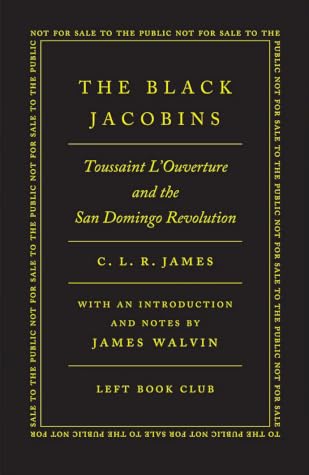
by
C.L.R. James
Warfare in St Domingue continued throughout the 1790s. Napoleon was determined to restore plantation slavery and to use St Domingue as a base for operations in the region. A huge new French army arrived, their main success being to lure L’Ouverture to a miserable death in France. But they faced a black guerrilla army determined to fight against the revival of slavery. The ex-slaves won, again. The depleted French forces departed for France and on 1 January 1804 L’Ouverture’s successor, Dessalines, declared Haitian independence.
Haiti was the first black republic outside Africa, and the second post-colonial society of the modern era (after the USA). En route the ex-slaves – their armies, their leaders, their guerrillas – had defeated invading British, Spanish and French armies. It had been a stunning reversal, not merely of European arms, but of the racial fundamentals which underpinned the Atlantic system. The European masters had been defeated by their African helots in an unprecedented turn-around of racial fortunes. Slave-owners everywhere realized and feared the implications of the events in Haiti. It formed, in a violent brew of international rivalries, racial antipathies and ideological clashes, the planters’ worst nightmares; of slaves seized of their own equality, armed and able to topple planters and colonial government alike.