
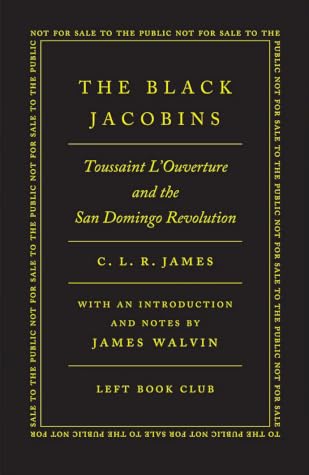
by
C.L.R. James
22
2. The Owners
0
terms
10
notes
23
The ignorance inherent in rural life prior to the industrial revolution was reinforced by the irascibility and the conceit of isolation allied to undisputed domination over hundreds of human beings. The plantations were often miles apart and, in those days of horse-traffic and few or bad roads in a mountainous country, communication with neighbours was difficult and rare. The planters hated the life and sought only to make enough money to retire to France or at least spend a few months in Paris, luxuriating in the amenities of civilization. With so much to eat and drink, there was a lavish hospitality which has remained a tradition, but the majority of the great houses, contrary to the legend, were poorly furnished, and their owners looked on them as rest-houses in the intervals of trips to Paris. Seeking to overcome their abundant leisure and boredom with food, drink, dice and black women, they had long before 1789 lost the simplicity of life and rude energy of those nameless men who laid the foundation of the colony. A manager and an overseer, and the more intelligent of their slaves were more than sufficient to run their plantations. As soon as they could afford it they left the island, if possible never to return, though they never formed in France so rich and powerful a social and political force as the West Indian interest in England.
The ignorance inherent in rural life prior to the industrial revolution was reinforced by the irascibility and the conceit of isolation allied to undisputed domination over hundreds of human beings. The plantations were often miles apart and, in those days of horse-traffic and few or bad roads in a mountainous country, communication with neighbours was difficult and rare. The planters hated the life and sought only to make enough money to retire to France or at least spend a few months in Paris, luxuriating in the amenities of civilization. With so much to eat and drink, there was a lavish hospitality which has remained a tradition, but the majority of the great houses, contrary to the legend, were poorly furnished, and their owners looked on them as rest-houses in the intervals of trips to Paris. Seeking to overcome their abundant leisure and boredom with food, drink, dice and black women, they had long before 1789 lost the simplicity of life and rude energy of those nameless men who laid the foundation of the colony. A manager and an overseer, and the more intelligent of their slaves were more than sufficient to run their plantations. As soon as they could afford it they left the island, if possible never to return, though they never formed in France so rich and powerful a social and political force as the West Indian interest in England.
24
To the men of divers races, classes and types who formed the early population of San Domingo had been added as the years passed a more unified and cohesive element, the offshoots of the French aristocracy. Deprived of political power by Richelieu and converted by Louis XIV into a decorative and administrative appendage of the absolute monarchy, the younger sons of French noblemen found in San Domingo some opportunity to rebuild their shattered fortunes and live the life of the country magnate now denied them in France. They came as officers in the army and officials, and stayed to found fortunes and families. They commanded the militia, administered a rude justice. Arrogant and spendthrift, yet they were a valuable section of white San Domingo society and knit together more firmly a society composed of such diverse and disintegrating elements. But even their education, traditions and pride were not proof against the prevailing corruption, and one could see a ‘relation of the de Vaudreils, a Châteauneuf, or Boucicaut, last descendant of the famous marshal of France, passing his life between a bowl of rum and a Negro concubine’.2
To the men of divers races, classes and types who formed the early population of San Domingo had been added as the years passed a more unified and cohesive element, the offshoots of the French aristocracy. Deprived of political power by Richelieu and converted by Louis XIV into a decorative and administrative appendage of the absolute monarchy, the younger sons of French noblemen found in San Domingo some opportunity to rebuild their shattered fortunes and live the life of the country magnate now denied them in France. They came as officers in the army and officials, and stayed to found fortunes and families. They commanded the militia, administered a rude justice. Arrogant and spendthrift, yet they were a valuable section of white San Domingo society and knit together more firmly a society composed of such diverse and disintegrating elements. But even their education, traditions and pride were not proof against the prevailing corruption, and one could see a ‘relation of the de Vaudreils, a Châteauneuf, or Boucicaut, last descendant of the famous marshal of France, passing his life between a bowl of rum and a Negro concubine’.2
26
In the towns the great merchants and the wealthy agents of the maritime bourgeoisie were included with the planters as big whites. On the plantations the managers and the stewards were either agents of the absentee owner, or were under the eye of the planter himself and, therefore, subordinate to him. These in the country, and in the towns the small lawyers, the notaries, the clerks, the artisans, the grocers, were known as the small whites.3 Included among the small whites was a crowd of city vagabonds, fugitives from justice, escaped galley slaves, debtors unable to pay their bills, adventurers seeking adventure or quick fortunes, men of all crimes and all nationalities. From the underworld of two continents they came, Frenchmen and Spaniards, Maltese, Italians, Portuguese and Americans. For whatever a man’s origin, record or character, here his white skin made him a person of quality and rejected or failures in their own country flocked to San Domingo, where consideration was achieved at so cheap a price, money flowed and opportunities of debauchery abounded.
No small white was a servant, no white man did any work that he could get a Negro to do for him. [...]
In the towns the great merchants and the wealthy agents of the maritime bourgeoisie were included with the planters as big whites. On the plantations the managers and the stewards were either agents of the absentee owner, or were under the eye of the planter himself and, therefore, subordinate to him. These in the country, and in the towns the small lawyers, the notaries, the clerks, the artisans, the grocers, were known as the small whites.3 Included among the small whites was a crowd of city vagabonds, fugitives from justice, escaped galley slaves, debtors unable to pay their bills, adventurers seeking adventure or quick fortunes, men of all crimes and all nationalities. From the underworld of two continents they came, Frenchmen and Spaniards, Maltese, Italians, Portuguese and Americans. For whatever a man’s origin, record or character, here his white skin made him a person of quality and rejected or failures in their own country flocked to San Domingo, where consideration was achieved at so cheap a price, money flowed and opportunities of debauchery abounded.
No small white was a servant, no white man did any work that he could get a Negro to do for him. [...]
32
But despite these restrictions the Mulattoes continued to make progress. By 1755, little more than three generations after the Negro Code, they were beginning to fill the colony, and their growing numbers and riches were causing alarm to the whites.
They lived (ran a report) like their forebears, on the local vegetables, drinking no wine, confining themselves to the local liquors brewed from the sugar cane. Thus their personal consumption contributed nothing to the maintenance of the important trade with France. Their sober ways of living and their small expenditure enabled them to put away most of their income every year, they accumulated immense capital, and grew more arrogant as their wealth increased. They bid for all properties on sale in the various districts, and raised prices to such fantastic heights that the whites who were not wealthy could not buy, or ruined themselves by attempting to keep pace with them. Thus, in some districts, the finest properties were in the possession of the half-castes, and yet they were everywhere the least ready to submit to statute labour and the public dues. Their plantations were the sanctuary and asylum of the freedmen who had neither work nor profession and of numerous fugitive slaves who had run away from their gangs. Being so rich they imitated the style of the whites and sought to drown all traces of their origin. They were trying to get high commands in the militia. Those who had ability enough to make them forget the vice of their origin were even seeking places in the judiciary. [...]
[...] The Council proposed to banish all the half-castes up to the degree of quarteron to the mountains (‘which they would bring into cultivation’), to forbid the sale of all property on the plains to half-castes, to deny them the right of acquiring any house-property, to force all those up to the degree of quarteron and all those whites who had married people of colour to that degree, to sell all their slaves within a year. ‘For,’ said the Council, ‘these are dangerous people, more friendly to the slaves, to whom they are still attached, than to us who oppress them by the subordination which we demand and the scorn with which we treat them. In a revolution, in a moment of tension, they would be the first to break the yoke which weighed on them, the more because they are richer and are now accustomed to have white debtors, since when they no longer have sufficient respect for us.’ But the colonists could not carry out these sweeping plans. The Mulattoes, unlike the German Jews, were already too numerous, and the revolution would have begun there and then.
But despite these restrictions the Mulattoes continued to make progress. By 1755, little more than three generations after the Negro Code, they were beginning to fill the colony, and their growing numbers and riches were causing alarm to the whites.
They lived (ran a report) like their forebears, on the local vegetables, drinking no wine, confining themselves to the local liquors brewed from the sugar cane. Thus their personal consumption contributed nothing to the maintenance of the important trade with France. Their sober ways of living and their small expenditure enabled them to put away most of their income every year, they accumulated immense capital, and grew more arrogant as their wealth increased. They bid for all properties on sale in the various districts, and raised prices to such fantastic heights that the whites who were not wealthy could not buy, or ruined themselves by attempting to keep pace with them. Thus, in some districts, the finest properties were in the possession of the half-castes, and yet they were everywhere the least ready to submit to statute labour and the public dues. Their plantations were the sanctuary and asylum of the freedmen who had neither work nor profession and of numerous fugitive slaves who had run away from their gangs. Being so rich they imitated the style of the whites and sought to drown all traces of their origin. They were trying to get high commands in the militia. Those who had ability enough to make them forget the vice of their origin were even seeking places in the judiciary. [...]
[...] The Council proposed to banish all the half-castes up to the degree of quarteron to the mountains (‘which they would bring into cultivation’), to forbid the sale of all property on the plains to half-castes, to deny them the right of acquiring any house-property, to force all those up to the degree of quarteron and all those whites who had married people of colour to that degree, to sell all their slaves within a year. ‘For,’ said the Council, ‘these are dangerous people, more friendly to the slaves, to whom they are still attached, than to us who oppress them by the subordination which we demand and the scorn with which we treat them. In a revolution, in a moment of tension, they would be the first to break the yoke which weighed on them, the more because they are richer and are now accustomed to have white debtors, since when they no longer have sufficient respect for us.’ But the colonists could not carry out these sweeping plans. The Mulattoes, unlike the German Jews, were already too numerous, and the revolution would have begun there and then.
37
From the beginning the colonists were at variance with the French Government and the interests it represented. The French, like every other Government in those days, looked upon colonies as existing exclusively for the profit of the metropolis. Known as the Mercantile system in England, the French called this economic tyranny by a more honest name, the Exclusive. Whatever manufactured goods the colonists needed they were compelled to buy from France. They could sell their produce only to France. The goods were to be transported only in French ships. Even the raw sugar produced in the colonies was to be refined in the mother-country, and the French imposed heavy duties on refined sugar of colonial origin. ‘The colonies,’ said Colbert, ‘are founded by and for the metropolis.’ This was not true. The colonists had founded San Domingo themselves, and the falsehood of the claim made the exploitation all the harder to bear.
From the beginning the colonists were at variance with the French Government and the interests it represented. The French, like every other Government in those days, looked upon colonies as existing exclusively for the profit of the metropolis. Known as the Mercantile system in England, the French called this economic tyranny by a more honest name, the Exclusive. Whatever manufactured goods the colonists needed they were compelled to buy from France. They could sell their produce only to France. The goods were to be transported only in French ships. Even the raw sugar produced in the colonies was to be refined in the mother-country, and the French imposed heavy duties on refined sugar of colonial origin. ‘The colonies,’ said Colbert, ‘are founded by and for the metropolis.’ This was not true. The colonists had founded San Domingo themselves, and the falsehood of the claim made the exploitation all the harder to bear.
39
The slave-trade and slavery were the economic basis of the French Revolution. ‘Sad irony of human history,’ comments Jaurès. ‘The fortunes created at Bordeaux, at Nantes, by the slave-trade, gave to the bourgeoisie that pride which needed liberty and contributed to human emancipation.’ Nantes was the centre of the slave-trade. As early as 1666,108 ships went to the coast of Guinea and took on board 37,430 slaves, 12 to a total value of more than 37 millions, giving the Nantes bourgeoisie 15 to 20 per cent on their money. In 1700 Nantes was sending fifty ships a year to the West Indies with Irish salt beef, linen for the household and for clothing the slaves, and machinery for sugar-mills. Nearly all the industries which developed in France during the eighteenth century had their origin in goods or commodities destined either for the coast of Guinea or for America. The capital from the slave-trade fertilized them; though the bourgeoisie traded in other things than slaves, upon the success or failure of the traffic everything else depended.13
The slave-trade and slavery were the economic basis of the French Revolution. ‘Sad irony of human history,’ comments Jaurès. ‘The fortunes created at Bordeaux, at Nantes, by the slave-trade, gave to the bourgeoisie that pride which needed liberty and contributed to human emancipation.’ Nantes was the centre of the slave-trade. As early as 1666,108 ships went to the coast of Guinea and took on board 37,430 slaves, 12 to a total value of more than 37 millions, giving the Nantes bourgeoisie 15 to 20 per cent on their money. In 1700 Nantes was sending fifty ships a year to the West Indies with Irish salt beef, linen for the household and for clothing the slaves, and machinery for sugar-mills. Nearly all the industries which developed in France during the eighteenth century had their origin in goods or commodities destined either for the coast of Guinea or for America. The capital from the slave-trade fertilized them; though the bourgeoisie traded in other things than slaves, upon the success or failure of the traffic everything else depended.13
41
Rich as was the French bourgeoisie, the colonial trade was too big for it. The British bourgeois, most successful of slave-traders, sold thousands of smuggled slaves every year to the French colonists and particularly to San Domingo. But even while they sold the slaves to San Domingo, the British were watching the progress of this colony with alarm and with envy. After the independence of America in 1783, this amazing French colony suddenly made such a leap as almost to double its production between 1783 and 1789. In those years Bordeaux alone invested 100 millions in San Domingo. The British bourgeois were the great rivals of the French. All through the eighteenth century they fought in every part of the world. The French had jumped gleefully in to help drive them out of America. San Domingo was now incomparably the finest colony in the world and its possibilities seemed limitless. The British bourgeoisie investigated the new situation in the West Indies, and on the basis of what it saw, prepared a bombshell for its rivals. Without slaves San Domingo was doomed. The British colonies had enough slaves for all the trade they were ever likely to do. With the tears rolling down their cheeks for the poor suffering blacks, those British bourgeois who had no West Indian interests set up a great howl for the abolition of the slave-trade.
im not sure i totally follow this argument but i enjoy his scorn here lol
Rich as was the French bourgeoisie, the colonial trade was too big for it. The British bourgeois, most successful of slave-traders, sold thousands of smuggled slaves every year to the French colonists and particularly to San Domingo. But even while they sold the slaves to San Domingo, the British were watching the progress of this colony with alarm and with envy. After the independence of America in 1783, this amazing French colony suddenly made such a leap as almost to double its production between 1783 and 1789. In those years Bordeaux alone invested 100 millions in San Domingo. The British bourgeois were the great rivals of the French. All through the eighteenth century they fought in every part of the world. The French had jumped gleefully in to help drive them out of America. San Domingo was now incomparably the finest colony in the world and its possibilities seemed limitless. The British bourgeoisie investigated the new situation in the West Indies, and on the basis of what it saw, prepared a bombshell for its rivals. Without slaves San Domingo was doomed. The British colonies had enough slaves for all the trade they were ever likely to do. With the tears rolling down their cheeks for the poor suffering blacks, those British bourgeois who had no West Indian interests set up a great howl for the abolition of the slave-trade.
im not sure i totally follow this argument but i enjoy his scorn here lol
44
How could anyone seriously fear for such a wonderful colony? Slavery seemed eternal and the profits mounted. Never before, and perhaps never since, has the world seen anything proportionately so dazzling as the last years of pre-revolutionary San Domingo. Between 1783 and 1789 production nearly doubled. Between 1764 and 1771 the average importation of slaves varied between ten and fifteen thousand. In 1786 it was 27,000, and from 1787 onwards the colony was taking more than 40,000 slaves a year. But economic prosperity is no guarantee of social stability. That rests on the constantly shifting equilibrium between the classes. It was the prosperity of the bourgeoisie that started the English revolution of the seventeenth century. With every stride in production the colony was marching to its doom.
The enormous increase of slaves was filling the colony with native Africans, more resentful, more intractable, more ready for rebellion than the creole Negro. Of the half-a-million slaves in the colony in 1789, more than two-thirds had been born in Africa.
god i love the way he writes
How could anyone seriously fear for such a wonderful colony? Slavery seemed eternal and the profits mounted. Never before, and perhaps never since, has the world seen anything proportionately so dazzling as the last years of pre-revolutionary San Domingo. Between 1783 and 1789 production nearly doubled. Between 1764 and 1771 the average importation of slaves varied between ten and fifteen thousand. In 1786 it was 27,000, and from 1787 onwards the colony was taking more than 40,000 slaves a year. But economic prosperity is no guarantee of social stability. That rests on the constantly shifting equilibrium between the classes. It was the prosperity of the bourgeoisie that started the English revolution of the seventeenth century. With every stride in production the colony was marching to its doom.
The enormous increase of slaves was filling the colony with native Africans, more resentful, more intractable, more ready for rebellion than the creole Negro. Of the half-a-million slaves in the colony in 1789, more than two-thirds had been born in Africa.
god i love the way he writes
45
Mulattoes educated in Paris during the Seven Years’ War had come home, and their education and accomplishments filled the colonists with hatred and envy and fear. It was these last years that saw the fiercest legislation against them. Forbidden to go to France, where they learnt things that were not good for them, they stayed at home to increase the strength of the dissatisfied.
Mulattoes educated in Paris during the Seven Years’ War had come home, and their education and accomplishments filled the colonists with hatred and envy and fear. It was these last years that saw the fiercest legislation against them. Forbidden to go to France, where they learnt things that were not good for them, they stayed at home to increase the strength of the dissatisfied.
45
With the growth of trade and of profits, the number of planters who could afford to leave their estates in charge of managers grew, and by 1789, in addition to the maritime bourgeois, there was a large group of absentee proprietors in France linked to the aristocracy by marriage, for whom San Domingo was nothing else but a source of revenue to be spent in the luxurious living of aristocratic Paris. So far had these parasites penetrated into the French aristocracy that a memoir from San Domingo to the King could say: ‘Sire, your court is creole,’ without too much stretching of the truth.
The prosperity affected even the slaves. More of them could save money, buy their freedom, and enter the promised land.
This was the San Domingo of 1789, the most profitable colony the world had ever known; to the casual eye the most flourishing and prosperous possession on the face of the globe; to the analyst a society torn by inner and outer contradictions which in four years would split that structure into so many pieces that they could never be put together again.
With the growth of trade and of profits, the number of planters who could afford to leave their estates in charge of managers grew, and by 1789, in addition to the maritime bourgeois, there was a large group of absentee proprietors in France linked to the aristocracy by marriage, for whom San Domingo was nothing else but a source of revenue to be spent in the luxurious living of aristocratic Paris. So far had these parasites penetrated into the French aristocracy that a memoir from San Domingo to the King could say: ‘Sire, your court is creole,’ without too much stretching of the truth.
The prosperity affected even the slaves. More of them could save money, buy their freedom, and enter the promised land.
This was the San Domingo of 1789, the most profitable colony the world had ever known; to the casual eye the most flourishing and prosperous possession on the face of the globe; to the analyst a society torn by inner and outer contradictions which in four years would split that structure into so many pieces that they could never be put together again.