
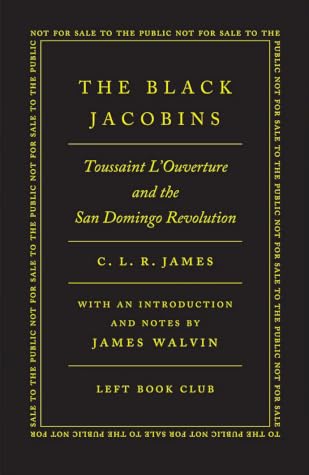
by
C.L.R. James
5
1. The Property
0
terms
2
notes
9
The difficulty was that though one could trap them like animals, transport them in pens, work them alongside an ass or a horse and beat both with the same stick, stable them and starve them, they remained, despite their black skins and curly hair, quite invincibly human beings; with the intelligence and resentments of human beings. To cow them into the necessary docility and acceptance necessitated a régime of calculated brutality and terrorism, and it is this that explains the unusual spectacle of property-owners apparently careless of preserving their property: they had first to ensure their own safety.
For the least fault the slaves received the harshest punishment. [...]
The difficulty was that though one could trap them like animals, transport them in pens, work them alongside an ass or a horse and beat both with the same stick, stable them and starve them, they remained, despite their black skins and curly hair, quite invincibly human beings; with the intelligence and resentments of human beings. To cow them into the necessary docility and acceptance necessitated a régime of calculated brutality and terrorism, and it is this that explains the unusual spectacle of property-owners apparently careless of preserving their property: they had first to ensure their own safety.
For the least fault the slaves received the harshest punishment. [...]
20
Over and over again Toussaint read this passage: ‘A courageous chief only is wanted. Where is he?’ A courageous chief was wanted. It is the tragedy of mass movements that they need and can only too rarely find adequate leadership. But much else was wanted.
Men make their own history, and the black Jacobins of San Domingo were to make history which would alter the fate of millions of men and shift the economic currents of three continents. But if they could seize opportunity they could not create it. The slave-trade and slavery were woven tight into the economics of the eighteenth century. Three forces, the proprietors of San Domingo, the French bourgeoisie and the British bourgeoisie, throve on this devastation of a continent and on the brutal exploitation of millions. As long as these maintained an equilibrium the infernal traffic would go on, and for that matter would have gone on until the present day. But nothing, however profitable, goes on for ever. From the very momentum of their own development, colonial planters, French and British bourgeois, were generating internal stresses and intensifying external rivalries, moving blindly to explosions and conflicts which would shatter the basis of their dominance and create the possibility of emancipation.
god he's good [the passage comes from a revolutionary tract by the abbe raynal]
Over and over again Toussaint read this passage: ‘A courageous chief only is wanted. Where is he?’ A courageous chief was wanted. It is the tragedy of mass movements that they need and can only too rarely find adequate leadership. But much else was wanted.
Men make their own history, and the black Jacobins of San Domingo were to make history which would alter the fate of millions of men and shift the economic currents of three continents. But if they could seize opportunity they could not create it. The slave-trade and slavery were woven tight into the economics of the eighteenth century. Three forces, the proprietors of San Domingo, the French bourgeoisie and the British bourgeoisie, throve on this devastation of a continent and on the brutal exploitation of millions. As long as these maintained an equilibrium the infernal traffic would go on, and for that matter would have gone on until the present day. But nothing, however profitable, goes on for ever. From the very momentum of their own development, colonial planters, French and British bourgeois, were generating internal stresses and intensifying external rivalries, moving blindly to explosions and conflicts which would shatter the basis of their dominance and create the possibility of emancipation.
god he's good [the passage comes from a revolutionary tract by the abbe raynal]