
why/write
Simone de Beauvoir,
Richard Seymour,
Patricia Highsmith,
Ursula K. Le Guin,
Anne Lamott,
Mario Levrero,
Alexander Chee,
Jennifer Egan,
Roberto Bolaño
Why write?
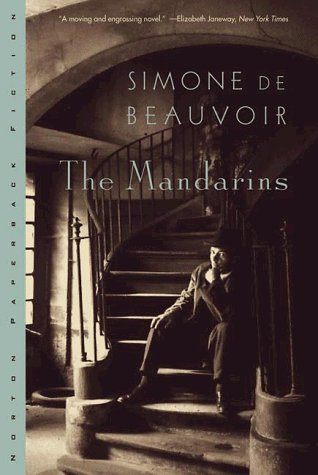
'It's true it isn't easy to be young in these times, ' Henri said to himself. He made up his mind to have a serious talk with Lambert one of these days. 'And just what would I say to him?' He began undressing. 'If I were a Communist or a Christian, I'd be less at a loss. An ethical system based on universal values, yes, you can try to impose it on others. But the meaning one gives to one's own life is another story. I couldn't explain that in a few sentences; Lambert would have to be made to see the world through my eyes.' Henri sighed. And that's precisely where literature is useful - to show the world to others as you yourself see it. Only he had tried and he had failed. 'Did I really try?' he asked himself, lighting another cigarette and sitting down on the edge of the bed. He had wanted to write a book for his own pleasure, a book which would serve no purpose, was not needed, had no reason for being. No wonder he had become fed up with it so quickly. He promised himself he would be honest, but he had only been complacent. He had pretended to talk about himself without setting himself in either the past or the present. But the truth of one's life is outside oneself, in events, in other people, in things; to talk about oneself, one must talk about everything else. He got up and drank a glass of water. At the time, it had suited him to believe that literature no longer had any meaning, but nevertheless it hadn't prevented him from writing a play that satisfied him. A play set in a definite place, at a definite time, a play that meant something. And that was precisely why he was satisfied with it. Then why not undertake a similar novel; why not tell a story of today in which the readers would find their own worries, their own problems? Neither demonstrate nor exhort, but bear witness. It took him a long time to fall asleep.
<3<3

To write? Because all this is going to vanish. The only thing left will be the prose and poems, the books, what is written down. Man was very fortunate to have invented the book. Without it the past would completely vanish, and we would be left with nothing, we would be naked on earth.
q: What do you think is the ultimate impulse to write?

One of the things that was interesting to me working with Czesław for twenty-five years was that he never thought it wasn’t the most important thing in the world. He had despair about the world. He had despair about whether his art could ever achieve what he hoped it would achieve. He had a feeling that serious art can lose its way among junk. But he always felt that, as he says in one poem, “Great was that chase with the hounds for the unattainable meaning of the world.” He always thought that the poets and the philosophers and the artists and the theologians and so forth were engaged in the grand human adventure.

VILA-MATAS
I fully recognize myself in it! Today I know that the best thing about that whole experience was getting to know Duras. I arrived in Paris tired of “normal people,” and tired, too, of all the prim, proper writers that proliferated at the time—not to mention these days, today there are even more. In Paris I confirmed that the writers who appealed to me were those like Duras, the kind who don’t appear on school honors plaques and who are divisive, distinctly unedifying, full of defects, but show immense talent. I think that really terrible side of Duras—she was spectacularly brutal—had a great influence on me.
INTERVIEWER
Brutal?
VILA-MATAS
Brutal because her obsession with writing sprang from a genuine belief that she could transcend the words and reach another—inexpressible—reality. And in order to reach it she was prepared to do anything. She was, frankly, scary. To put it another way, she was a writer on a mission. If I remember correctly, she described this process of reaching “the inexpressible” as “piercing the black shadow,” an “interior” shadow. I also remember that, given her belief that absolutely everybody possesses an inner shadow, she found it strange that not everybody wrote.

To me the important thing is not to offer any specific hope of betterment but, by offering an imagined but persuasive alternative reality, to dislodge my mind, and so the reader's mind, from the lazy, timorous habit of thinking that the way we live now is the only way people can live. It is that inertia that allows the institutions of injustice to continue unquestioned.
[...] I hope every writer has had at least a moment when they rode the wave, and all the words were right.
As readers, we have all ridden that wave, and known that joy.
Prose and poetry - all art, music, dance - rise from and move with the profound rhyhtms of our body, our being, and hte body and being of the world. [...] Once we get the beat, teh right beat, our ideas and our words dance to it, the round dance that everybody can join. And then I am thou, and the barriers are down. For a little while.

It was like a walking frame or a wheelchair, a crutch, which when you think about it is what most writing is, something to support the figure of the writer, so that he doesn’t fall back into the primordial soup of everyone else, which is no one.

I think if we are being honest, we probably would admit that at times we fear there is an unbridgeable gap between us and others—readers, friends, family, partners—that language cannot cross. Or maybe we fear the gap is in fact bridgeable by someone less damaged or more talented or attractive or authentic than ourselves. To cross this gap is the dream of all writers, and that dream is a kind of metonymy of the human dream to cross over into intimacy or connection. It is this melancholy awareness of inevitable distance between humans, and the hope that it can somehow be crossed over, that gently permeates this poem.

Interviewer: Do you enjoy writing, or is such a term irrelevant to your experience?
Mailer: Oh, no. No, no. You set me thinking of something Jean Malaquais once said. He always had a terrible time writing. He once complained with great anguish about the unspeakable difficulties he was having with a novel. And I asked him, "Why do it? You can do many other things well. Why do you bother with it?" I really meant this. Because he suffered when writing like no one I know. He looked up in surprise and said, "Oh, but this is the only way one can ever find the truth. The only time know that something is true is at the moment I discover it in the act of writing." I think it's that. I think it's this moment when one knows it's true. One may not have written it well enough for others to know, but you're in love with the truth when discover it at the point of a pencil. That, in and by itself, is one of the few rare pleasures in life.

I am not alone. Whatever else there was or is, writing is with me.
—Lidia Yuknavitch
<3 <3