
why/write
Simone de Beauvoir,
Richard Seymour,
Patricia Highsmith,
Ursula K. Le Guin,
Anne Lamott,
Mario Levrero,
Alexander Chee,
Jennifer Egan,
Roberto Bolaño
Why write?

Nanni Balestrini’s novels have meant a great deal to me over the years. Formally, stylistically, they are in a category alone. Until I discovered them, I had often wondered if a novelist needed to have contempt for humanity, à la Céline, to have a great style. Style and cynicism—the ability to satirize, and to leave nothing sacred—had always seemed linked. In youth, I’d even regarded a lack of nihilism as an artistic weakness. Balestrini gives the lie to this idea. His novels, which are as funny and bleak as Journey to the End of the Night, are fueled not by contempt but instead by a kind of indestructible belief in revolutionary possibility. This may have something to do with the way the books were made. Balestrini was a subversive, an activist, and an organizer lifelong, in meetings, on barricades, outside factory gates, in the streets, in clandestine spaces. Never a voyeur, and always a participant, which must have been why people trusted him when he turned on his tape recorder. He was introducing art—the novel—to the work of rejecting, possibly overthrowing, bourgeois structures of power.
<3
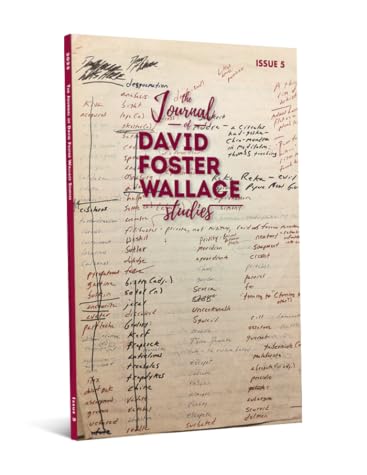
Two of Wallace's most famous nonfictional texts, "E Unibus Plu-ram" (1993) and This Is Water (2005), essential to Wallace's manifesto, are sociological to the core. In them, Wallace explores the causes of American social predicaments and submits solutions to them. This indicates the centrality of sociology to his literary project. Part of his diagnosis is that "this is a generation that has an inheritance of absolutely nothing as far as meaningful moral values, and it's our job to make them up, and we're not doing it." Part of his solution is that writers must produce literature that functions "as an anodyne against loneliness," i.e., their duty is to recreate a sense of community.
This is the structure of Wallace's sociology: to define the predicament against which he can theorize writing as therapeutic, corrective, redemptive, and a response to the problems of our time. This is why his sociology constitutes the foundation of his intellectual project. There is no division between Wallace's fiction and nonfiction. His fictional production explicitly refers to its historical, social, political, ethical, and metaphysical context, i.e., to what is addressed in the nonfiction. His work thus constitutes a unity with one clear goal: to find the possibility of salvation from unbearable suffering.

There’s the door, she tells me, and points. Why don’t you just walk out?
I don’t move. I can walk out the door, but then I’d have to stand in the hall and wait.
What about that gate? She’s pointing out the window now. The gate is lit up at night: razor wire coiled along the top, the tower with a sharpshooter in it. Or what about your cell doors? she asks. Or block gates? Or shower doors? Or the mess hall doors, or the doors to the visitor entrance? How often do you gentlemen touch a doorknob? That’s what I’m asking.
I knew the minute I saw Holly that she’d never taught in a prison before. It wasn’t her looks—she’s not a kid, and you can see she hasn’t had it easy. But people who teach in prisons have a hard layer around them that’s missing on Holly. I can hear how nervous she is, like she planned every word of that speech about the doors. But the crazy thing is, she’s right. The last time I got out, I’d stand in front of doors and wait for them to open up. You forget what it’s like to do it yourself.
She says, My job is to show you a door you can open. And she taps the top of her head. It leads wherever you want it to go, she says. That’s what I’m here to do, and if that doesn’t interest you then please spare us all, because this grant only funds ten students, and we only meet once a week, and I’m not going to waste everyone’s time on bullshit power struggles.
She comes right to my desk and looks down. I look back up. I want to say, I’ve heard some cheesy motivational speeches in my time, but that one’s a doozy. A door in our heads, come on. But while she was talking I felt something pop in my chest.
You must be logged in to see this comment.
I got to my class the first night and there they were: the trash. Looking huge at their desks. Most of them seemed edgy, curious, but not Ray Dobbs. He was lean, with thick dark hair. Handsome. But his blue eyes were dead.
I gave him an assignment: Write a story three pages long. And he came back the next week and read out the vilest shit about fucking his teacher. All of them were howling and I was really scared, knowing if I lost control of the class there’d be no getting it back. And that gave me an adrenaline surge that was the tiniest bit like getting high.
So I started to talk. And as Ray Dobbs listened to me I saw something open up behind his eyes like a camera shutter when the picture shoots. It made goose bumps rise up all over me because I’d done that; I’d made that happen just by talking. It felt intimate, like something physical between us.
After that I could feel Ray watching me. It made me alert, like someone had scrubbed mint all over my skin. I’d walk into that stinking, miserable prison and for the next three hours, a wise and beautiful woman would float out of the wreckage of my life, and her words and thoughts and tiniest movements were precious.
My doubts relate more to the fact that now, when I look back on that time, another completely different image occurs to me as the source of that impulse; and judging by this image, the initial impulse arose from a conversation I had with a friend. I’d told this friend about an experience of mine that had been extremely transcendental, and I’d told him how difficult it would be to turn it into a story. According to my theory, there are some extraordinary experiences that can’t be written about without becoming denatured; it’s impossible to set them down on paper. My friend insisted that if I wrote it just as I’d told it that night, I’d have a beautiful story; and that not only would I be able to write it, but that writing it was my duty.
I’m sorry, literature, you who also have something of a guileless and pitying prostitute about you, I’ve abandoned you too in this reverie of self-absorption, reminiscing behind your back. I’m losing you, too, but it had to be done. I hope you understand: I’m trying to put my own jigsaw together, calling out in a voice that has to travel down tunnels that are fifteen, eighteen, twenty years long, calling to my scattered pieces, to the unburied corpses of myself, grotesque spectres that never rest, images that never had a mirror to reflect them, broken glass crushed under the wheels of a thousand cars travelling down the road in the same direction, all going to the same place.
'Listen,' Robert said in a conciliatory tone of voice, 'one book more or less on earth isn't as important as all that. And the political situation at present is extremely stimulating; I hope you realize that. This is the first time the left has ever held its fate in its own hands, the first chance to try to organize a group independent of the Communists without running the risk of serving the cause of the right. I'm not going to let this opportunity slip by! I've been waiting for it all my life.'
'For my part, I think your books are more important,' I said. 'They bring people something unique and different. But when it comes to politics, you're not the only one about who can become involved in it.'
'But I'm the only one who can steer things in the direction I want them to take,' Robert said cheerfully. 'You of all people ought to understand me. The vigilance committees and the Resistance were useful, all right, but they were negative things. Today, it's a question of building, and that's much more interesting.'
'I understand you very well, but your writing interests me more.'
'Haven't we always agreed that one doesn't write just for the sake of writing?' Robert said. 'At certain times, other forms of action become more urgent.'
'Not for you,' I replied. 'First and foremost, you're a writer.'
'You know that's not true,' Robert said reproachfully. 'For me, the revolution comes first.'
'Yes,' I said, 'but you can best serve the revolution by writing your books.'
Robert shook his head. 'That depends on the circumstances. We're at a critical moment of history just now; first we have to win the political battle.'
the perennial debate
It's not easy. There was a time I did see him from a distance, but I was too young. I looked at him from too far off. Friends had pointed him out to me at the Sorbonne; they spoke of him a great deal, with a mixture of admiration and disapproval. It was whispered that he drank and frequented brothels. If that had been true, I think it would have attracted rather than repelled me; I was still rebelling against my pious childhood. In my mind, sin was a touching manifestation of the absence of God, and if someone had told me that Dubreuilh raped little girls I'd have taken him for a saint of sorts. But his vices were minor and his too-well-established fame irritated me. When I began taking his courses, I had already made up my mind that the 'great man' was a charlatan. Of course, he was different from all the other professors. He would come rushing into the room like a gust of wind; he was always four or five minutes late. He would survey us for a moment with his large, crafty eyes, and then he would begin speaking in either a very amiable or a very aggressive voice. There was something provocative in his surly face, his violent voice, his bursts of laughter which sometimes seemed to us a little insane. He wore very white shirts, his hands were always carefully manicured, and he was impeccably shaven; it was impossible, therefore, to attribute to negligence his zipper jackets, his pullovers, his clumsy shoes. He preferred comfort to decency with such an obvious lack of restraint that I thought it affected. I had read his novels and didn't like them at all; I expected them to bring to me some inspiring message, and all they ever spoke to me of were indifferent people, frivolous sentiments, and a lot of other things that didn't seem to me the least bit essential. As for his courses, they were interesting all right, but he never really said anything worthy of a genius. And he was always so cocksure of being right that I had an irresistible desire to contradict him. Oh, I was convinced, too, that the truth was to the left; ever since my childhood I had sniffed an odour of stupidity and lies in bourgeois thinking, a very foul-smelling odour. And then I had learned from the Gospel that all men are equal, are brothers; that's one thing I continue to believe in with an unshakable faith. But spiritually, after I had been for so long crammed full of absolutes, the void left in the heavens made a mockery of all morality I had been taught. But Dubreuilh believed there could be salvation here on earth. I let him know where I stood in my first essay. 'Revolution, fine,' I said, 'but what then?' When he gave me back my paper a week later as we were leaving the classroom, he ridiculed my efforts. According to him, my absolute was the abstract dream of a petty bourgeoise incapable of facing reality. Of course I couldn't hold my own against him, and he won every round. But that didn't prove anything, and I told him as much. We resumed our discussion the following week and this time he tried to convince me, rather than overwhelm me. I had to admit that in private discussion he didn't at all seem to feel that he was a great man. He began chatting with me, rather often after classes, sometimes he walked home with me occasionally taking a longer route than was necessary. And then we began going out together in the afternoons, the evenings. We stopped talking about morality and politics and other lofty subjects. He told me about the people he knew and the things he did, and most of all he would take me for walks, show me streets, squares, quays, canals, cemeteries, suburbs, warehouses, vacant sites, little cafes, and a hundred corners of Paris that were completely new to me. And I began to realize that I had never really seen things I believed I had always known; with him everything took on a thousand meanings — faces, voices, people's clothing, a tree poster, a neon sign, no matter, what. I reread all his novels. And I soon realized I had completely misunderstood them the first time. Dubreuilh gave the impression of writing capriciously, for his own pleasure, completely without motivation. And yet on closing the book, you felt yourself overwhelmed with anger, disgust, revolt; you wanted things to change. To read certain passages from his works, you would take him for a pure aesthete; he has a feeling for words, and he's interested in things for themselves, in rain and clear skies, in the games of love and chance, in everything. Only he doesn't stop there; suddenly you find yourself thrown in among people, and all their problems become your concern. That's why I'm so determined for him to continue writing; I know through my own experience what he can bring to his readers. There's no gap between his political ideas and his poetic emotions. Because he himself loves life so much, he wants all men to be able to share it abundantly. And because he loves people, everything that's part of their lives interests him deeply.
<3
The next morning the radio confirmed the German collapse. 'It's really the beginning of peace,' Henri repeated to himself, sitting down at his desk. 'At last I can start writing again!' He would, he assured himself, write every day from now on. But what exactly would he write? He didn't know and he was perfectly content not to know; always before he had known only too well. Now he would attempt to talk to the reader without premeditation, as one writes to a friend: And perhaps he would at last succeed in saying all those things for which he had never found room enough in his too carefully constructed books. There are so many things one would like to preserve with words but which are forever lost. He raised his head and looked through the window at the cold sky. What a pity to think that this winter morning would be lost; everything seemed so precious: the white, virginal paper, the smell of alcohol and stale cigarette ends, the Arab music drifting up from the cafe next door. Notre Dame was as cold as the sky, a tramp with a. huge collar of bluish chicken feathers was dancing in the middle of the street, and two girls in their Sunday clothes were watching him and laughing. It was Christmas, it was the German collapse, and life was beginning again. Yes, all those mornings, all those evenings, that he had let slip through his fingers in the last four years, he was determined to make up for them during the next thirty. You can't say everything, that's true enough. But nevertheless you can try to get across the real flavour of your life. Every life has a flavour, a flavour all its own, and if you can't describe it, there's no point in writing. 'I've got to tell about what I liked, what I like, what I am,' he said to himself as he finished sketching a cluster of flowers on a scrap of paper. Who was he? What manner of man would he discover after that long absence? It's difficult, working from within, for a person to define himself, to set limits on himself. He wasn't a political fanatic, nor a literary aesthete, nor a dedicated man in any sense. Rather, he felt quite ordinary, and the feeling didn't upset him in the least. A man like everyone else, who spoke sincerely of himself, would speak in the name of everyone, for everyone. Complete sincerity: that was the only distinctive thing he felt he had to aim for, the only restriction he would have to impose upon himself. He added another flower to the cluster. But it isn't easy to be sincere. First of all, he had no intention of making an open confession. And secondly, whosoever says novel, says lie. Well, he would think about that later. For the moment, he had above all else to keep himself from becoming burdened with too many problems. Say anything, begin anywhere — beneath the moon in the gardens of El Oued. The paper was bare; he had to take advantage of it.
<3
'I felt as if I were back in school writing a composition: Describe your impressions while visiting a concentration camp,' he said ironically. 'I think there were more than twenty of us there writing on the same subject.' Suddenly his face brightened. 'Do you want to know something that's really good? Your book. I started it after driving a whole night and day without sleep, and believe me I was really beat. But I read it straight through, couldn't go to sleep until I finished it.'
'You make me happy,' Henri said.
Compliments always embarrassed him. Yet what Lambert said gave him real pleasure. It was precisely the way he had dreamed of being read — straight through in a single night by an impatient young man. That alone made writing worthwhile. Especially that.