
why/write
Simone de Beauvoir,
Richard Seymour,
Patricia Highsmith,
Ursula K. Le Guin,
Anne Lamott,
Mario Levrero,
Alexander Chee,
Jennifer Egan,
Roberto Bolaño
Why write?

And this is why writing good fiction is almost never easy. The point at which fiction seems to become easy for a writer--and I'll let everyone supply his or her own examples of this--is usually the point at which it's no longer necessary to read that writer. [...] It's a prejudice of mine that literature cannot be a mere performance: that unless the writer is personally at risk--unless the book has been, in some way, for the writer, an adventure into the unknown; unless the writer has set himself or herself a personal problem not easily solved; unless the finished book represents the surmounting of some great resistance--it's not worth reading. Or, for the writer, in my opinion, worth writing.
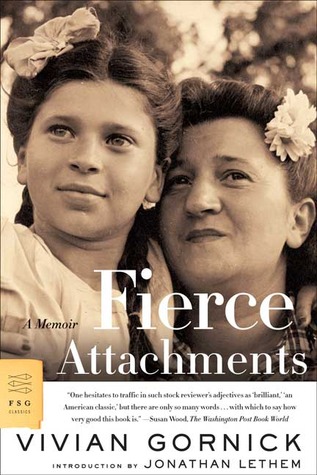
Yet those years were a true beginning for me. I did actually try to sit at the desk and think. Mostly, I failed miserably. Mostly, not always. In the second year of my marriage the rectangular space made its first appearance inside me. I was writing an essay, a piece of graduate-student criticism that had flowered without warning into thought, radiant shapely thought. The sentences began pushing up in me, struggling to get out, each one moving swiftly to add itself to the one that preceded it. I realised suddenly that an image had taken control of me: I saw its shape and its outline clearly. The sentences were trying to fill in the shape. The image was the wholeness of my thought. In that instant I felt myself open wide. My insides cleared out into a rectangle, all clean air and uncluttered space, that began in my forehead and ended in my groin. In the middle of the rectangle only my image, waiting patiently to clarify itself. I experienced a joy then I knew nothing else would ever equal. Not an ‘I love you’ in the world could touch it. Inside that joy I was safe and erotic, excited and at peace, beyond threat or influence. I understood everything I needed to understand in order that I might act, live, be.

The Cuban author Guillermo Cabrera Infante says that the writer is important not because he can write but because he can listen. His job is ‘to catch the human voice in flight’.
He goes home to his life. I will always be displaced by it. And here I am again in this room, calm, half-sleepy, looking forward to going back to my life. We will never be a couple. One day we will find the sexual passion gone and a friendship taking its place. And through it all his marriage will have sailed serenely on. A radio’s on, somewhere out there, a woman singing wildly. A train passes. I don’t care. Nothing can touch me. The power of work. Art, and the huge, quiet power it gives.
<3
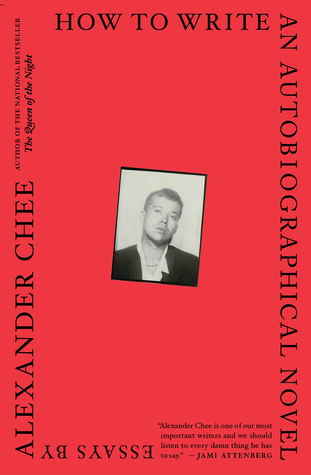
[...] There was something I wanted to feel, and I felt it only when I was writing. I think of this as one of the most important parts of my writer's education---that when left alone with nothing else to read, I began to tell myself the stories I wanted to read.
[...] The point of it is in the possibility of being read by someone who could read it. Who could be changed, out past your imagination's limits. Hannah Arendt has a definition of freedom as being the freedom to imagine that which you cannot yet imagine. The freedom to imagine that as yet unimaginable work in front of others, moving them to still more action you can't imagine, that is the point of writing, to me. You may think it is humility to imagine your work doesn't matter. It isn't. Much the way you don't know what a writer will go on to write, you don't know what a reader, having read you, will do.

Although the pivotal moment theory might work for some, it might be overblown. As time drags on, other events step up to the plate, and one begins to wonder why any fork in the road presented the less traveled option. Chen knew his own confused path that, upon review, could not have been changed then and certainly not now. Chen was a man who lived in several exiles. As for Paul, he was still too young to know. Thinking about Paul and Chen, maybe you couldn’t exactly compare pivotal moments, but rather a single desire that united the two men: the desire to write.
The desire to write is linked to the desire to think and the desire to record. You could say it’s all the same thing, but you probably favor something or another. You who think you’re thinking are recording your thinking, but you who think you’re writing are recording your writing. You who think you’re recording are writing your record. It’s all stupidly obvious except for the desire. You could say it’s an obsessive trait, and once it kicks in, you’re stuck with it. The desire is selfish and personal. It has nothing to do with talent or giftedness. That becomes apparent or unapparent in the act, but the desire is an enigma. You say, I want to be famous; I want to be remembered; I want to speak; I want to communicate; I want to imagine; I want to remember. But writing itself is a strange way to accomplish any of that stuff, sitting alone for hours with a pen and paper or typewriter. It’s a complicated desire that becomes mixed up with the self, and Chen and Paul, if forced, would admit that it was a desire stronger than any human relationship, including the one between them.

It’s a matter of pressing interest, I find. What is the purpose of my average day?
If you’d asked me that five years ago, I would’ve equably cited John Dryden, who said that the purpose of literature is to give ‘instruction and delight’. That verdict goes back three centuries, and in my opinion has worn pretty well.*
You hope to delight, and also to instruct. Instruct in a way that you hope will stimulate the reader’s mind, heart, and, yes, soul, and make the reader’s world fuller and richer. My ambition is summed up by a minor character in the late-period Bellow novel The Dean’s December: a stray dog, on the streets of Bucharest, whose compulsive barks seem to represent ‘a protest against the limits of dog experience (for God’s sake, open the universe a little more!)’.

When you write, you feel how it must be, you know that at such a spot a certain thing is needed, at another spot something else; you compose pictures for yourself that you see, you have rather the feeling that you are going to bring something to flower; you feel it in your heart like the distant echo of all the passions you are going to create; and the inability to render all that is the eternal despair of those who write; the poverty of languages, which have scarcely one word for a hundred thoughts; the weakness of man, who cannot find approximations -- and to me it is an eternal anguish.
Oh my God, my God, why did you cause me to be born with so much ambition? [...]

[...] I am not predicting, or prescribing. I am describing. I am describing certain aspects of psychological reality in the novelist's way, which is by inventing elaborately circumstantial lies.
In reading a novel, any novel, we have to know perfectly well that the whole thing is nonsense, and then, while reading, believe every word of it. Finally, when we're done with it, we may find - if it's a good novel - that we're a bit different from what we were before we read it, that we have been changed a little, as if by having met a new face, crossed a street we never crossed before. But it's very hard to say just what we learned, how we were changed.
The artist deals with what cannot be said in words.
The artist whose medium is fiction does this in words. The novelist says in words what cannot be said in words.
[...] The future, in fiction, is a metaphor.
A metaphor for what?
If I could have said it nonmetaphorically, I would not have written all these words, this novel; [...]