
for/pq
Ingmar Bergman,
Martin Amis,
Michael Ondaatje,
Yara Rodrigues Fowler,
Lucia Berlin,
Elia Kazan,
Merritt Tierce,
Italo Calvino,
Karen Tei Yamashita
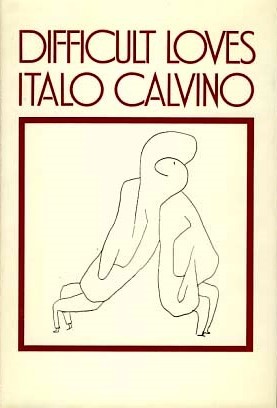
"There isn't time for cakes," said Dritto, pushing him aside. "We've got to hurry." And he went ahead, twisting the beam of his flashlight around in the dark. Everywhere it touched it lit up rows of shelves, and on the shelves rows of trays, and on the trays rows of cakes of every conceivable shape and color, tarts filled with cream that glittered like candle wax, piles of sugar-coated buns, and castles of almond cakes.
It was then that a terrible worry came over Baby, the worry of not having time to eat all he wanted, of being forced to make his escape before he had sampled all the different kinds of cakes, of having all this land of milk and honey at his disposal for only a few minutes in his whole life. And the more cakes he discovered, the more his anxiety increased, so that every new corner and every fresh view of the shop that was lit up by Dritto's flashlight seemed to be about to shut him off.
He flung himself at the shelves, choking himself with cakes, cramming two or three inside his mouth at a time, without even tasting them; he seemed to be battling with the cakes, as if they were threatening enemies, strange monsters besieging him, a crisp and sticky siege which he must break through by the force of his jaw. The slit halves of the big sugared buns seemed to be opening yellow throats and eyes at him, the cream horns to be blossoming like flowers of carnivorous plants; for a horrible moment Baby had the feeling that it was he who was being devoured by the cakes.

But the next day, standing in the meadow, he invites Anna to visit the trailer, and she hesitates, thinking the offer is a commitment on his part, even a tentative one. It implies too much knowledge of the other—his home could be a capsule of the past or of a possible future. Her own hesitation at breaking their formality is interpreted by Rafael as shyness, or modesty, or a desire not to take the relationship further. And in some way this is not a misinterpretation of Anna. For she too has lived a stranger’s life. There are layers of compulsive secrecy in her. She knows there is a ‘flock’ of Annas, and that the Anna beside this unnamed river of Rafael’s is not the Anna giving a seminar at Berkeley on one of Alexandre Dumas’ collaborators and plot researchers, is not the Anna in San Francisco walking into Tosca’s or eating at the Tadich Grill on California Street.
okay i need to go to both those places

I WAS in Carly Wharton’s office, going over our casting problems, when a secretary came in and said, “Turn on the radio.” It was December 7, 1941, and that was how I heard about the attack on Pearl Harbor. A couple of weeks later, after I’d waited for some kind of call to arms, I went to my draft board and asked where I stood. I was eager to go, not because I was burning with patriotism but because entering the service would free me from the terrible tangle of my personal life. I believe many men who quickly entered the ranks had similar reasons. My draft board informed me that I was 3-A, by reason of my age, my marriage, and my two kids. I would have to deal with my personal problems personally.
lmao
Constance had one sure defense; she’d “see” (that all-purpose girl word) another man. Don’t forget, I told myself, how quickly she found Capa when you were on the road with Golden Boy. And just now, a weekend with Jack Houseman. And some others for sure. The back seat of a Pontiac, for chris-sake! If I left her now, she’d be out with another man tomorrow night. They all want to fuck her, and isn’t that the ultimate compliment to a woman like Constance? Isn’t it? One of her suitors will be attractive to her immediately. I’ll have to be with her, guarding her, all the time. I don’t trust her to be alone.
Her sister moved out—to be with Billy Wilder, I assumed—and I moved in. We were now recognized as a couple. I gave her address as my own (but not to Molly). Every time we made love, with the excitement and all, I’d say, “I love you, baby, I truly do love you.” And she’d say—after she’d cooled off—“I don’t believe you. If you did we’d be married by now.” After which I’d back into silence or change the subject, and Constance would look at me, nod her head, show her teeth, and say, “All right then, all right then, all right!” I didn’t know what that meant but did recognize the tone. Threatening.
oof
I MOVED back into the Garden of Allah. Constance’s mother had come west; the clan was gathering. Her sister was poisoning Constance against me by telling her the truth: that I was hesitating. Doris was the established girlfriend now of Billy Wilder, and I was waiting to see if she would prevail on him to marry her. Talk is cheap.
“I’m going to Reno,” I said to Constance. “Stop bothering me about it.”
“When?”
“As soon as I’m finished with the picture.”
“Did you sign what you said you were going to?”
“No, but they’re drawing up the papers, and I will.”
“When?” Then she was silent. “Oh, God, I hate this. The way you’ve got me. And the way I have to talk to you. I hate it.”
Later she said, “I wish we were alone in the world. That there was no one else on earth, anywhere. Anywhere.”
We were in our “tent,” of course, when she said that.
I didn’t say anything about the “no one else” line. That would truly drive me nuts.
ahhh this snake
I said very little to Molly about the purpose of my trip—she would have tried to talk me out of it. All I told her was that I needed a vacation alone. In Athens I found what I wanted and rented it, the Stormie Seas, a forty-foot caïque, flying the Union Jack. It had a crew of two social rebels, a young married couple—navigator and captain, mate and cook. I told them the kind of islands I wanted to see and they understood. We cleared Piraeus’s channel on our five-horse motor, then shut it off and, relying on cloth, turned south toward those islands of the Cyclades that tourists don’t trample. Quiet at last, my load of tensions eased, I asked myself a question I’d asked before, but now in earnest: Could I disappear from the world where I’d trafficked all my life and become someone else? Could I start over again? You will certainly say that is the most foolish of questions, but in time—it did take time—that is what I did: disappear from the world I’d inhabited all my adult life, to become someone else.

I watched the beginning of La Règle du jeu on video. It’s marvellous but I’ve never been able to sit still long enough to get to the end. Renoir’s love of people, that unfashionable thing: the sense of a rich, three-dimensional, teeming life away there beyond the flat screen and spreading out from it in all directions. A kind of fizzing and bubbling that goes on. Everyone busy living.
<3

You think about it. Food is the basis for everything. Without food, it’s all over. Kaput. They don’t lie when they say you are what you eat. If you can’t get nothing to eat, you are nothing. Nothing. They also don’t lie when they say you eat to live. And you live to eat. What’s someone’s culture but the way he eats? Everybody living from meal to meal, even if it takes somebody three days to get to the next one. Call that the culture of poverty. Maybe you a nomad or you tied to the land. It’s how you get your food. It’s how you organize to get your food. Keep your food. Keep your food for yourself. Who grows it? Cultivates it? Sells it? Cooks it? Who gets fed and does not get fed? Who throws it away? Who eats the leftovers?
What’s the story of the world? How come Magellan comes to bother folks like us in faraway islands? It’s to make their food taste better. Once you taste a secret, you go running after your tongue. It can’t be helped. Once you know this principle of the world, then everything becomes clear. You take Marx. You take Freud. You take Einstein. You take Suzuki. The politics of food. The sex of food. The relativity of food. The Zen of food.
I tell these radical kids, eventually all the answers can be found in food. Are they listening? Follow the food, I say. You born in the city. You forget your connection to the earth. And I don’t mean just Watsonville or Delano. That’s what guys like me have, the knowledge. We never stop. Everywhere we go, we touch the food right at the source. We digging the earth, sowing the seed. We pulling the weeds. Then cutting cane or slicing pineapple. Shucking lettuce or cutting asparagus. Dirt under the nails, under the blisters, in the grooves of our hands. It never washes out.
Then harvesting grapes. When grapes are ready, there’s nothing more beautiful and luxurious. I don’t say this like I’m the grower. I say this because who cannot appreciate the miracle of planted food comes back every year with your encouragement? These grapes are my grapes, my children. The small, sour, purple ones crushed for Gallo wine. Large, green, seedless Thompson for Dole fruit cocktail. The reds for Sun-Maid raisins. But that’s just the earth.
After we had worked together for our beliefs in twenty-four-hour days without rest, bonded ourselves to each other through the inner struggles of self-criticism within our groups, confessed our social sins to our brother- and sisterhoods and lost our individual selves to our collective purpose, we finally could only be with each other. And we found ourselves fighting if we should collude with the so-called system and its elected liberal officials, if our struggle should be defined as working with the working class or our oppressed Asian communities, if this or that hotel tenant was an advanced worker, if gay lib protestors were bourgeois degenerates, if our loyalties were with the PRC or the USSR, if any of us were reformists, revisionists, or sellouts, if our art and writing must always have political purpose, and we were very sure that depending on our correct analysis of these definitions, we could then make decisions to act that would be ultimately unbeatable. But however we may have accounted for our thinking and our actions in these years, this was how we fought and spent our youth.