
project/panopticon-diaries
Helen Garner,
Eve Babitz,
Lauren Elkin,
Haley Mlotek,
Elizabeth Hardwick,
Alba de Céspedes,
Liv Ullmann,
Leslie Jamison,
Nona Willis Aronowitz
eve diary fragments

Consider, for instance, the pros and cons list. I wrote it at the kitchen table on a gray afternoon, as naturally and casually as a shopping list. Transcribing the circular thoughts that had become fixtures in my brain, I put Aaron’s good and bad qualities in two columns. They were around the same length. The pros lavished praise on his tender heart—“generous,” “sensitive,” “affectionate,” “sense of comfort,” “always on my side.” The cons were mostly different ways of pointing out our incompatible interests: “we sometimes have nothing to talk about,” “doesn’t read.” And then, one vague entry, covered over with scribbles: “bad place with sex.”
Aaron found the list one day in our protracted post-breakup period, when, amid the rage and its rebound into knee-jerk intimacy, there was also a deluge of mundane tasks to do, like going through a bunch of boxes together and divvying up the items. When the paper fluttered out, he scanned the list, unsurprised by its content (we’d talked about all these issues to death), but flabbergasted by the date.
“Twenty thirteen?” he exclaimed. “You stayed with me for three more years after this?”
“There were just as many pros as cons,” I replied weakly. But I knew what he was thinking: Why did this woman stay with me for so long if she was clearly miserable?
lol
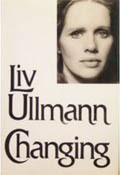
I realize I was brought up to be the person others wanted me to be, so that they would like me and not be bothered by my presence.
That person was not me.
When I began to be me, I felt that I had more to give.
Life was richer.
I am trying to eliminate all the bad conscience caused by things of no significance that stand in the way of what I really believe in.
Nora says to Helmer: “But I have lived only to be your plaything. And you wanted it that way.”
I love Nora. She is beautiful, and perfectly drawn by Ibsen.
Her need to be accepted. Her fear of presenting herself as she really is.
A woman who says one thing and means something quite different. Who wants to be friends with, and liked by, everyone. Who exclaims, “Don’t be angry with me!” the moment she senses she might have said something that could offend. And who all the while lives her secret life, and with strength and determination conducts financial transactions (unusual for a woman in those days) in order to save her husband’s life.
This woman, who uses and manipulates those around her while at the same time wanting to help and love them, refuses to do something she feels is morally repugnant to her when the decisive moment comes. It is beyond her imagination to conceive of exploiting the situation when Dr. Rank declares his love and begs to give her the money she so badly needs.
Like Helmer, Nora is one of society’s victims. She behaves in a way one would expect of a woman, of a wife, of a doll child.
She plays her part just as Helmer plays his. Neither of them gives the other a chance, because they are always in service to the other’s role.
When she finally sees, she also understands that the anger she feels over everything that is false between them is directed just as much against herself as against him. Her responsibility was as great as his. She hopes that the change will also take place in him—not for her sake, but for his own.
Not because he is threatened by a new Nora, who shows a strength he doesn’t comprehend, and which frightens him, but because he has discovered a new human beirfg whose motives he may learn to understand.
I believe that Nora’s most beautiful declaration and act of love is leaving her husband.

I called Clara and told her I’d like to come see her, and she invited me to lunch, but we didn’t set a day. I said how grateful I was for what she’s doing for us, I repeated, “Let’s hope for the best.” She said that in reality she didn’t have much hope, but that I shouldn’t discourage Michele, because she was still intending to try several paths. “The script has an interesting beginning, don’t you think?” I answered vaguely. I didn’t want to confess that I don’t know anything about it. “Of course,” Clara continued, “it all has to be rewritten, but as it’s been corrected, it might work. The plot, of course, is very dark, very risqué.” I said, “Yes … yes … ” “That’s also its strength, its attraction, I don’t deny it,” she observed. “That man who says he’s a different person to every woman is very successful. And then when he goes to the street with the prostitutes, and the following scene, when he comes home and there’s his wife, who says, ‘I kept dinner warm for you’ … There are wonderful ideas, a great film could be made. But I’m afraid it won’t work, no producer is courageous enough. I advised Michele to lighten it, but he says it’s impossible and ultimately he’s not wrong. Its character is really in that fever, that sexual obsession.” Then she said, “Too bad,” and added that Michele would have had a lot of talent for the cinema, and repeated, “Too bad.”
When Michele came home I didn’t tell him I’d talked to Clara.
oh god
[diary relevance: my theory about men trying to preserve their dilemmas for posterity rather than set things right in life]
I want to tell the truth, confess that the moment Guido asked me to go to Venice, I had decided to accept. I’ve never had the candor to admit it, even in this diary. Otherwise, I would have to acknowledge that the effort I made to forget myself for twenty years has been in vain. I succeeded until the moment when, hidden under my coat, I carried home this shiny black notebook like a bloodsucker. Everything started then; even the change in my relations with Guido began the day I admitted I could hide something from my husband, even if it was a notebook. I wanted to be alone, to write; and those who want to be enveloped in their own solitude, in a family, always carry in themselves the seed of sin. In fact, because of these pages, everything seems different, even what I feel for Guido. I blame his money for the weaknesses that I can’t overcome or accept. I want to delude myself that an outside force drives me to betray my duties, I don’t dare confess that I love him. I really think that the strongest feeling in me is cowardice.

The writer Catherine Lacey once brilliantly described the difficulty of writing about experiences you’re still living as “trying to make a bed while you’re still in it,” but as I read Garner’s diaries, I kept thinking that perhaps not every bed needs to be made. Sometimes we want the unmade beds, with messy sheets and sprawled-out bodies stretching and spooning, the fossils of curled hairs on the pillow, the faint salt of dried sweat.
Far from reading like B-roll footage, these diaries feel magnificent and sui generis, beholden to no rhythms or logic but their own, simultaneously seductive and staggering, a blend of pillow talk, bar gossip, and eavesdropping on therapy. They offer an intoxicating, astute account of the deep emotional movements of Garner’s life over two decades—two marriages and divorces, the flowering of her literary career, and her daughter’s coming-of-age—but they always live in the weeds, built of the grain and texture of her days. No small part of their brilliance stems from their faith that there is no meaningful separation between these realms of inquiry: that reckoning with human purpose and the anguished possibilities of human love always happens within, and not above, the realm of “trivial” daily experience. Which is to say: in their form as well as their content, they reveal where meaning dwells in our lives (everywhere), and how we might excavate it. “In my heart,” Garner has said, “I always liked my diary better than anything else I wrote.”
love this
What is the point of this diary? There is always something deeper, that I don’t write, even when I think I’m saying everything.
V’s proprietary tone when he speaks of the high priests of European literature—‘Yes, they are peculiar titles,’ he says about Canetti’s autobiography—reminds me of the German poet who boasted to me about how he had once sat up all night reading Chekhov’s letters. As if no one else had ever done this.
heh
After dinner the waiter brought L the wrong coffee, was corrected, went away. Time passed. He realised he’d been forgotten and from that moment the evening was lost. He went dark and stiff with rage. Anger spread into the air around him. A grille clanged down between him and the world. I panicked. All the air went out of me. I felt my face drop on its bones. He noticed and said, ‘What’s up?’ I said, in a small voice, ‘I feel sad. And scared.’ ‘Sorry,’ he said, ‘I just hate it when things like that happen, when people treat you like—’ I wanted to say, ‘He doesn’t scorn you, or hate you—he just made a mistake.’ But his whole ego was bound up in it. My own iron grille came down. I missed the chance to level with him. From then on we were both deep in reticence but keeping the superficial intimacy going. In the morning, a shyness. I like him. I envy his beauty and I hate the way it distorts his life. He is all split and troubled; and his loneliness is as bad as mine. We would wear each other out.
You must be logged in to see this comment.
I see that what I am doing, in this diary, is conducting an argument with myself, about these two men, and myself, and men in general.