
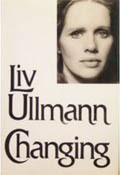
by
Liv Ullmann
I love Nora. She is beautiful, and perfectly drawn by Ibsen.
Her need to be accepted. Her fear of presenting herself as she really is.
A woman who says one thing and means something quite different. Who wants to be friends with, and liked by, everyone. Who exclaims, “Don’t be angry with me!” the moment she senses she might have said something that could offend. And who all the while lives her secret life, and with strength and determination conducts financial transactions (unusual for a woman in those days) in order to save her husband’s life.
This woman, who uses and manipulates those around her while at the same time wanting to help and love them, refuses to do something she feels is morally repugnant to her when the decisive moment comes. It is beyond her imagination to conceive of exploiting the situation when Dr. Rank declares his love and begs to give her the money she so badly needs.
Like Helmer, Nora is one of society’s victims. She behaves in a way one would expect of a woman, of a wife, of a doll child.
She plays her part just as Helmer plays his. Neither of them gives the other a chance, because they are always in service to the other’s role.
When she finally sees, she also understands that the anger she feels over everything that is false between them is directed just as much against herself as against him. Her responsibility was as great as his. She hopes that the change will also take place in him—not for her sake, but for his own.
Not because he is threatened by a new Nora, who shows a strength he doesn’t comprehend, and which frightens him, but because he has discovered a new human beirfg whose motives he may learn to understand.
I believe that Nora’s most beautiful declaration and act of love is leaving her husband.